Skip to content
A Transit Planner's Notebook
  • Home
  • Articles
  • Topics
  • About
  • Contact

Topic

Scheduling Explained

Running time, recovery, headways, trips, blocks, timetables, and schedule construction.

Articles in This Topic

11 articles

Scheduling Explained·October 29, 2026·3 min read

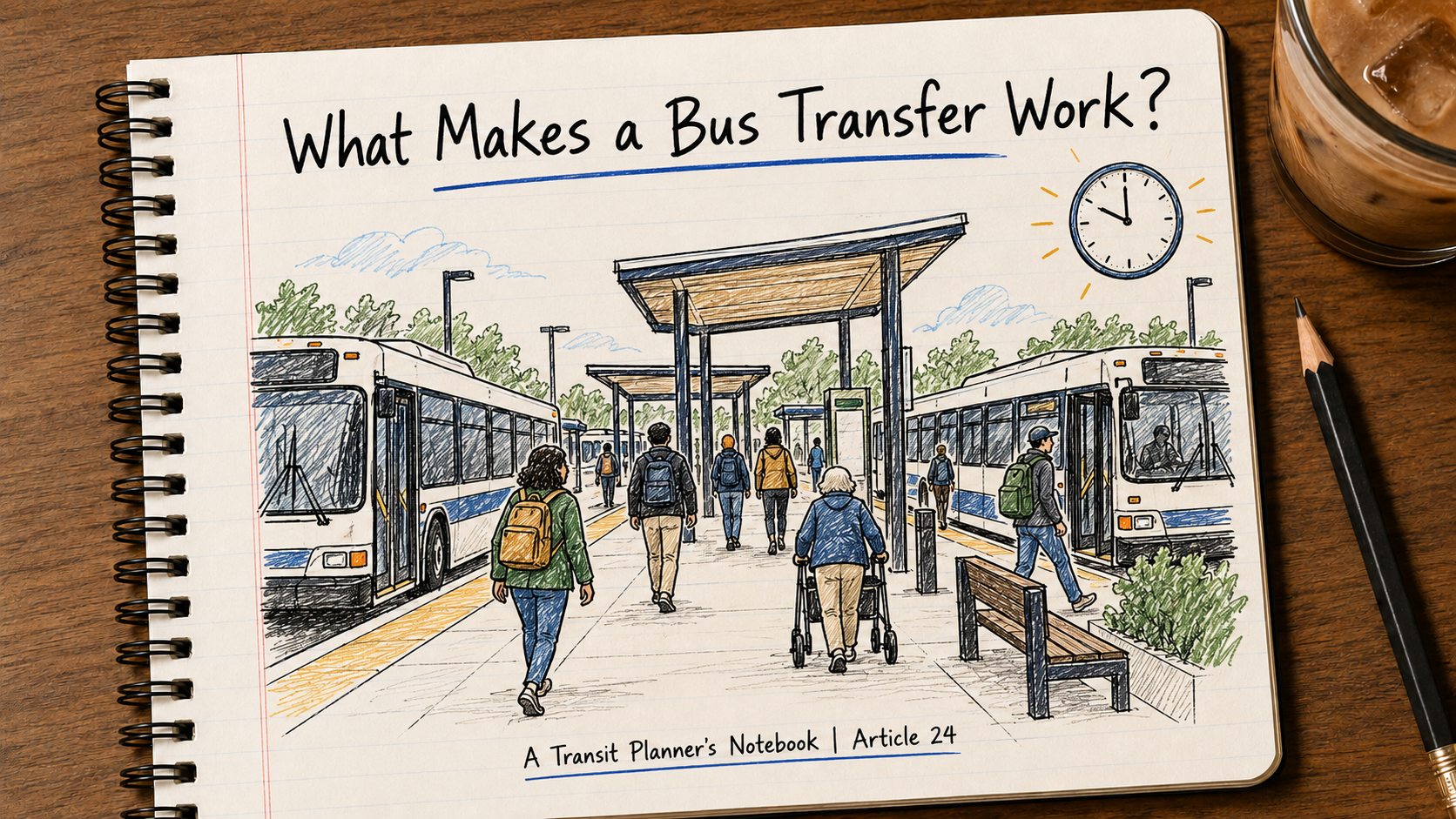
What Makes a Bus Transfer Work?

A connection needs time for passengers to leave one bus, reach the next boarding location, and board again. Good transfer planning considers ordinary variation and the consequences of missing the next departure.

Read Article
Scheduling Explained·October 22, 2026·3 min read

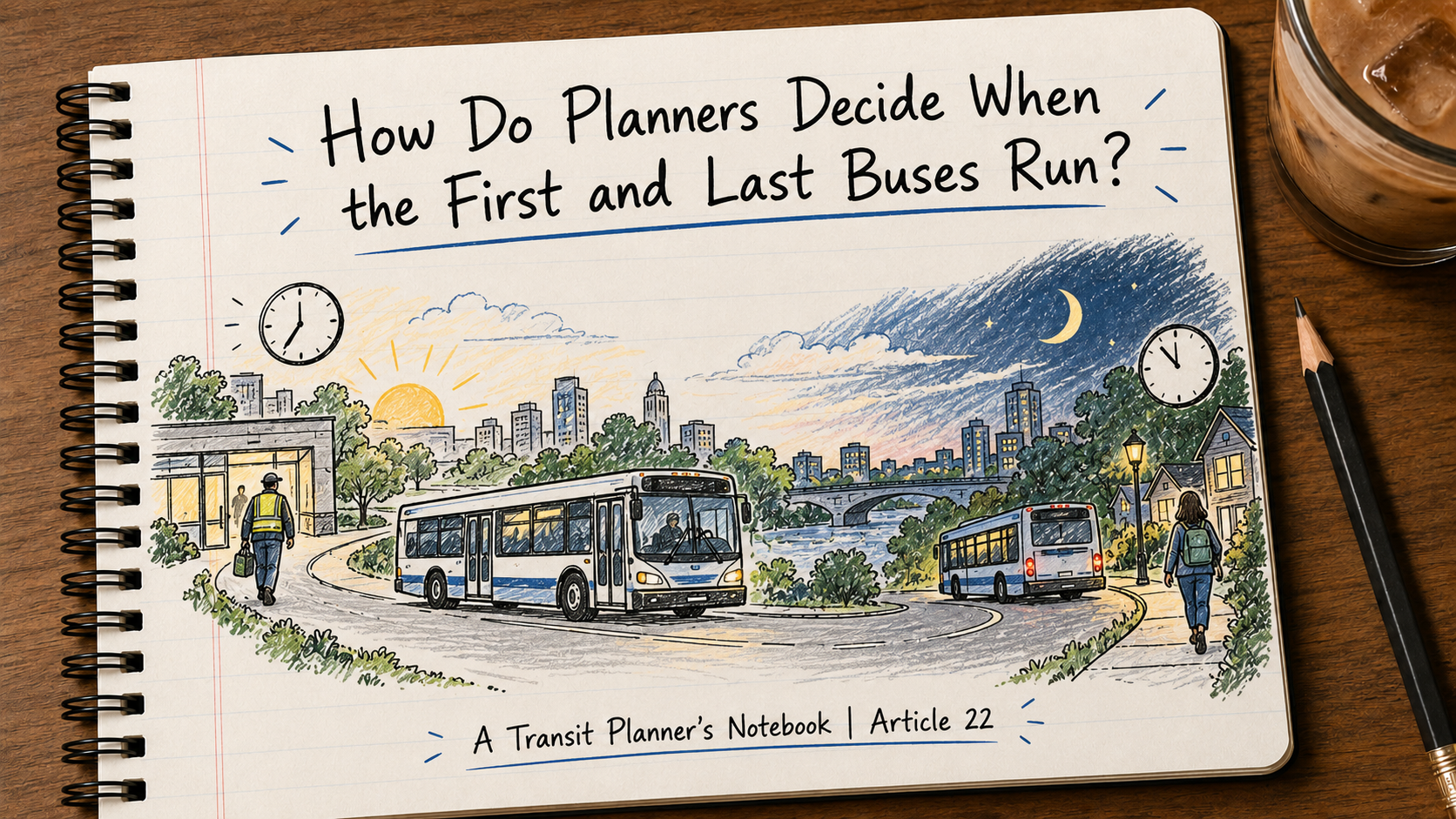
How Do Planners Decide When the First and Last Buses Run?

The first and last buses determine which daily activities transit can support. A useful service span must provide a practical arrival, workable connections, and an opportunity to return home.

Read Article

Scheduling Explained·September 24, 2026·2 min read

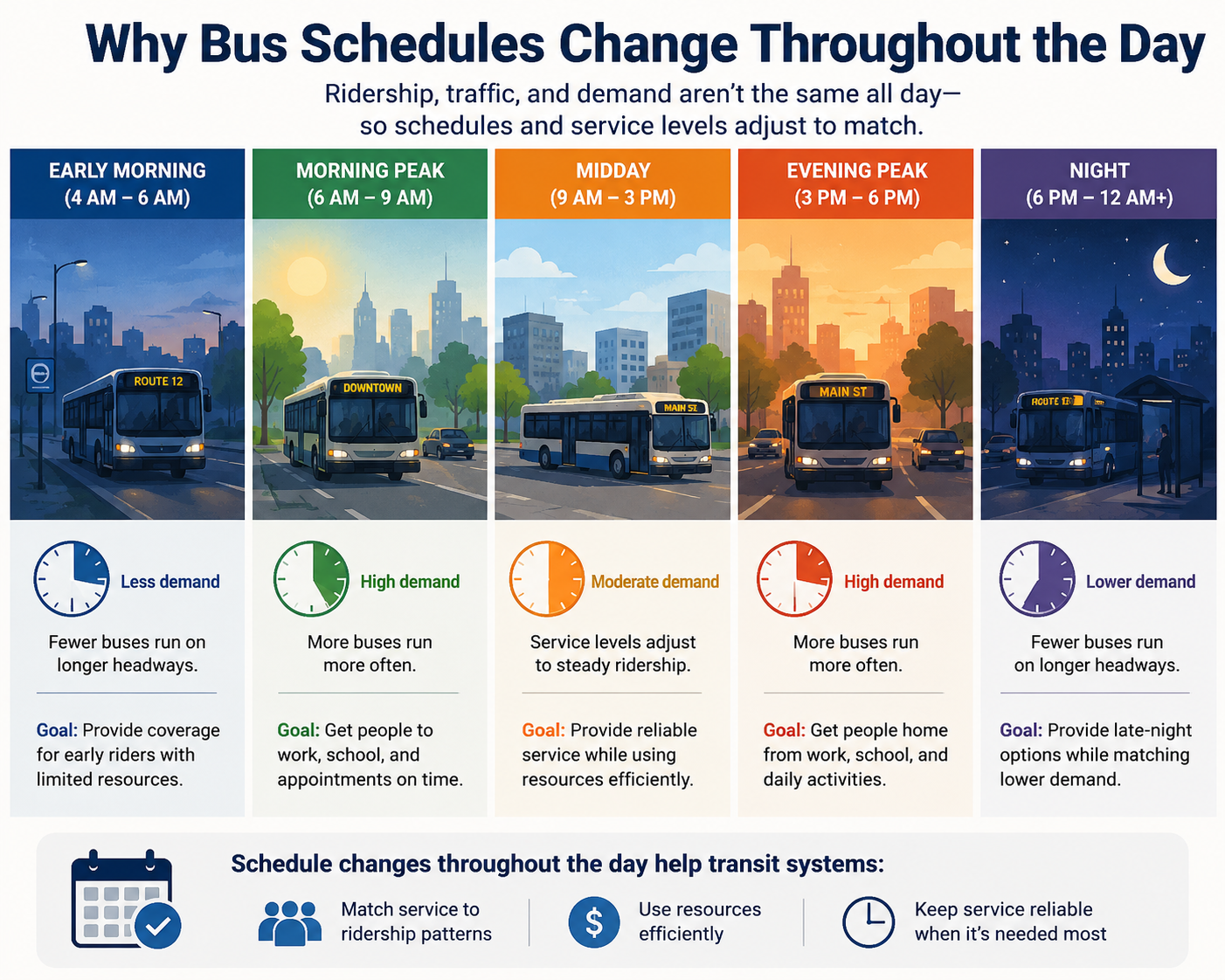
Why Bus Schedules Change Throughout the Day

The same route may need more running time at 4:00 PM than at 6:00 AM. Transit schedules change throughout the day because traffic, passenger activity, school schedules, employment patterns, and other conditions rarely remain constant.

Read Article

Scheduling Explained·September 21, 2026·2 min read

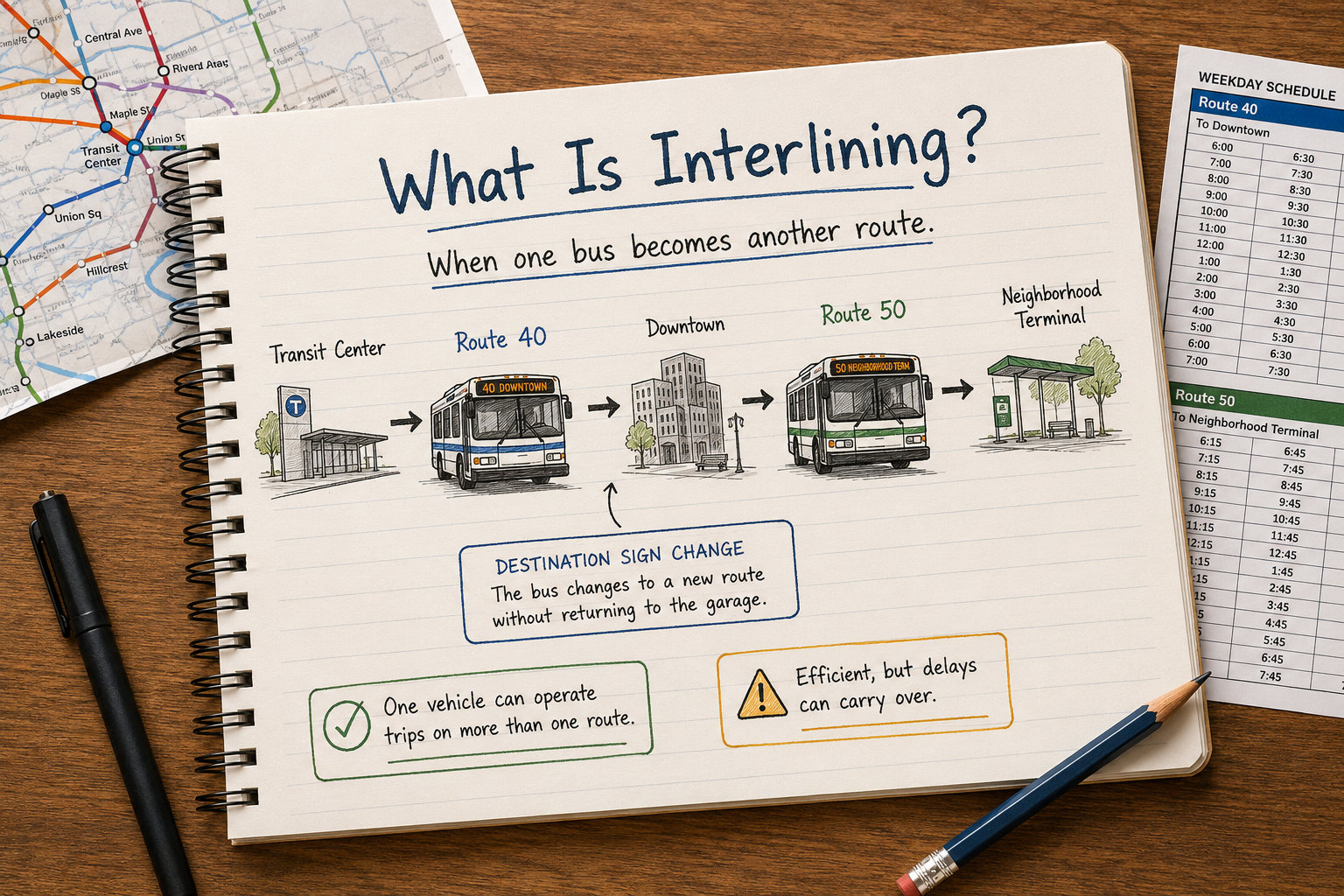
What Is Interlining? When One Bus Becomes Another Route

A bus displaying Route 40 may later become Route 50 without returning to the garage. This practice, known as interlining, can improve vehicle efficiency and passenger connections, but it can also allow delays on one route to affect another.

Read Article

Scheduling Explained·September 17, 2026·3 min read

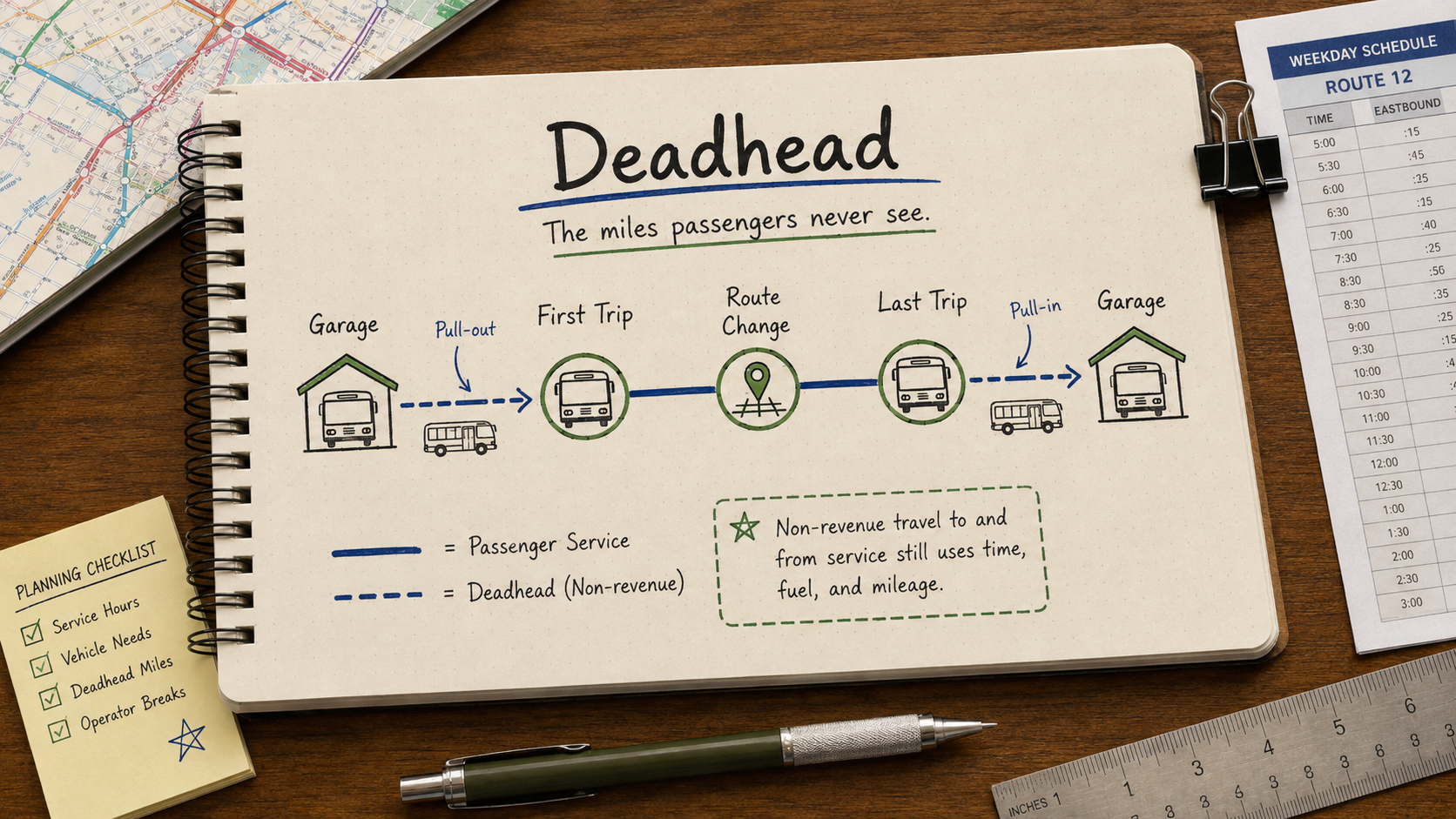
Deadhead: The Miles Passengers Never See

Not every mile a transit bus travels carries passengers. Deadhead movements connect garages, routes, terminals, and assignments, and although they never appear in the public timetable, they consume time, mileage, fuel, electricity, and operating resources.

Read Article

Scheduling Explained·September 14, 2026·3 min read

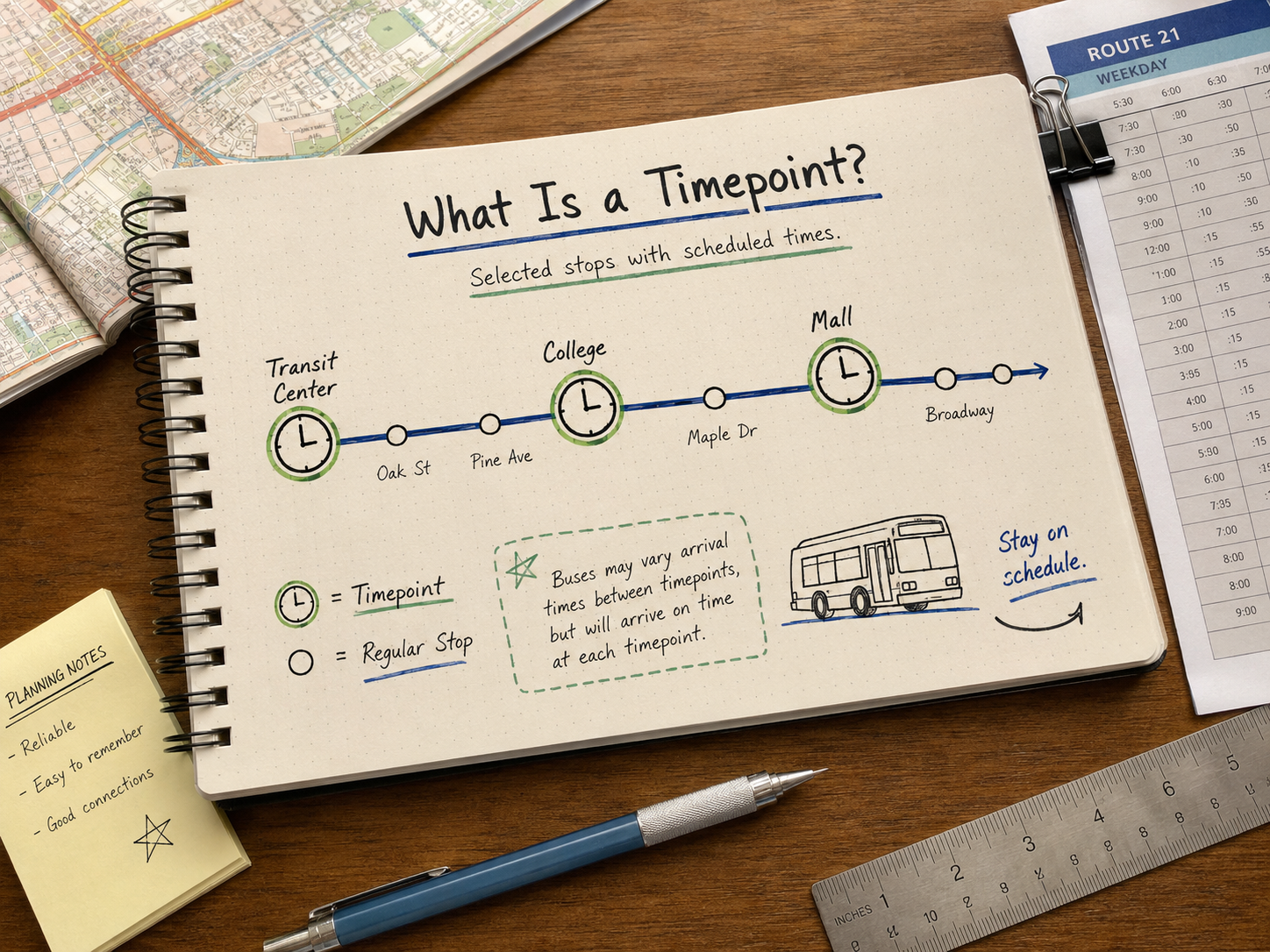
What Is a Timepoint - and Why Doesn't Every Bus Stop Have a Scheduled Time?

A bus may serve dozens of stops while the public timetable shows scheduled times at only a handful of locations. Those locations are timepoints, and they provide the structure that keeps a route understandable to passengers and manageable for operators.

Read Article

Scheduling Explained·September 3, 2026·4 min read

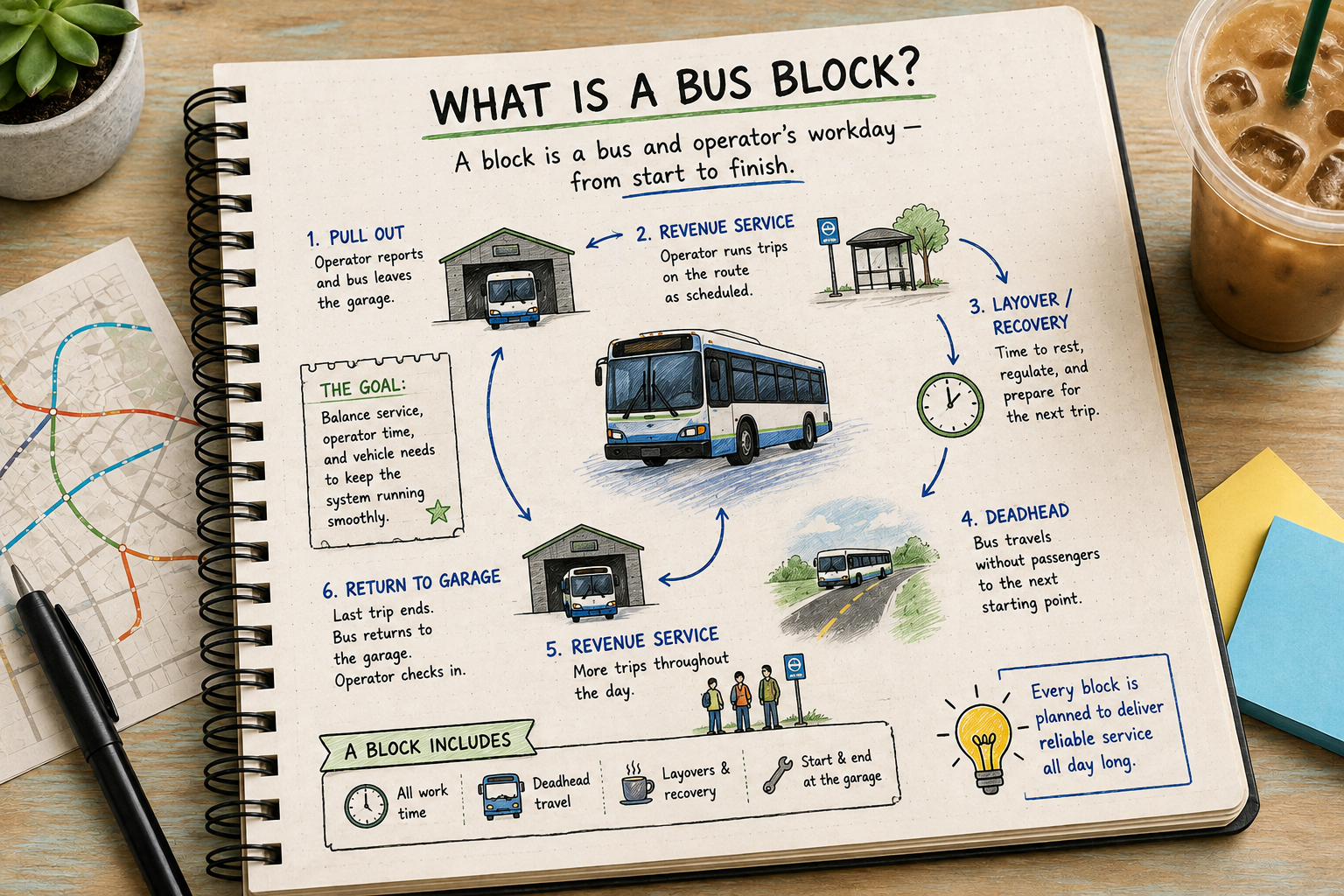
What Is a Bus Block?

Passengers see routes and trips, but planners must also determine what each bus does throughout the day. A block connects individual trips, deadhead movements, layovers, and vehicle requirements into one continuous operating assignment.

Read Article

Scheduling Explained·August 27, 2026·5 min read

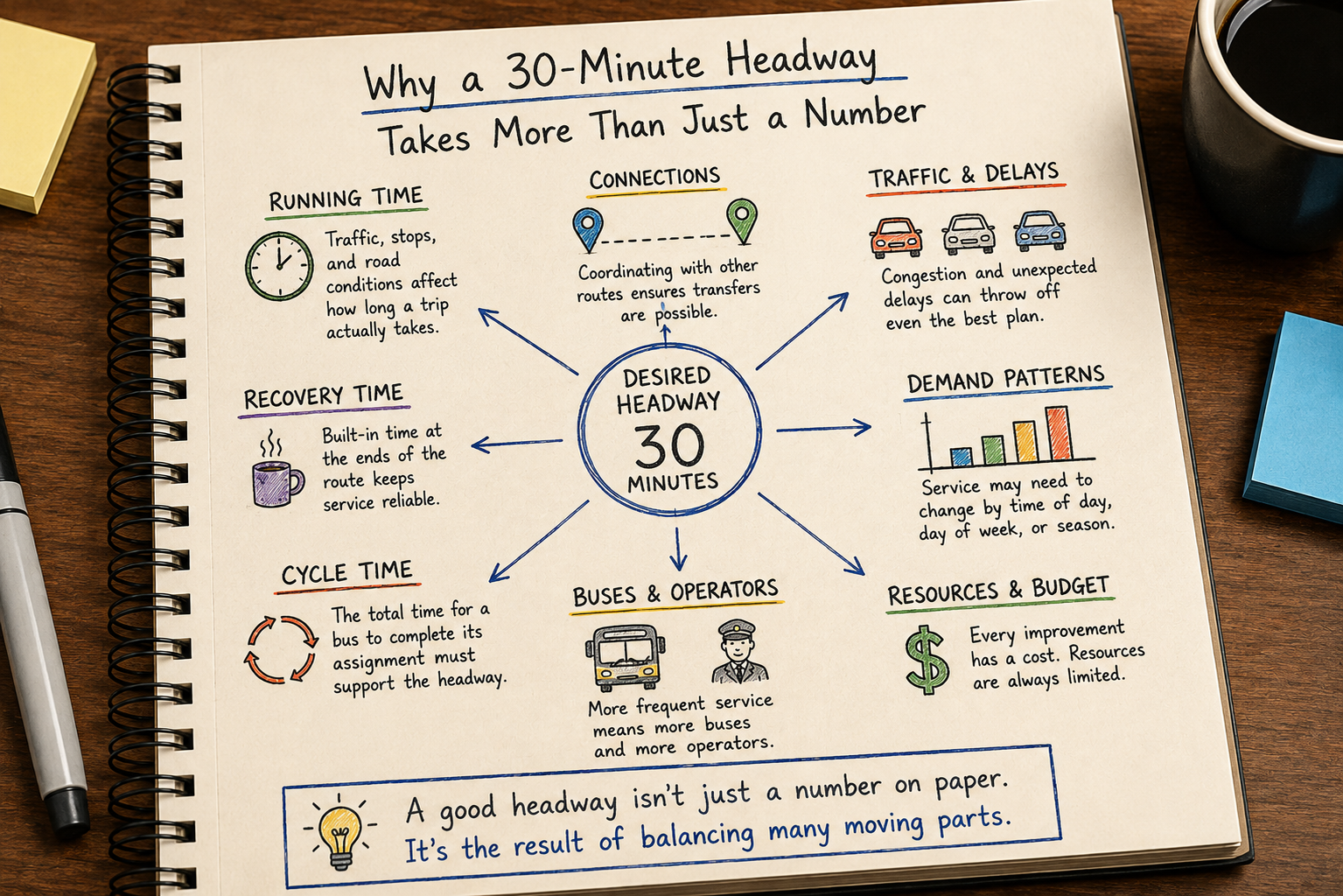
Headways: Why “Every 30 Minutes” Is More Complicated Than It Sounds

A route that operates every 30 minutes may sound simple, but maintaining that frequency depends on running time, recovery, available buses, connections, and the overall cycle time of the route.

Read Article

Scheduling Explained·August 24, 2026·5 min read

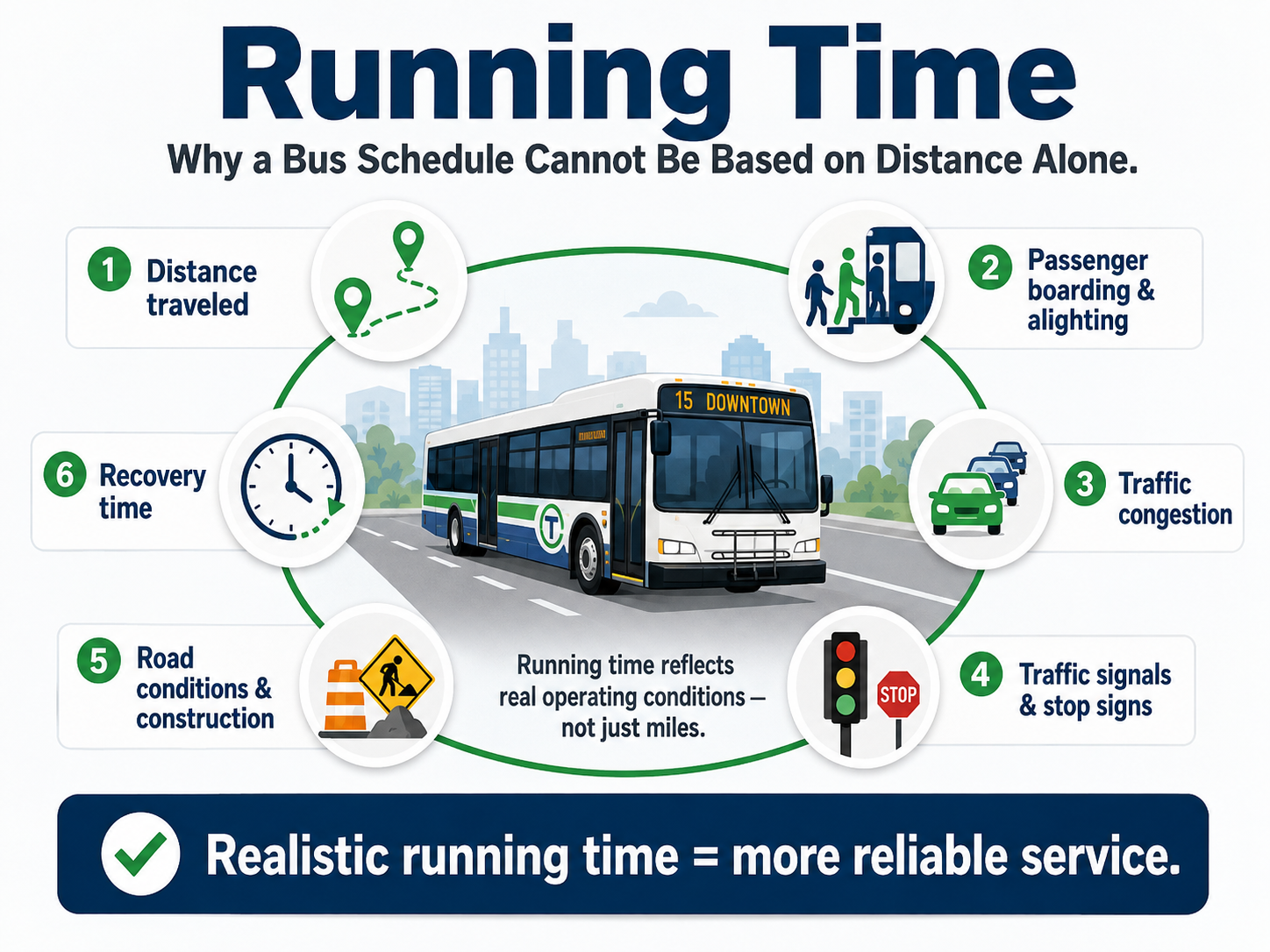
Running Time: Why a Bus Schedule Cannot Be Based on Distance Alone

Excerpt: Two trips covering the same route and the same distance may need very different schedules. Running time reflects traffic, passenger activity, stop spacing, road conditions, and time of day—not simply how many miles the bus travels.

Read Article

Scheduling Explained·August 13, 2026·5 min read

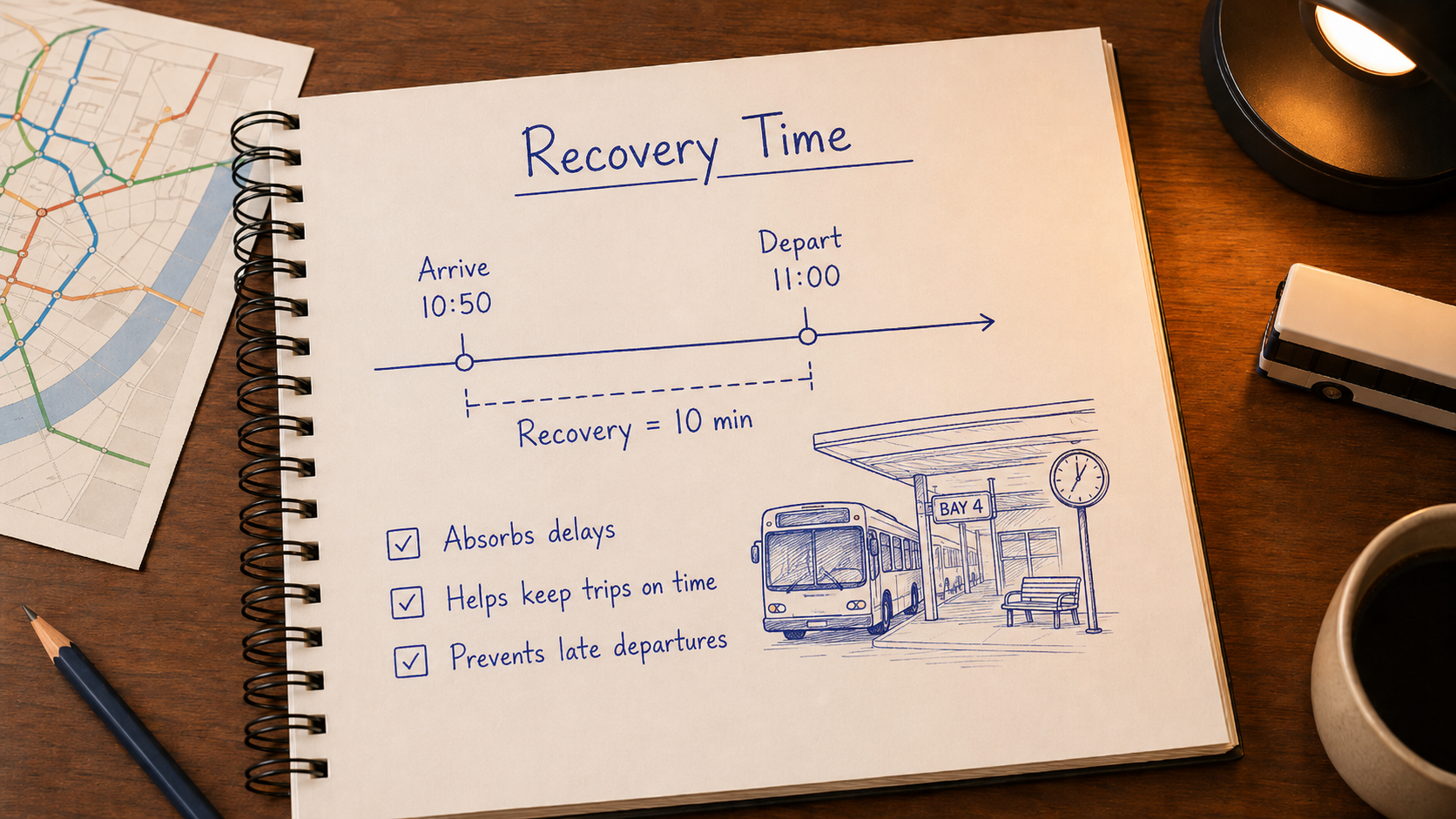
Recovery Time: Why Buses Sometimes Wait at the End of the Route

When a bus sits at the end of a route before departing again, that time is often intentional. Recovery time helps absorb normal delays, restore on-time service, and prevent one late trip from affecting every trip that follows.

Read Article

Scheduling Explained·August 10, 2026·5 min read

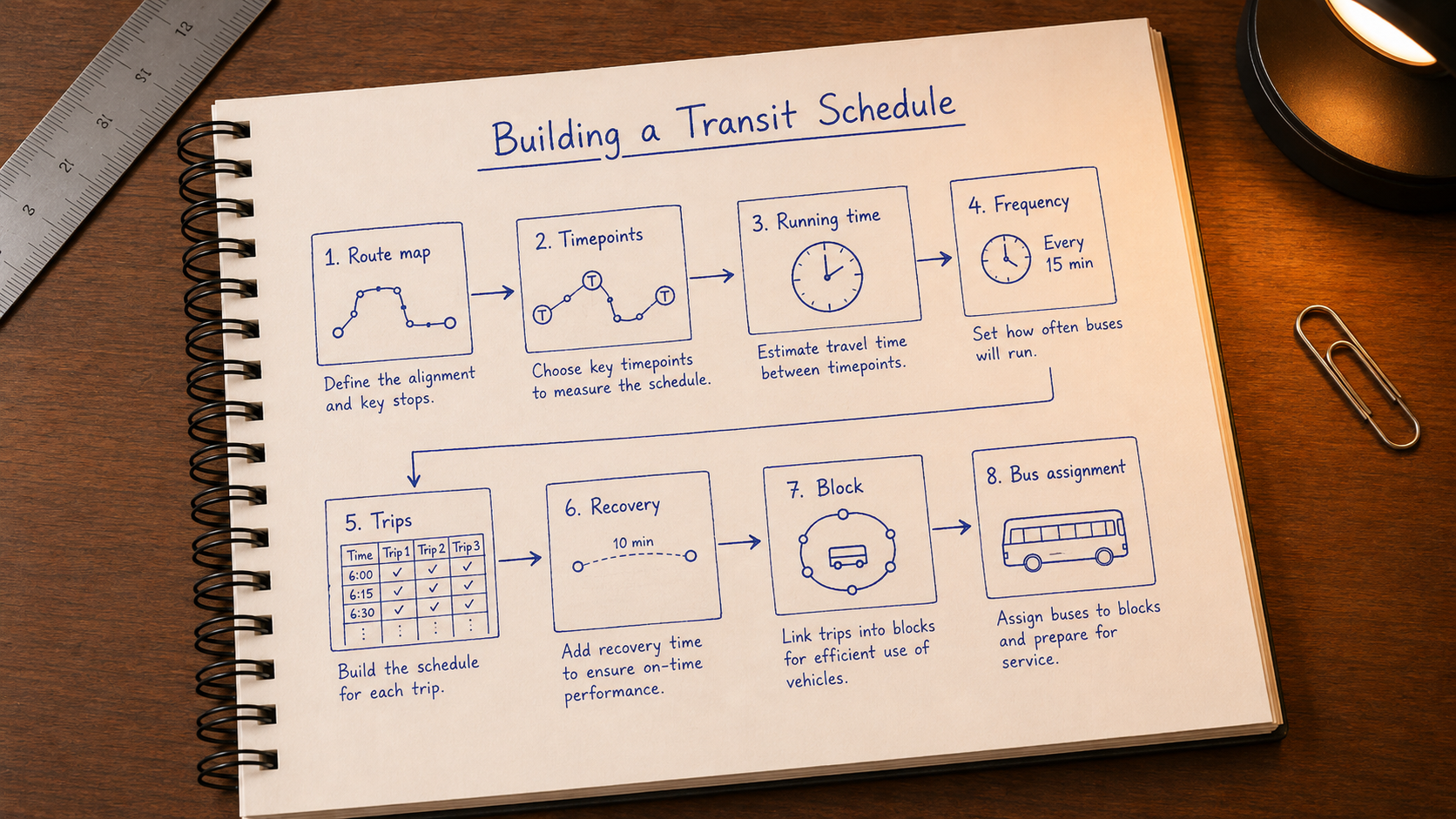
From Route Map to Daily Bus Assignment: How a Transit Schedule Is Built

A public timetable may look simple, but building it requires a series of connected decisions. This article walks through the process of turning a route map into individual trips, vehicle blocks, recovery time, and a workable daily operating schedule.

Read Article

A Transit Planner's Notebook

Practical articles about transit planning, bus scheduling, operations, destination signs, technology, and transit history.

Built to explain the work behind the timetable.

Site

  • Home
  • Articles
  • Topics
  • About
  • Contact
  • Subscribe
  • RSS Feed

Topics

  • Transit Planning
  • Scheduling Explained
  • Transit Operations
  • Bus Stops and Facilities
  • Transit Technology
  • Destination Signs
  • Transit History
  • Planner's Notebook
  • Privacy Policy
  • Terms of Use
  • Disclaimer
  • Accessibility Statement

The views expressed on this site are personal and do not necessarily represent those of any employer, transit agency, contractor, or public organization.

© 2026 A Transit Planner's Notebook. All rights reserved.