Deadhead: The Miles Passengers Never See
Why buses sometimes travel empty and why those miles still matter to the operating plan
By Craig3 min read
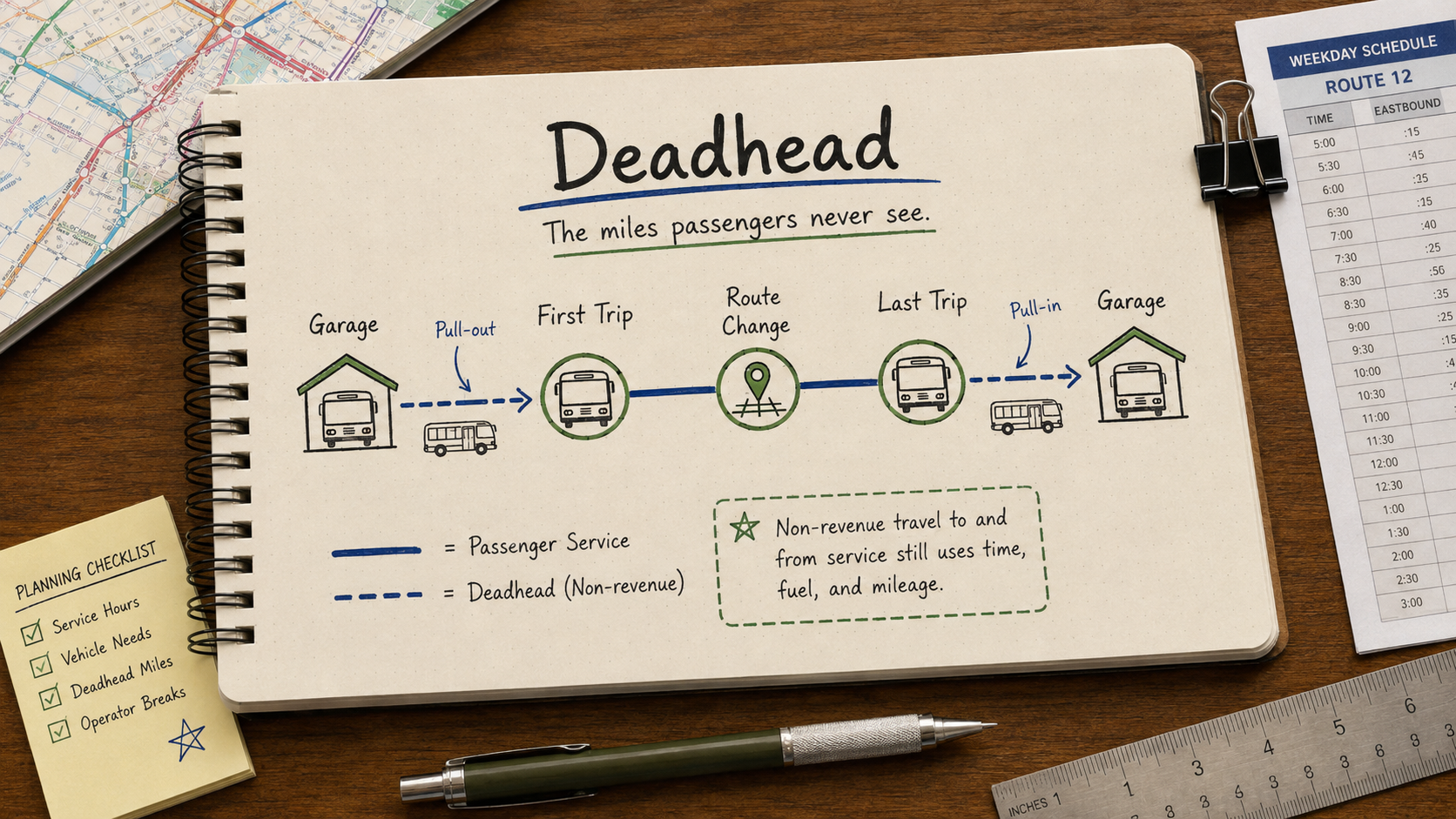
Not every mile a transit bus travels carries passengers. Deadhead movements connect garages, routes, terminals, and assignments, and although they never appear in the public timetable, they consume time, mileage, fuel, electricity, and operating resources.
A passenger sees a bus drive past with the destination sign displaying Not in Service.
A reasonable question is:
Why is an empty bus driving around when passengers are waiting for service?
Sometimes that bus is exactly where it needs to be.
It may be deadheading.
What Is Deadhead?
Deadhead is non-revenue travel performed by a transit vehicle.
Common examples include:
- Garage to the first trip
- Final trip back to the garage
- One route terminal to another route
- A vehicle traveling to replace another bus
- Movement to or from a fueling or charging location
Passengers generally cannot ride during these movements.
Pull-Out and Pull-In
The first deadhead of the day is often associated with pull-out.
The bus leaves the operating facility and travels to the location where its first passenger trip begins.
At the end of its work, the vehicle pulls in to the garage.
Those miles are necessary to operate the service even though they do not appear in the passenger timetable.
Geography Makes a Difference
Deadhead becomes particularly important in large service areas.
If a route begins 25 miles from the operating facility, the agency has to move a bus and operator those 25 miles before the first passenger ever boards.
The same thing happens at the end of the day.
That means the location of the garage can have a substantial effect on operating cost.
Deadhead Between Routes
Blocks may contain more than one route.
Suppose a bus finishes Route A at 10:30 and begins Route B at 10:50 several miles away.
The schedule must include enough deadhead time for the bus to make that movement.
If it does not, the second assignment is impossible.
This is one reason planners cannot simply connect trips based on their clock times.
Location matters just as much.
Deadhead Costs Money
An empty bus still uses:
- Operator time
- Fuel or electricity
- Tires
- Maintenance
- Vehicle mileage
- Road time
Reducing unnecessary deadhead can make a schedule more efficient.
But eliminating all deadhead is impossible.
The goal is to minimize it without damaging the service.
The Closest Trip Is Not Always the Best Connection
A scheduler may discover that connecting two nearby trips reduces deadhead but creates another problem.
Perhaps the connection:
- Provides inadequate recovery
- Requires the wrong vehicle type
- Creates a terminal conflict
- Spreads lateness between routes
Efficient blocking requires looking at the entire assignment.
Sometimes a few extra deadhead miles produce a much more reliable block.
Electric Buses Add Another Consideration
Battery-electric buses make deadhead mileage particularly important.
Every non-revenue mile still uses energy.
A block that appears comfortably within a vehicle's range when only revenue mileage is considered may become much tighter after pull-out, pull-in, and other non-revenue movement are included.
Planners therefore need to evaluate total block mileage.
Passengers Rarely See This Part of the Schedule
The public timetable might show eight hours of passenger service.
The bus itself may work longer.
It might spend:
- 20 minutes reaching its first route
- 15 minutes moving between assignments
- 25 minutes returning to the garage
Those movements are invisible to the passenger but very real to the operating plan.
Tags
This article reflects the author's personal experience and general industry knowledge. Agency practices, labor agreements, laws, funding requirements, and operating conditions vary.
Related Articles
Scheduling Explained3 min read
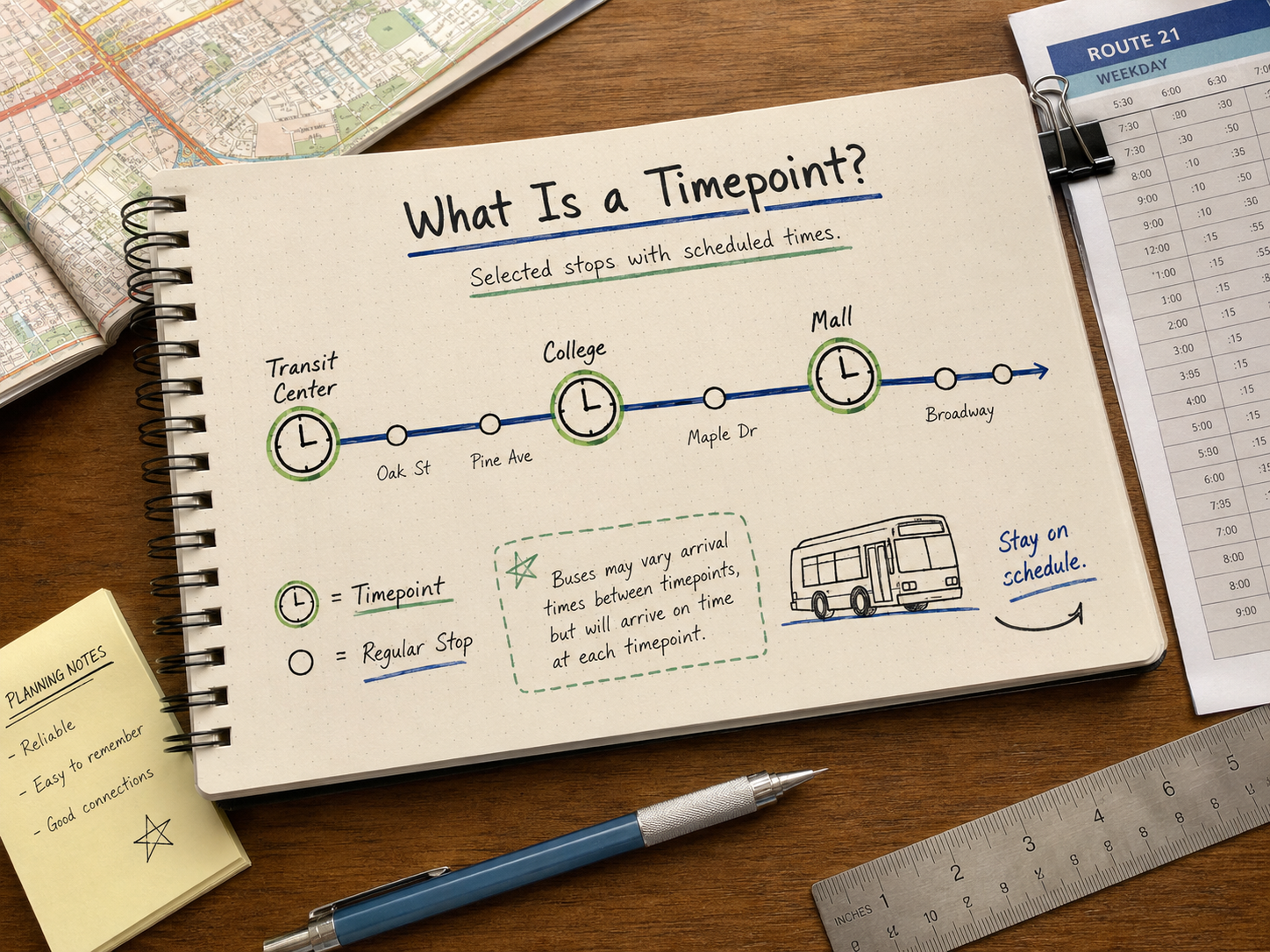
What Is a Timepoint - and Why Doesn't Every Bus Stop Have a Scheduled Time?
A bus may serve dozens of stops while the public timetable shows scheduled times at only a handful of locations. Those locations are timepoints, and they provide the structure that keeps a route understandable to passengers and manageable for operators.
Read Article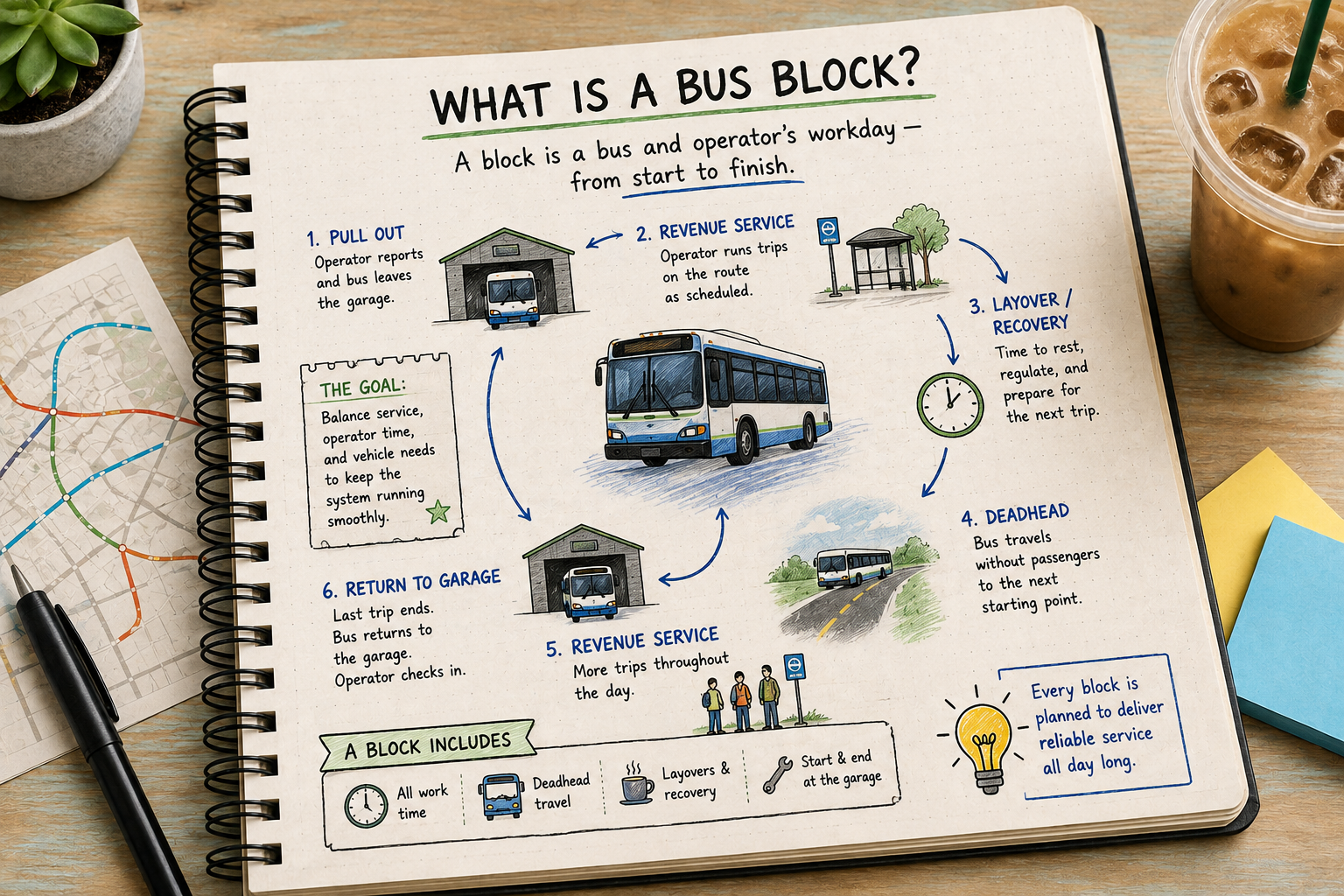
Scheduling Explained4 min read
What Is a Bus Block?
Passengers see routes and trips, but planners must also determine what each bus does throughout the day. A block connects individual trips, deadhead movements, layovers, and vehicle requirements into one continuous operating assignment.
Read Article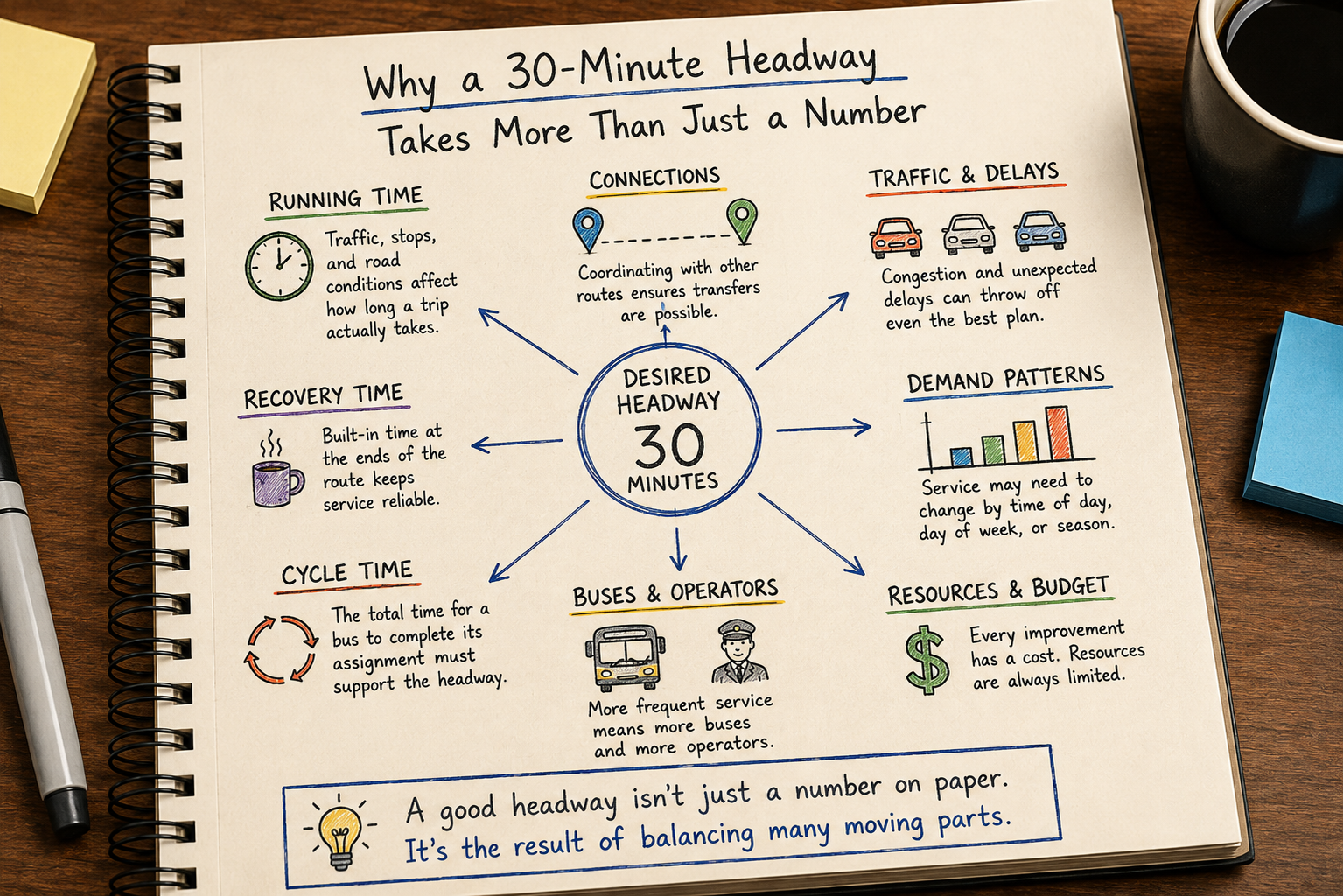
Scheduling Explained5 min read
Headways: Why “Every 30 Minutes” Is More Complicated Than It Sounds
A route that operates every 30 minutes may sound simple, but maintaining that frequency depends on running time, recovery, available buses, connections, and the overall cycle time of the route.
Read Article