Recovery Time: Why Buses Sometimes Wait at the End of the Route
Why a few scheduled minutes at the terminal can protect an entire day of service
By Craig5 min read
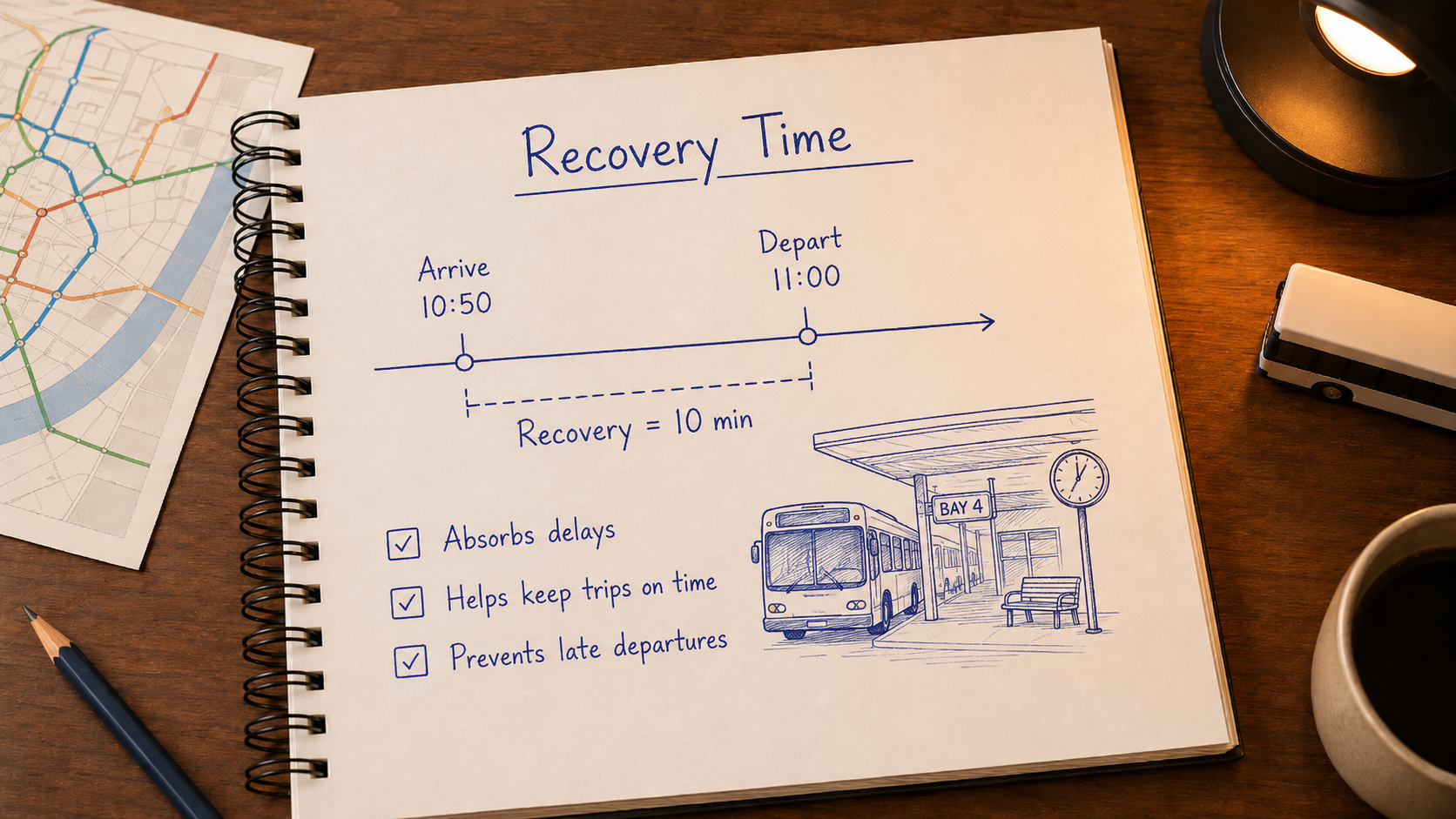
A passenger arrives at a transit center and sees a bus sitting with its doors closed. The operator appears ready, the bus is running, and the departure time is still several minutes away.
A natural question follows:
Why is the bus just sitting there?
The answer is often recovery time, one of the most important and least understood parts of a reliable transit schedule.
What Is Recovery Time?
Recovery time is scheduled time placed between trips so a late bus has an opportunity to return to its published schedule.
Consider a bus that is scheduled to arrive at a transit center at 10:50 and begin its next trip at 11:00.
Those ten minutes serve several purposes. They may allow the operator to:
- Recover from a late arrival
- Prepare for the next trip
- Change the destination sign
- Check the bus
- Use the restroom
- Board passengers safely
- Depart at the scheduled time
When the bus arrives on time, passengers see it waiting. When the bus arrives late, some or all of that waiting time disappears.
That is exactly what recovery time is intended to do.
Why Not Schedule the Bus to Leave Immediately?
Without recovery time, a delay on one trip becomes a delay on every later trip.
Suppose a bus is scheduled to arrive at 10:50 and depart again at 10:50. If it arrives eight minutes late, the next trip begins eight minutes late.
If that trip encounters another five minutes of delay, the following trip may begin 13 minutes late. By the afternoon, the bus may be operating far behind schedule.
Recovery time creates a buffer between trips.
It does not eliminate every delay, but it helps prevent ordinary delays from spreading through the entire service day.
What Causes Buses to Fall Behind?
Many delays are outside the direct control of the operator.
Common causes include:
- Traffic congestion
- Road construction
- Collisions
- Long traffic signals
- Railroad crossings
- Heavy passenger loads
- Mobility-device boardings
- Detours
- Weather
- Special events
- Unusually slow boarding
- Blocked bus stops
A schedule cannot predict the exact delay on every trip. It can, however, include a reasonable allowance for the delays that regularly occur.
The challenge is determining how much recovery is appropriate.
Recovery Is Not the Same as Running Time
Running time is the time scheduled for the bus to travel between points while carrying passengers.
Recovery is the time provided after the trip.
If a bus is regularly arriving late, the problem may be inadequate running time rather than inadequate recovery.
Adding recovery at the end can help the following trip leave on time, but it does not correct an unrealistic public timetable. Passengers along the route will still experience a late bus.
A good schedule needs both:
- Realistic running time during the trip
- Adequate recovery between trips
Using recovery to hide insufficient running time is not a lasting solution.
Layover and Recovery
The terms layover and recovery are sometimes used interchangeably, but they describe slightly different ideas.
A layover is the period when the bus is waiting between assignments. Recovery is the portion intended to absorb schedule variation and restore on-time service.
In practice, the same period may perform both functions.
For example, a scheduled 12-minute terminal period may provide recovery for the bus while also giving the operator a brief pause before the next departure.
Longer operator breaks and meal periods are generally handled separately through the operator scheduling and labor process.
Why the Bus Should Not Leave Early
When the bus arrives early at a terminal, passengers may wonder why the operator cannot simply begin the next trip.
The published departure time is a commitment to passengers.
Someone may be walking toward the stop expecting the bus to leave at 11:00. If it departs at 10:55, that passenger has missed a bus that technically left before it was supposed to arrive.
Early departures are especially harmful on routes with long headways. Missing a bus that operates every ten minutes is inconvenient. Missing one that operates every hour or every two hours can seriously disrupt a passenger's day.
A bus may arrive early, but it should not leave a published timepoint before its scheduled departure.
How Much Recovery Is Enough?
There is no universal number that works for every route.
Recovery should reflect:
- Route length
- Traffic variability
- Passenger demand
- Service frequency
- Terminal conditions
- Time of day
- Historical on-time performance
- Available space
- Connections with other routes
A short local route may need only a few minutes under normal conditions. A long intercity route may require more because it encounters a wider range of traffic and operating conditions.
Recovery may also vary throughout the day. More time may be needed during peak traffic periods than during the early morning.
Too Little Recovery
When recovery is insufficient, several problems can occur:
- Trips begin late
- Passengers miss connections
- Operators feel pressured
- Delays accumulate
- Meal and restroom opportunities are reduced
- Dispatch must intervene more frequently
- Service reliability declines
A timetable can look very efficient on paper because every minute is assigned to movement. In actual service, that type of schedule may be fragile.
Efficiency is not the same as reliability.
Too Much Recovery
Excessive recovery also has consequences.
It can:
- Increase the number of buses required
- Add operating cost
- Occupy transit-center bays
- Create long terminal waits
- Reduce productivity
- Make the service less attractive to through passengers
The objective is not to provide the largest possible cushion. It is to provide enough time for dependable operation without wasting resources.
Transit-Center Coordination
Recovery becomes especially complicated at busy transit centers.
Several buses may need to arrive, unload, wait, board, and depart from a limited number of bays.
A planner must consider not only how much recovery each route needs, but where the bus will physically wait.
A schedule that places several buses in the same bay at the same time cannot be solved simply by writing different route numbers on the timetable.
Terminal capacity is part of schedule design.
This article reflects the author's personal experience and general industry knowledge. Agency practices, labor agreements, laws, funding requirements, and operating conditions vary.
Related Articles
Scheduling Explained3 min read
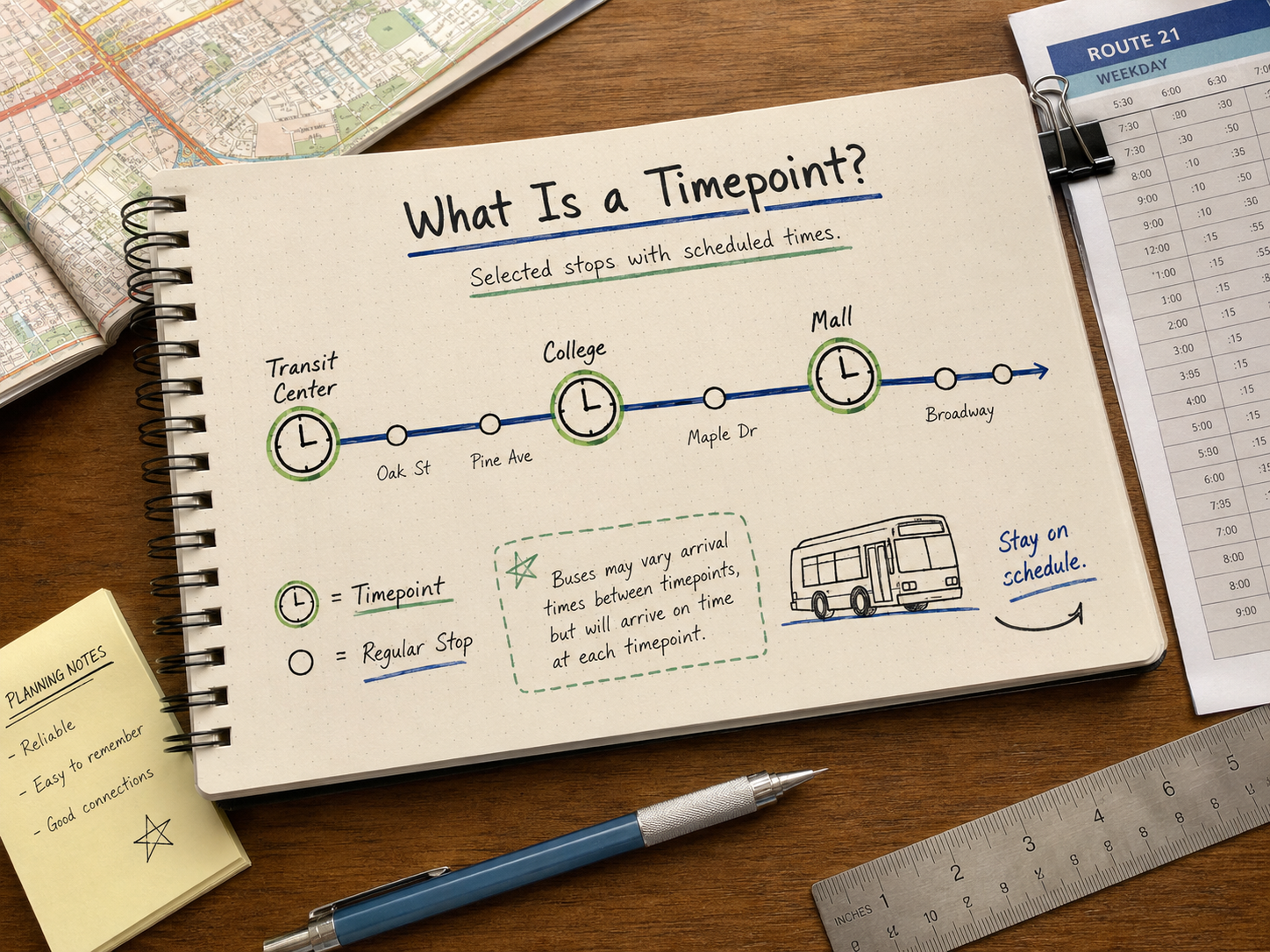
What Is a Timepoint - and Why Doesn't Every Bus Stop Have a Scheduled Time?
A bus may serve dozens of stops while the public timetable shows scheduled times at only a handful of locations. Those locations are timepoints, and they provide the structure that keeps a route understandable to passengers and manageable for operators.
Read Article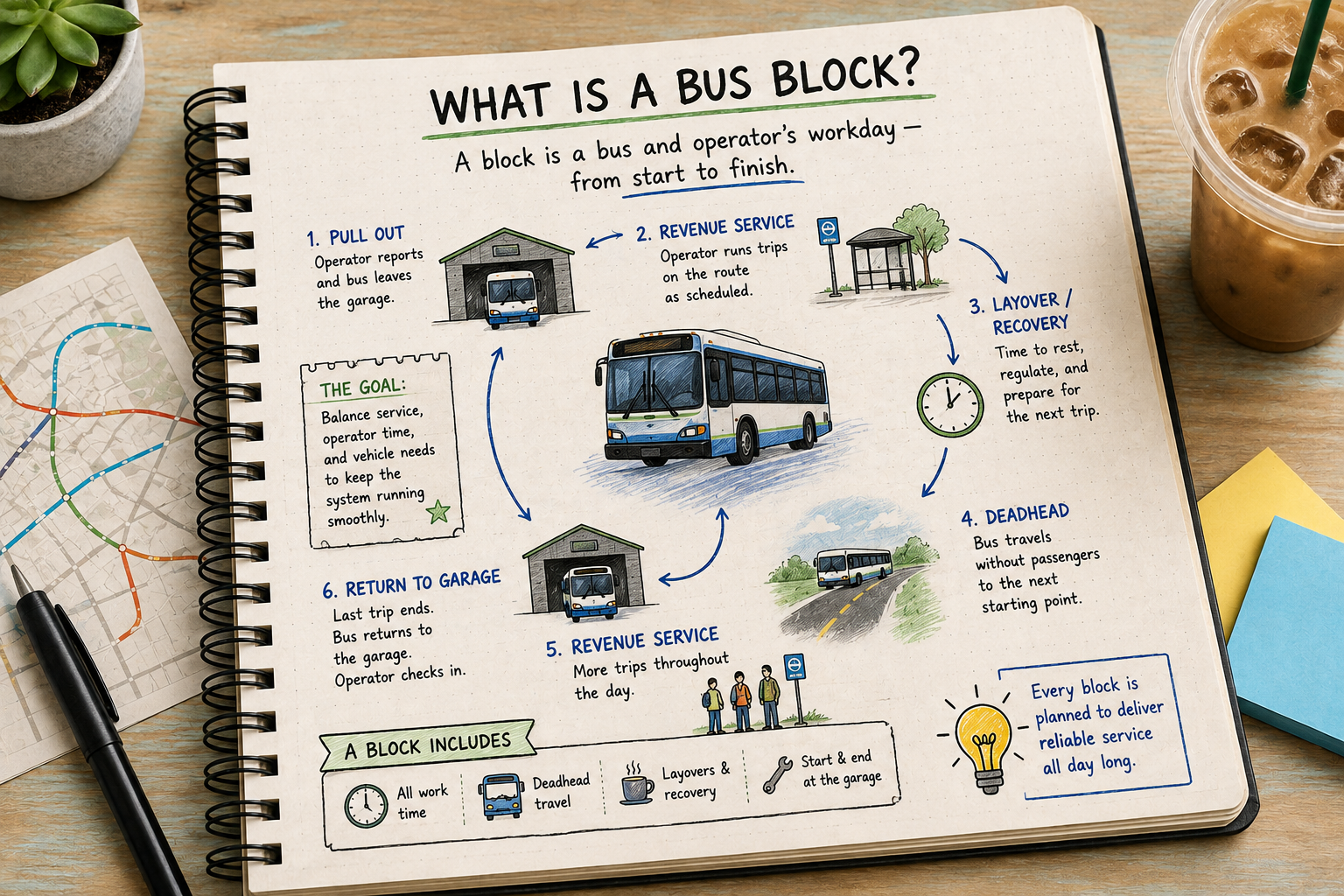
Scheduling Explained4 min read
What Is a Bus Block?
Passengers see routes and trips, but planners must also determine what each bus does throughout the day. A block connects individual trips, deadhead movements, layovers, and vehicle requirements into one continuous operating assignment.
Read Article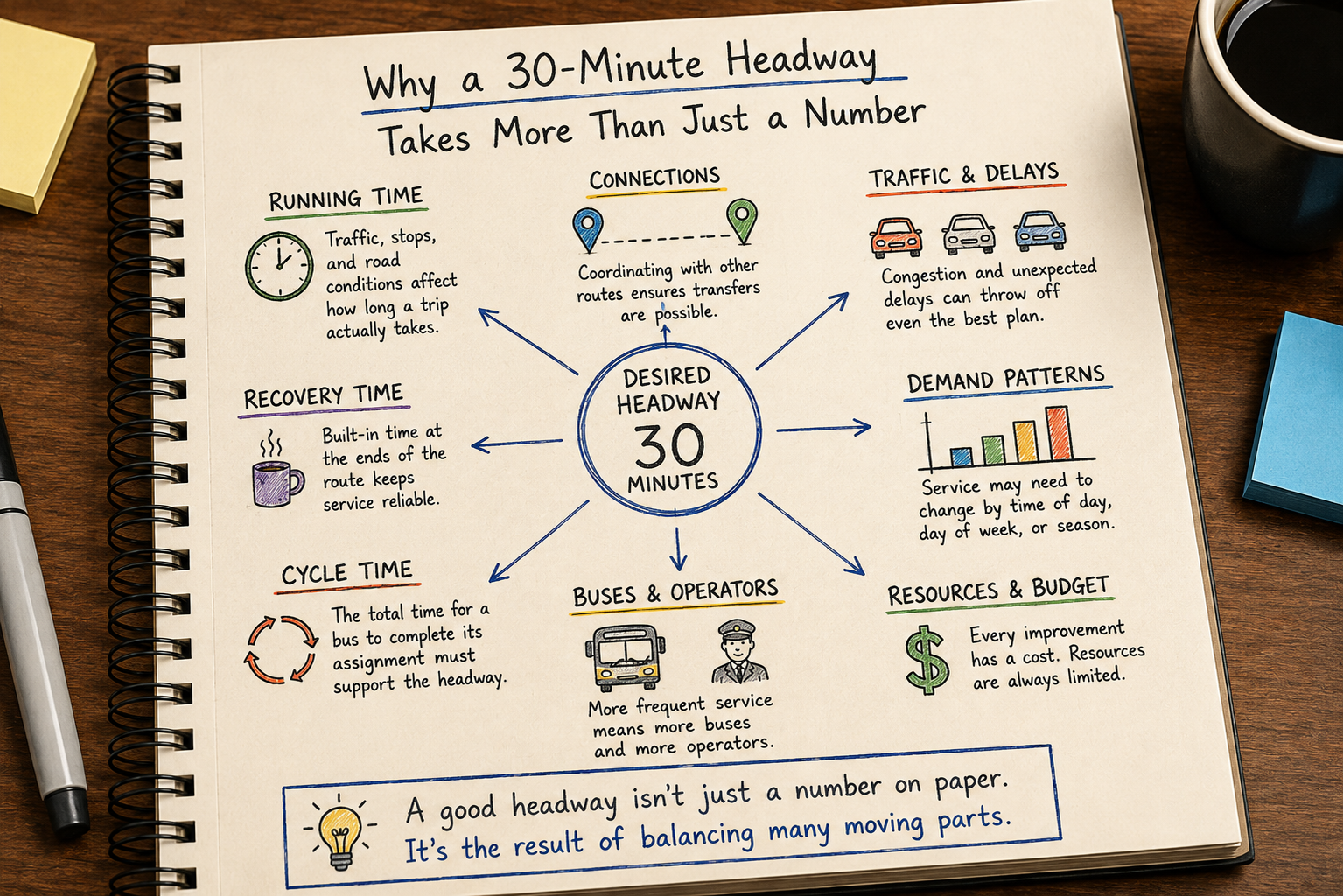
Scheduling Explained5 min read
Headways: Why “Every 30 Minutes” Is More Complicated Than It Sounds
A route that operates every 30 minutes may sound simple, but maintaining that frequency depends on running time, recovery, available buses, connections, and the overall cycle time of the route.
Read Article