A Transit Planner's Notebook — Explaining Public Transit Planning
Explaining how public transit is planned, scheduled, and operated.
Public transit is more than buses, stops, and timetables. Behind every trip is a network of planning decisions involving routes, schedules, vehicles, operators, passengers, funding, and real-world operating conditions. This site explains how those pieces fit together.
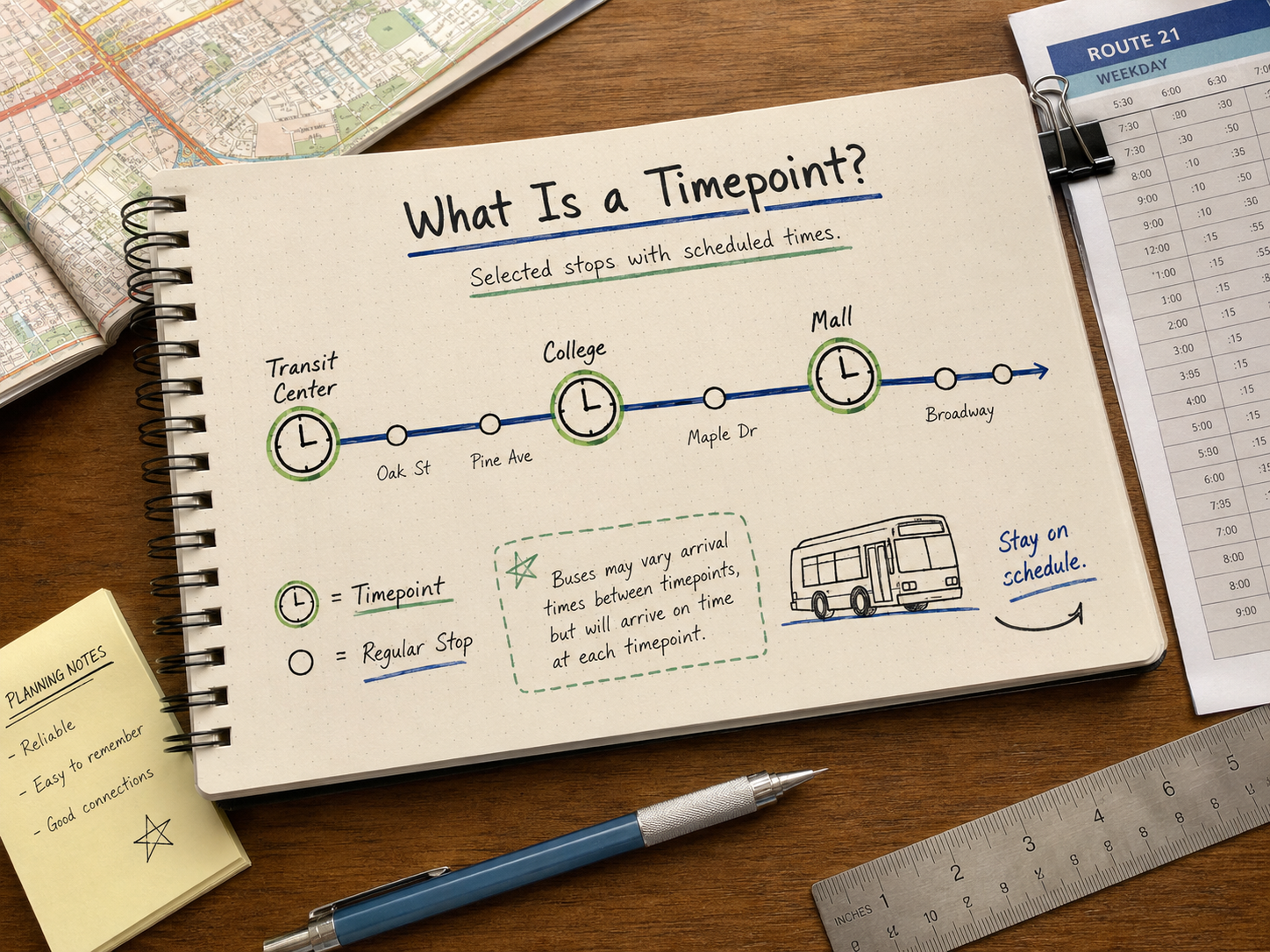
A bus may serve dozens of stops while the public timetable shows scheduled times at only a handful of locations. Those locations are timepoints, and they provide the structure that keeps a route understandable to passengers and manageable for operators.
A bus may serve dozens of stops while the public timetable shows scheduled times at only a handful of locations. Those locations are timepoints, and they provide the structure that keeps a route understandable to passengers and manageable for operators.
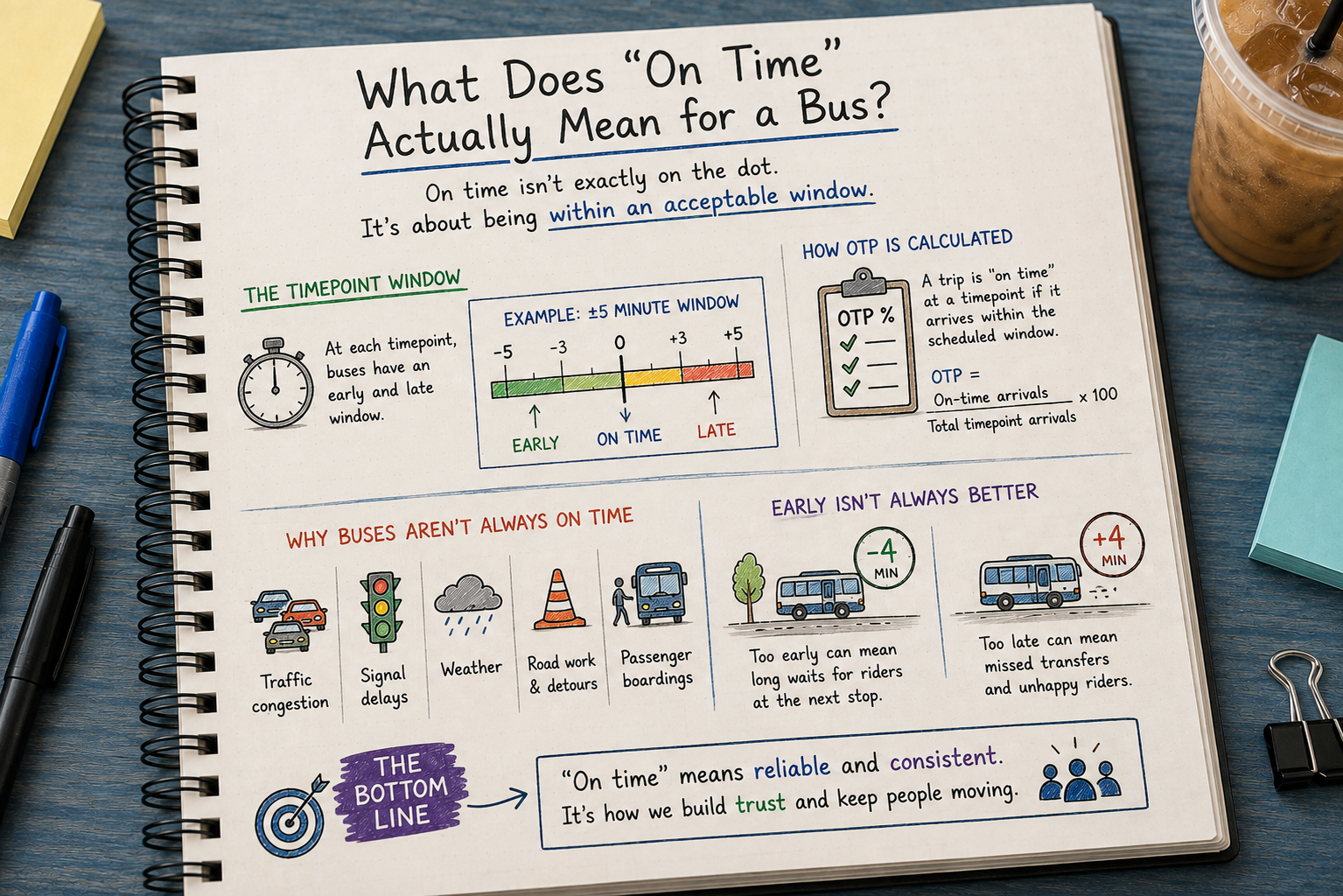
On-time performance is one of transit’s most important service measures, but “on time” does not always mean arriving at the exact scheduled minute. Understanding early departures, late arrivals, timepoints, and schedule adherence helps explain what the numbers really measure.
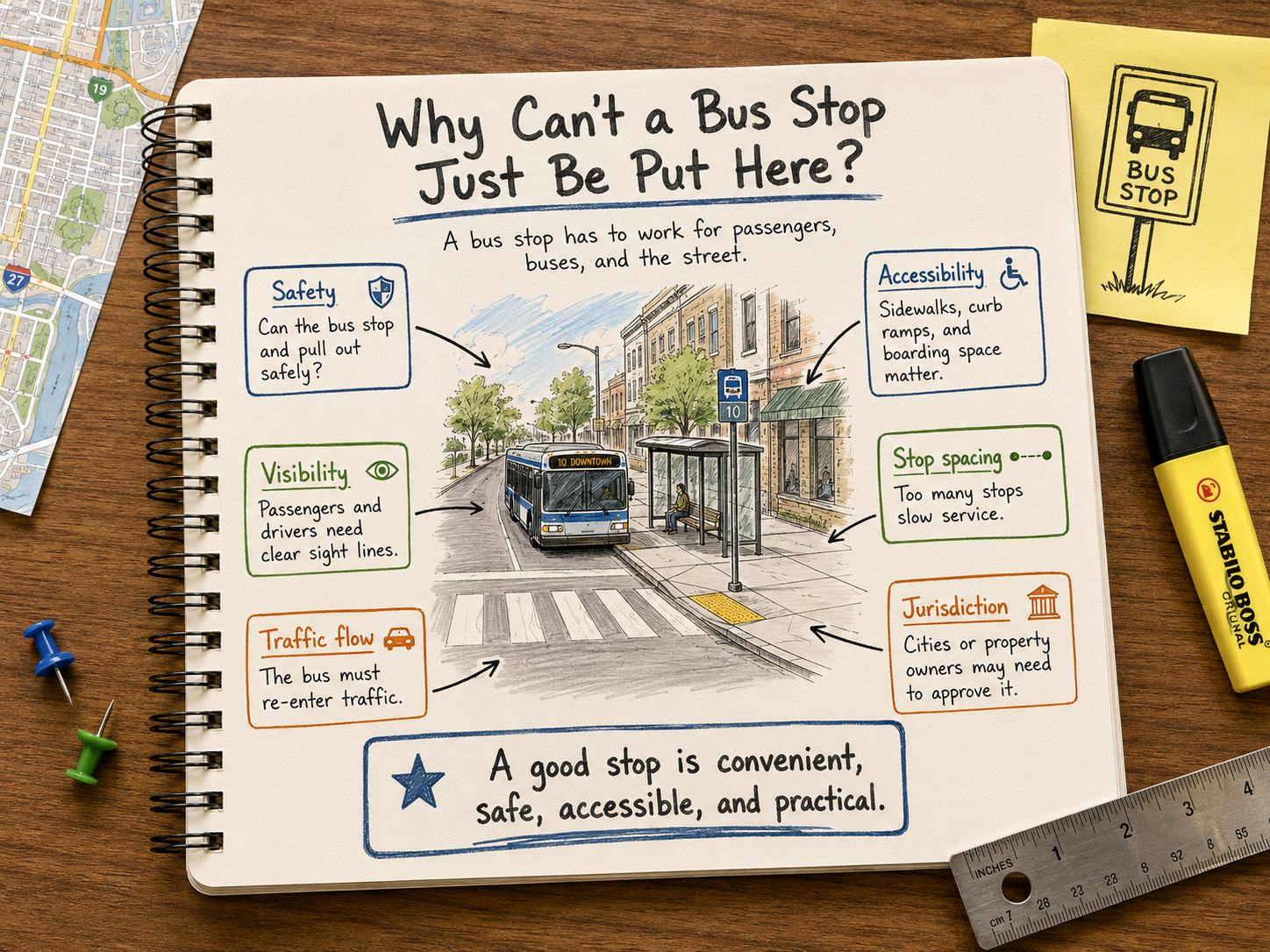
A convenient location is not automatically a suitable bus stop. Planners must consider pedestrian access, roadway conditions, accessibility, spacing, visibility, jurisdictional approval, and how safely a bus can enter and leave the stop.
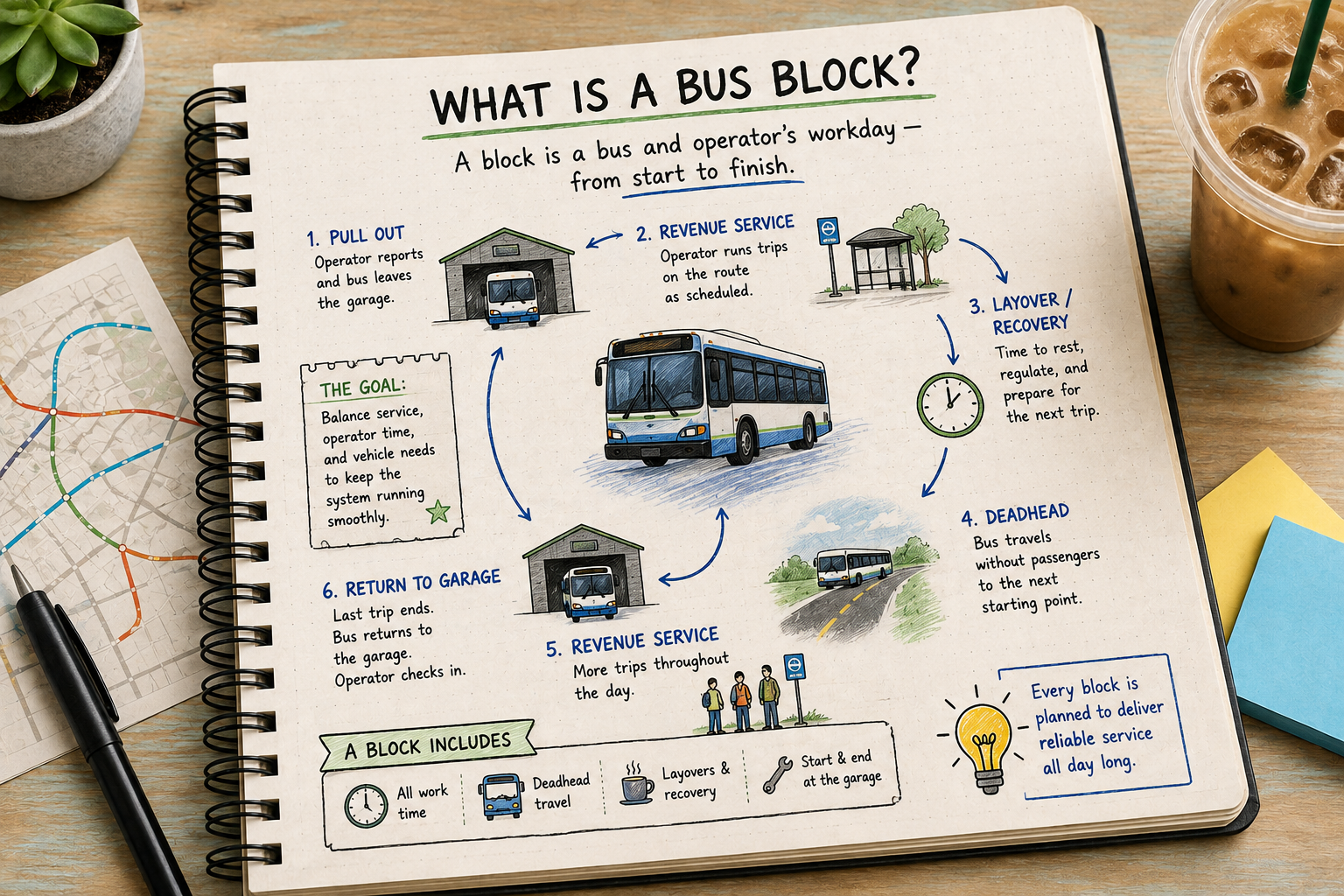
Passengers see routes and trips, but planners must also
determine what each bus does throughout the day. A block connects
individual trips, deadhead movements, layovers, and vehicle requirements
into one continuous operating assignment.
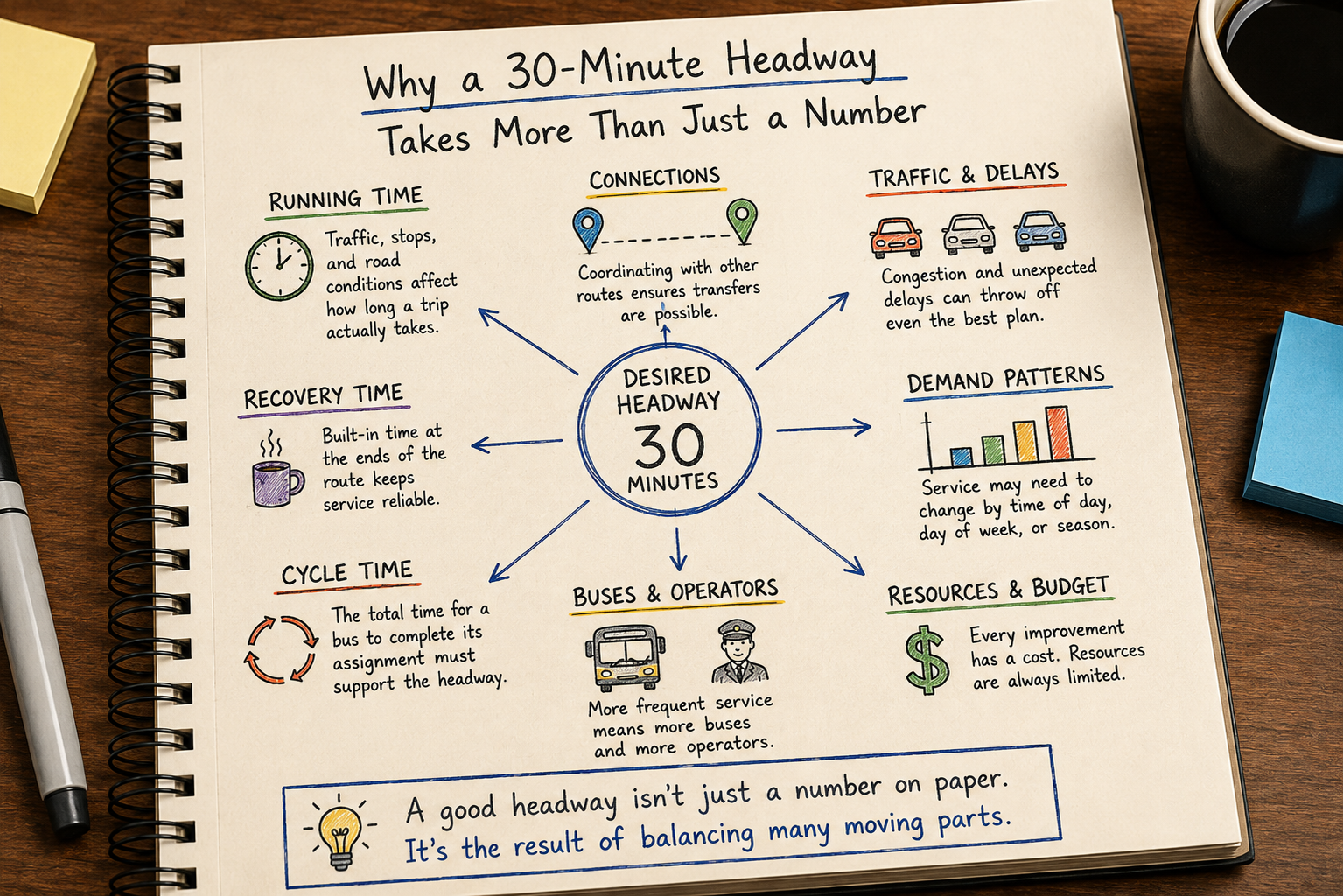
A route that operates every 30 minutes may sound simple, but maintaining that frequency depends on running time, recovery, available buses, connections, and the overall cycle time of the route.
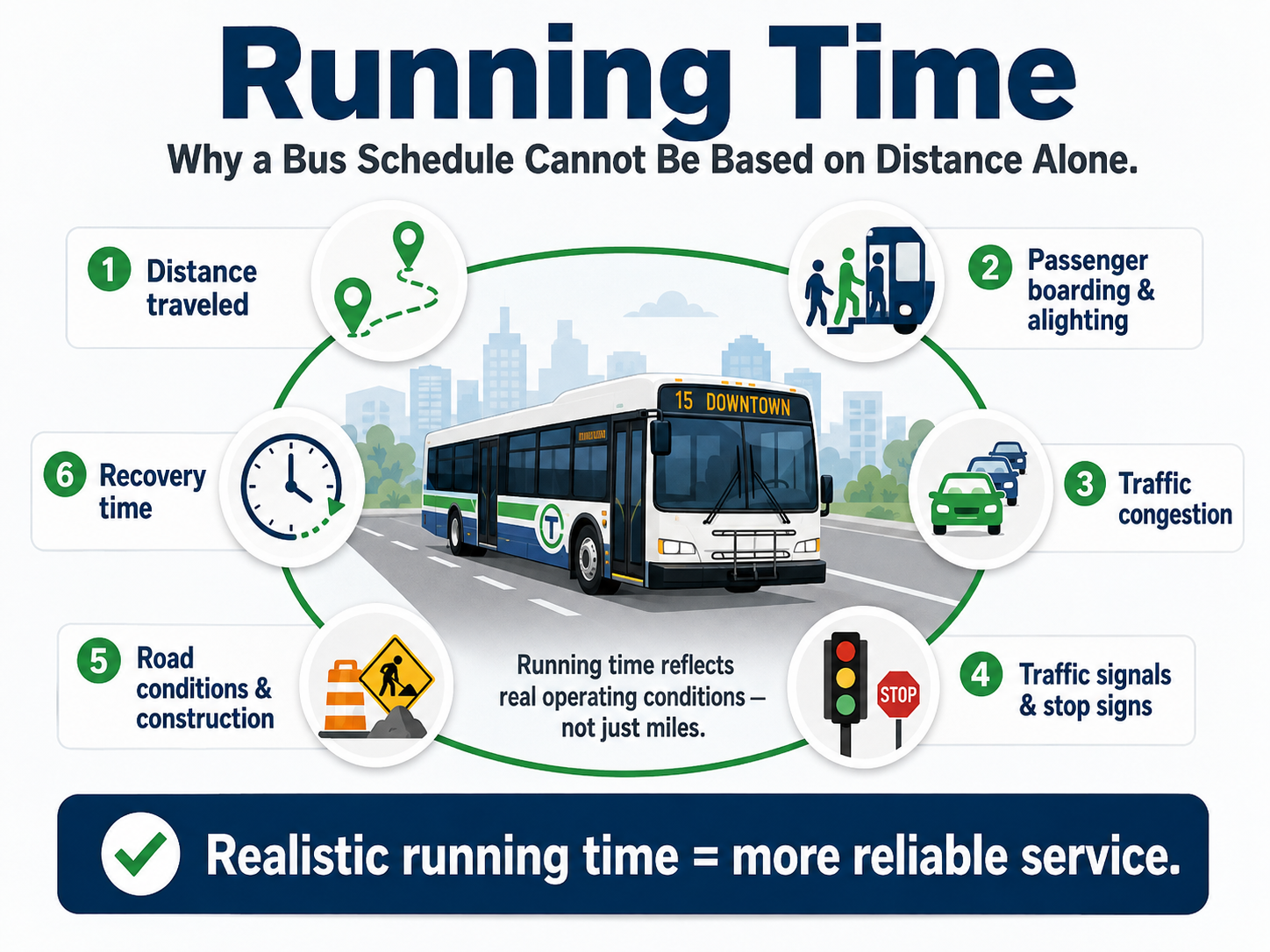
Excerpt: Two trips covering the same route and the same distance may need very different schedules. Running time reflects traffic, passenger activity, stop spacing, road conditions, and time of day—not simply how many miles the bus travels.
A Transit Planner’s Notebook provides practical explanations of how bus routes, schedules, blocks, recovery time, vehicle assignments, stops, and transit operations work. It also explores destination signs, transit technology, historical documents, and lessons learned from years of working in public transportation.