What Is Interlining? When One Bus Becomes Another Route
How transit agencies connect different routes to use buses efficiently - and why delays can travel with them
By Craig2 min read
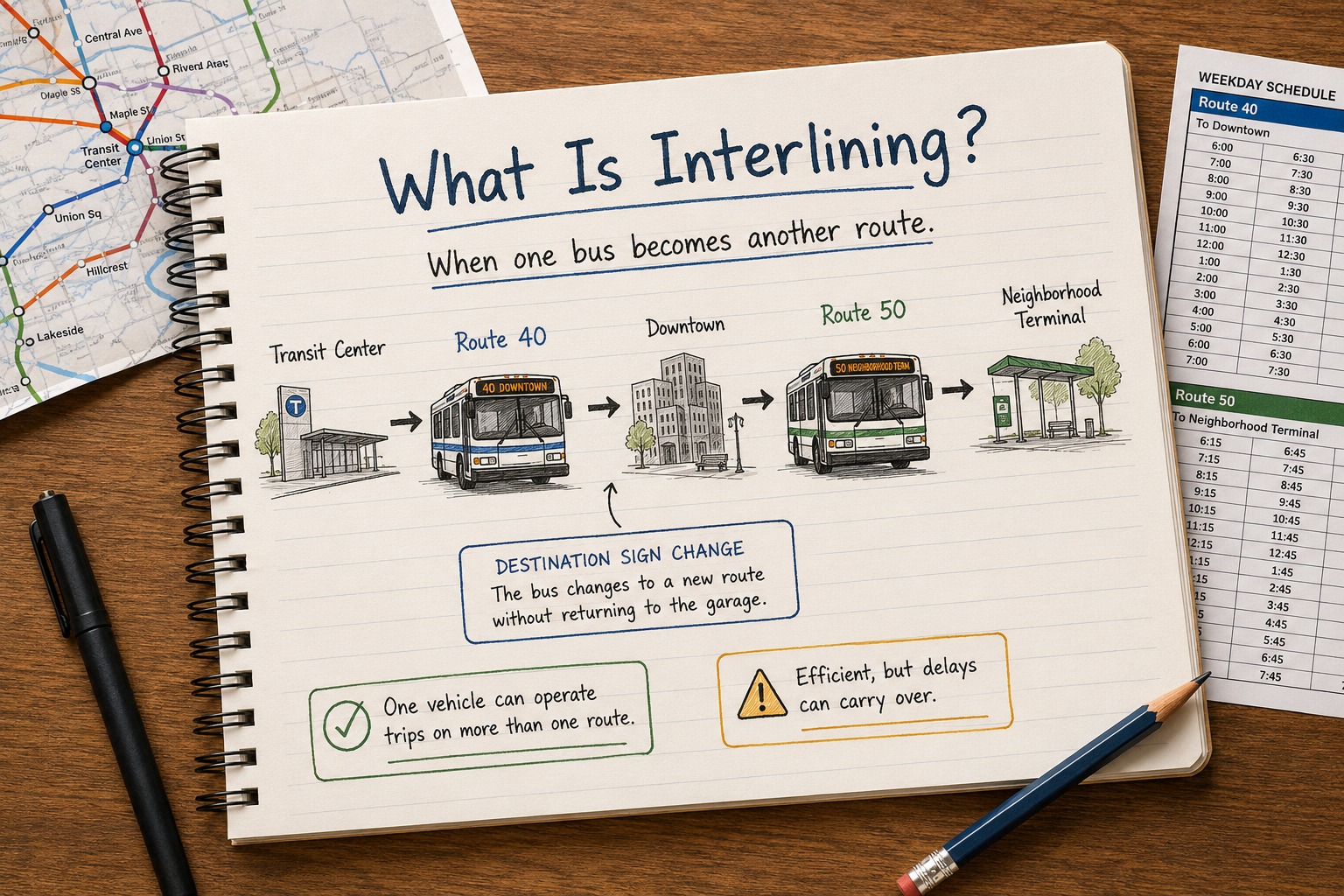
A passenger reaches the end of a route and notices that the destination sign changes.
The bus that was Route 40 is now Route 50.
It may even continue with some of the same passengers aboard.
This is an example of interlining.
What Is Interlining?
Interlining occurs when the same vehicle operates trips on more than one route as part of the same block.
For example:
- Route 40 outbound
- Route 40 inbound
- Route 50 outbound
- Route 50 inbound
The bus does not necessarily return to the garage between routes.
Why Interline?
One reason is efficiency.
Demand is rarely identical on every route throughout the day.
A bus may be needed on one route during the morning but better used somewhere else later.
Interlining can help an agency:
- Reduce unnecessary idle time
- Reduce deadhead
- Use vehicles more efficiently
- Create through-service opportunities
- Match resources to changing demand
Through-Riding
Sometimes interlining allows passengers to stay on the same bus while the route number changes.
This can provide a convenient one-seat ride.
However, it must be clearly communicated.
A passenger should not have to guess whether the bus continues or whether everyone must get off.
Destination signs, announcements, timetables, and operator instructions all need to agree.
Delays Can Spread
Interlining has a major disadvantage.
Suppose Route A regularly encounters afternoon congestion.
If the same bus becomes Route B immediately afterward, Route B may begin late.
The passengers on Route B may have no idea that their delay began several miles away on a completely different route.
This is called delay propagation.
Recovery Becomes Important
Proper recovery between interlined trips can reduce that problem.
If the block provides enough time between assignments, a slightly late Route A trip may still allow Route B to begin on time.
If the connection is too tight, the two routes become operationally dependent on one another.
Not Every Pair of Routes Is a Good Match
Successful interlining generally requires compatible:
- Locations
- Running times
- Vehicle requirements
- Passenger demand
- Terminals
- Schedules
Two routes may look convenient to combine but create operational problems when examined in detail.
Destination Signs Matter
Interlining also highlights the importance of destination signs.
At the end of one trip, the display may need to change to:
- A different route number
- A different destination
- A special or short-turn reading
If the wrong sign is displayed, passengers may board the wrong service or avoid a bus they could have used.
Tags
This article reflects the author's personal experience and general industry knowledge. Agency practices, labor agreements, laws, funding requirements, and operating conditions vary.
Related Articles
Scheduling Explained3 min read
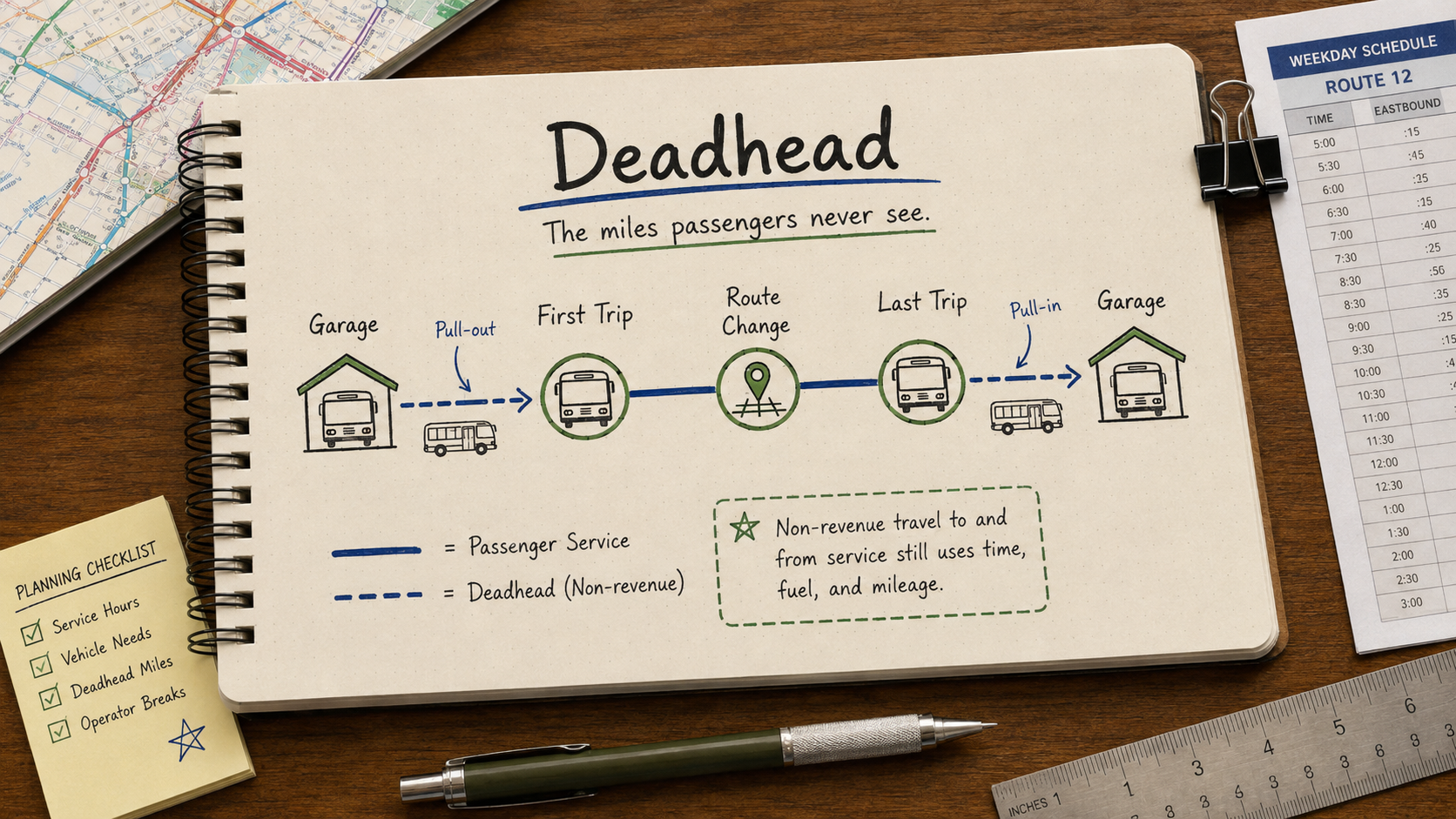
Deadhead: The Miles Passengers Never See
Not every mile a transit bus travels carries passengers. Deadhead movements connect garages, routes, terminals, and assignments, and although they never appear in the public timetable, they consume time, mileage, fuel, electricity, and operating resources.
Read Article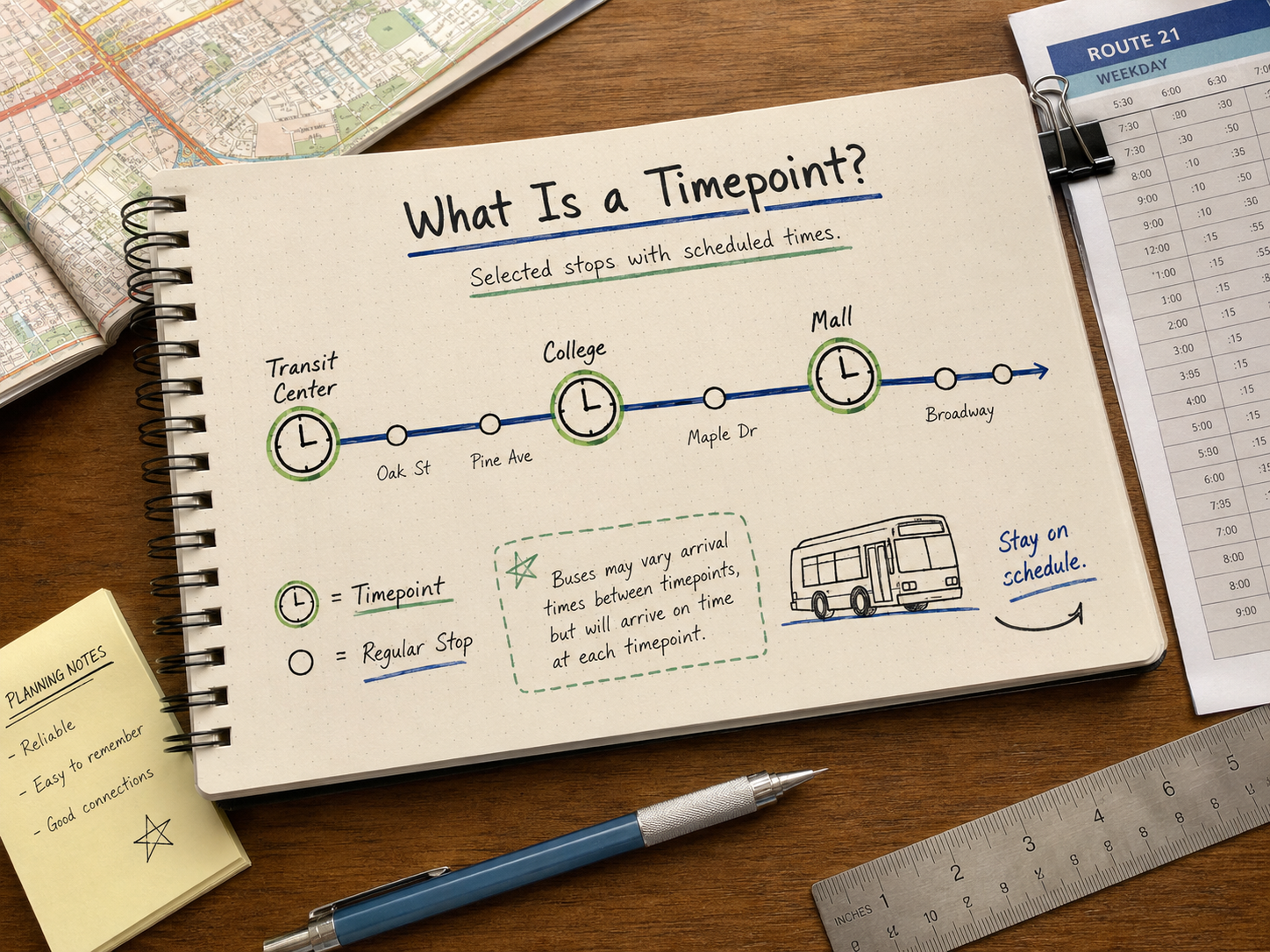
Scheduling Explained3 min read
What Is a Timepoint - and Why Doesn't Every Bus Stop Have a Scheduled Time?
A bus may serve dozens of stops while the public timetable shows scheduled times at only a handful of locations. Those locations are timepoints, and they provide the structure that keeps a route understandable to passengers and manageable for operators.
Read Article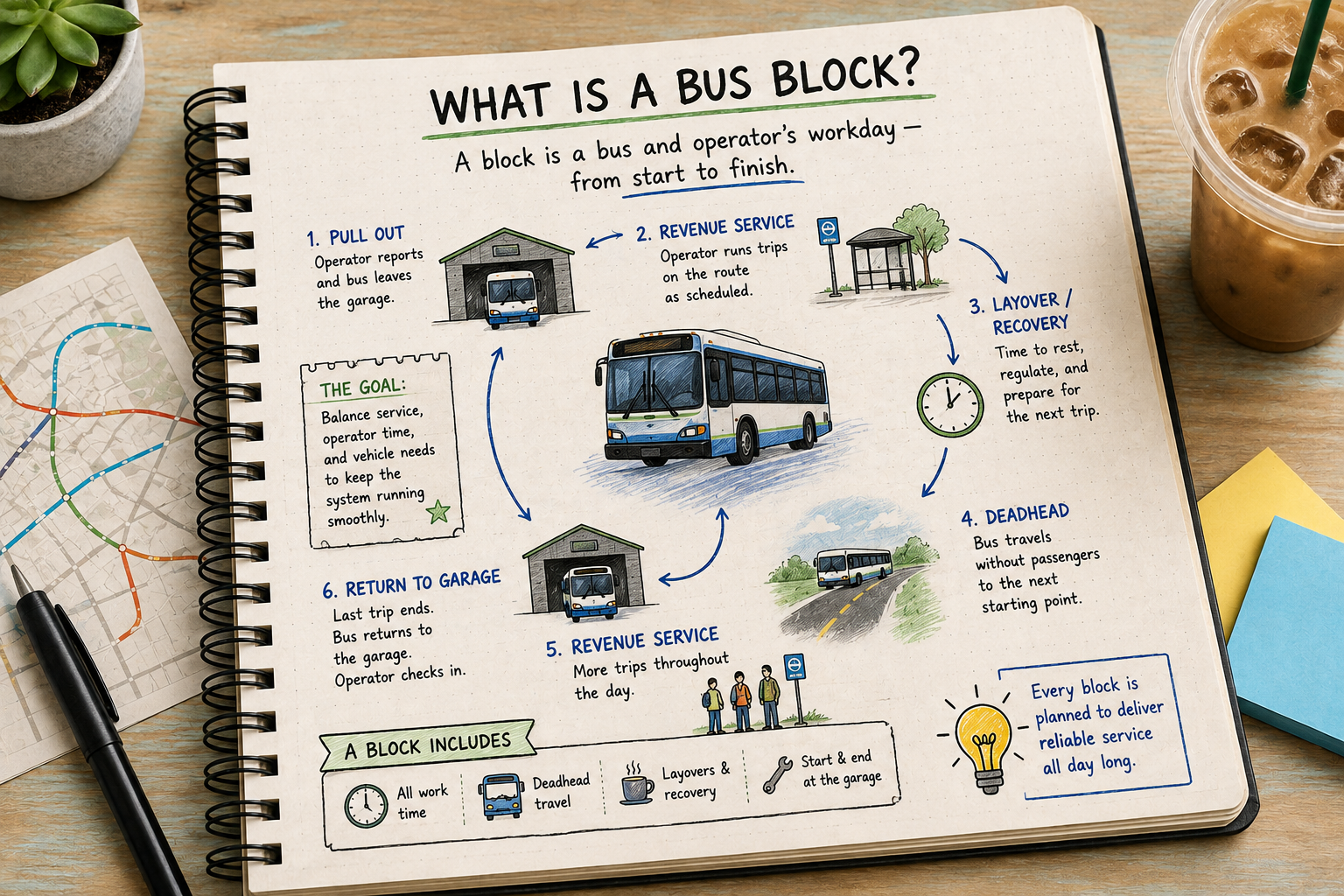
Scheduling Explained4 min read
What Is a Bus Block?
Passengers see routes and trips, but planners must also determine what each bus does throughout the day. A block connects individual trips, deadhead movements, layovers, and vehicle requirements into one continuous operating assignment.
Read Article