Why Bus Schedules Change Throughout the Day
How traffic, passenger demand, schools, employment patterns, and road conditions create different schedules for different times
By Craig2 min read
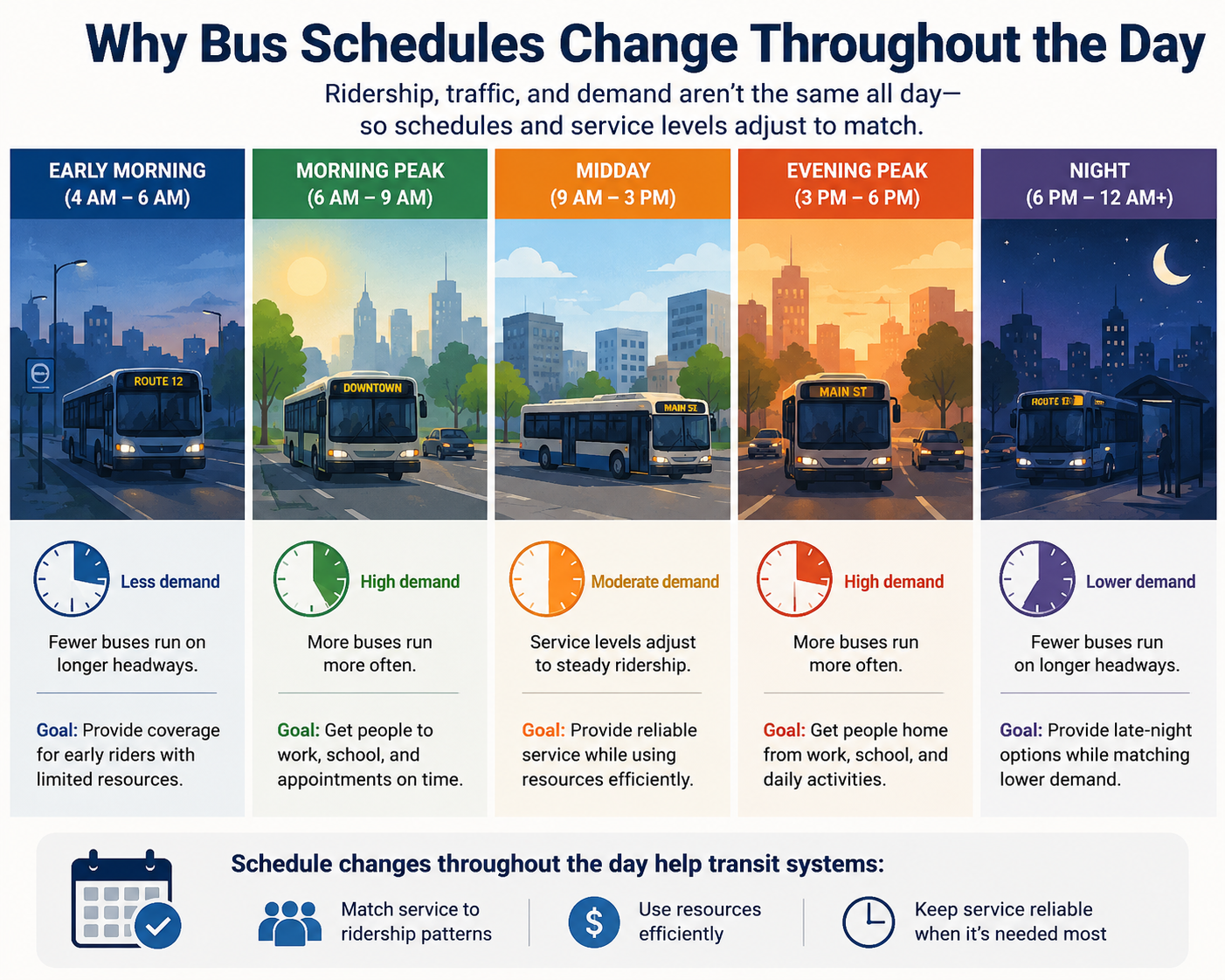
Passengers sometimes notice that the same trip takes 42 minutes in the morning and 50 minutes in the afternoon.
Why not use one travel time all day?
Because the street does not operate the same way all day.
The Morning Is Not the Afternoon
Early-morning service may encounter:
- Light traffic
- Fewer passengers
- Shorter traffic-signal delays
Afternoon service may encounter:
- School traffic
- Commute traffic
- Heavy shopping activity
- Longer intersection delays
- More passenger boardings
Using the same running time for both periods may produce an unrealistic afternoon schedule.
Timebands
Schedulers often divide the service day into periods or timebands.
Each timeband can receive different running times based on actual operating conditions.
A route might use:
- Early-morning running time
- Midday running time
- Afternoon-peak running time
- Evening running time
The exact structure varies by agency.
Passenger Demand Changes Too
Traffic is not the only variable.
Passenger activity may increase around:
- School dismissal
- Work shift changes
- Medical appointment periods
- Shopping periods
- Major events
More passengers generally mean more dwell time at stops.
That additional dwell becomes part of the running-time requirement.
School Days Can Be Different
A route serving a high school may behave very differently when school is in session.
One large boarding can add several minutes.
Traffic surrounding the school can add more.
That is one reason agencies may create special school trippers or adjust selected trips rather than changing the entire route.
A Timetable Does Not Have to Be Perfectly Symmetrical
Passengers sometimes expect every trip to have identical spacing.
That is aesthetically appealing.
Operationally, it may not be best.
A carefully designed schedule can have slightly different running times while still remaining understandable.
Reliability should take priority over making every timetable column look identical.
Data Helps Identify the Differences
Automated operating data makes these patterns easier to see.
A planner may discover that a segment:
- Works well before 9:00
- Begins losing three minutes after noon
- Requires five additional minutes during the afternoon peak
The timetable can then reflect those differences.
Tags
This article reflects the author's personal experience and general industry knowledge. Agency practices, labor agreements, laws, funding requirements, and operating conditions vary.
Related Articles
Scheduling Explained2 min read
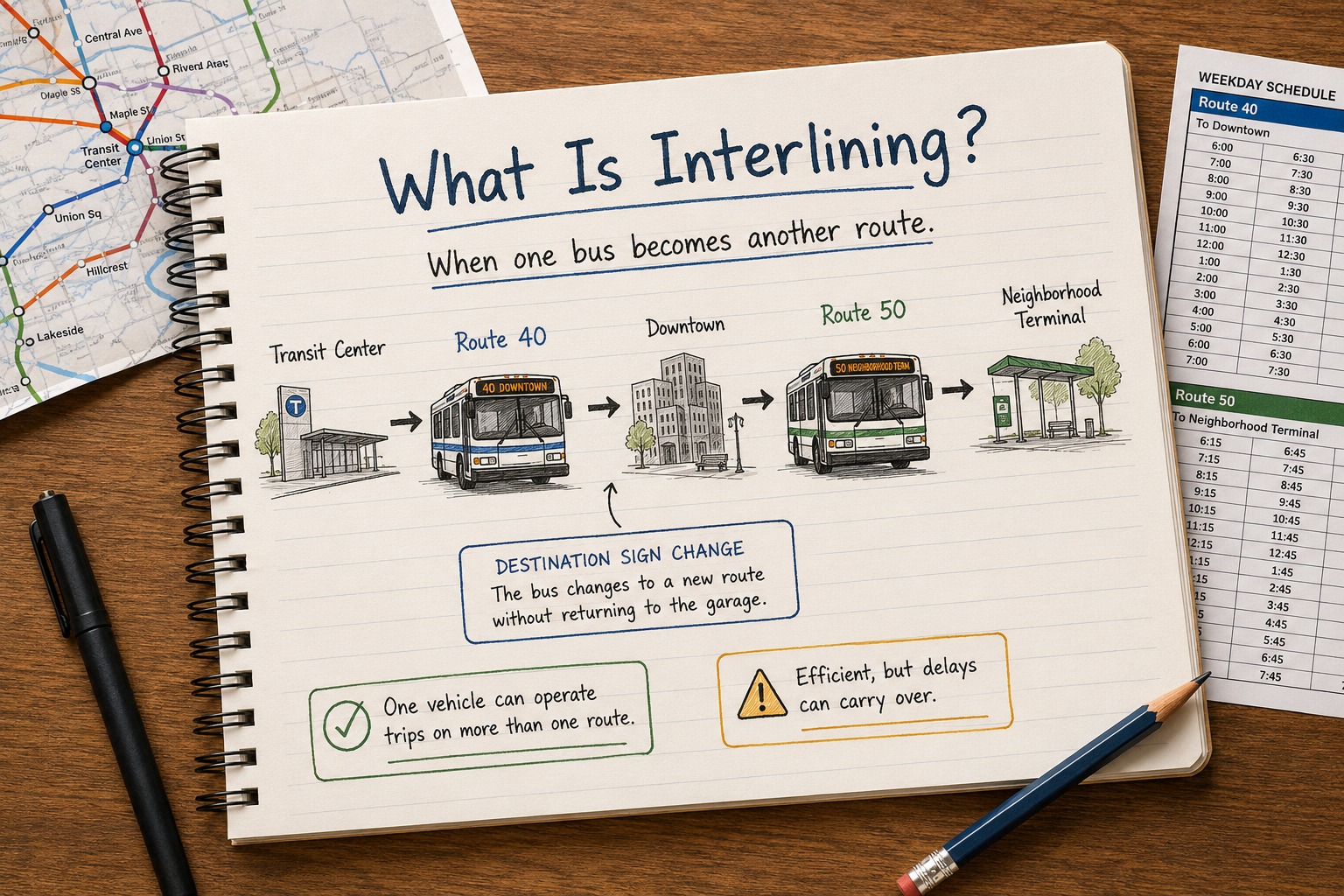
What Is Interlining? When One Bus Becomes Another Route
A bus displaying Route 40 may later become Route 50 without returning to the garage. This practice, known as interlining, can improve vehicle efficiency and passenger connections, but it can also allow delays on one route to affect another.
Read Article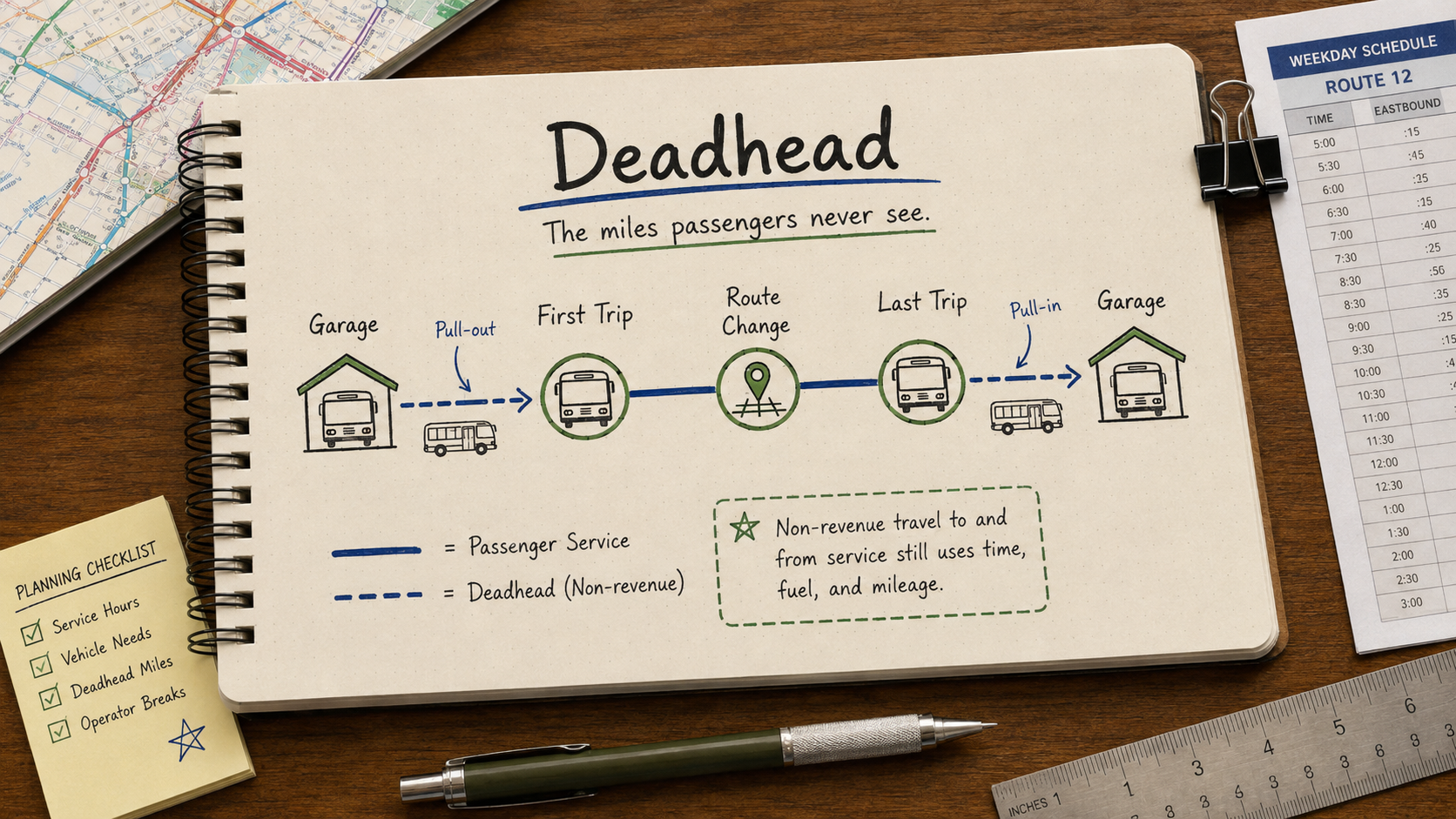
Scheduling Explained3 min read
Deadhead: The Miles Passengers Never See
Not every mile a transit bus travels carries passengers. Deadhead movements connect garages, routes, terminals, and assignments, and although they never appear in the public timetable, they consume time, mileage, fuel, electricity, and operating resources.
Read Article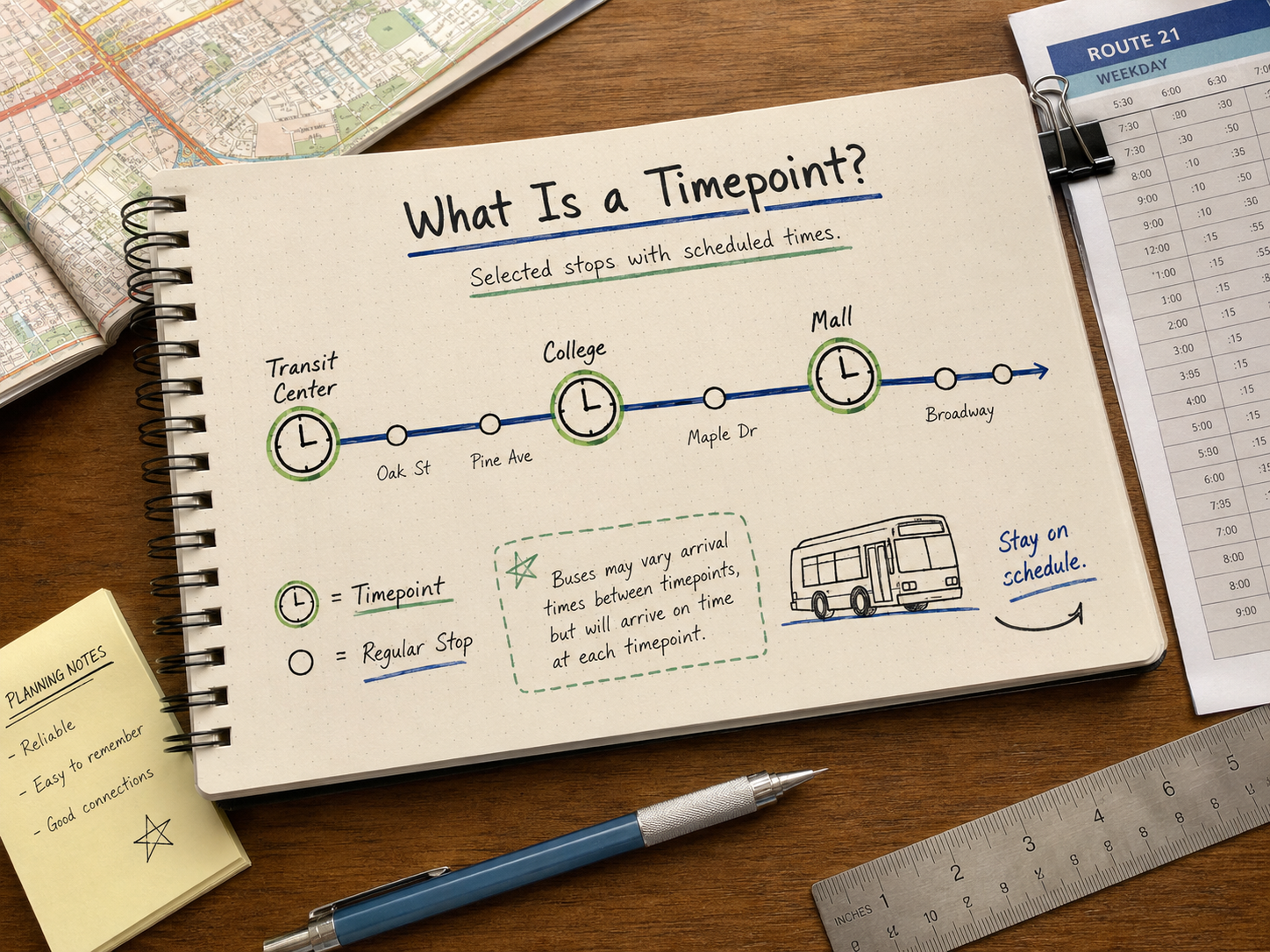
Scheduling Explained3 min read
What Is a Timepoint - and Why Doesn't Every Bus Stop Have a Scheduled Time?
A bus may serve dozens of stops while the public timetable shows scheduled times at only a handful of locations. Those locations are timepoints, and they provide the structure that keeps a route understandable to passengers and manageable for operators.
Read Article