What Makes a Bus Transfer Work?
Why a connection needs time to leave one bus and reach the next
By Craig3 min read
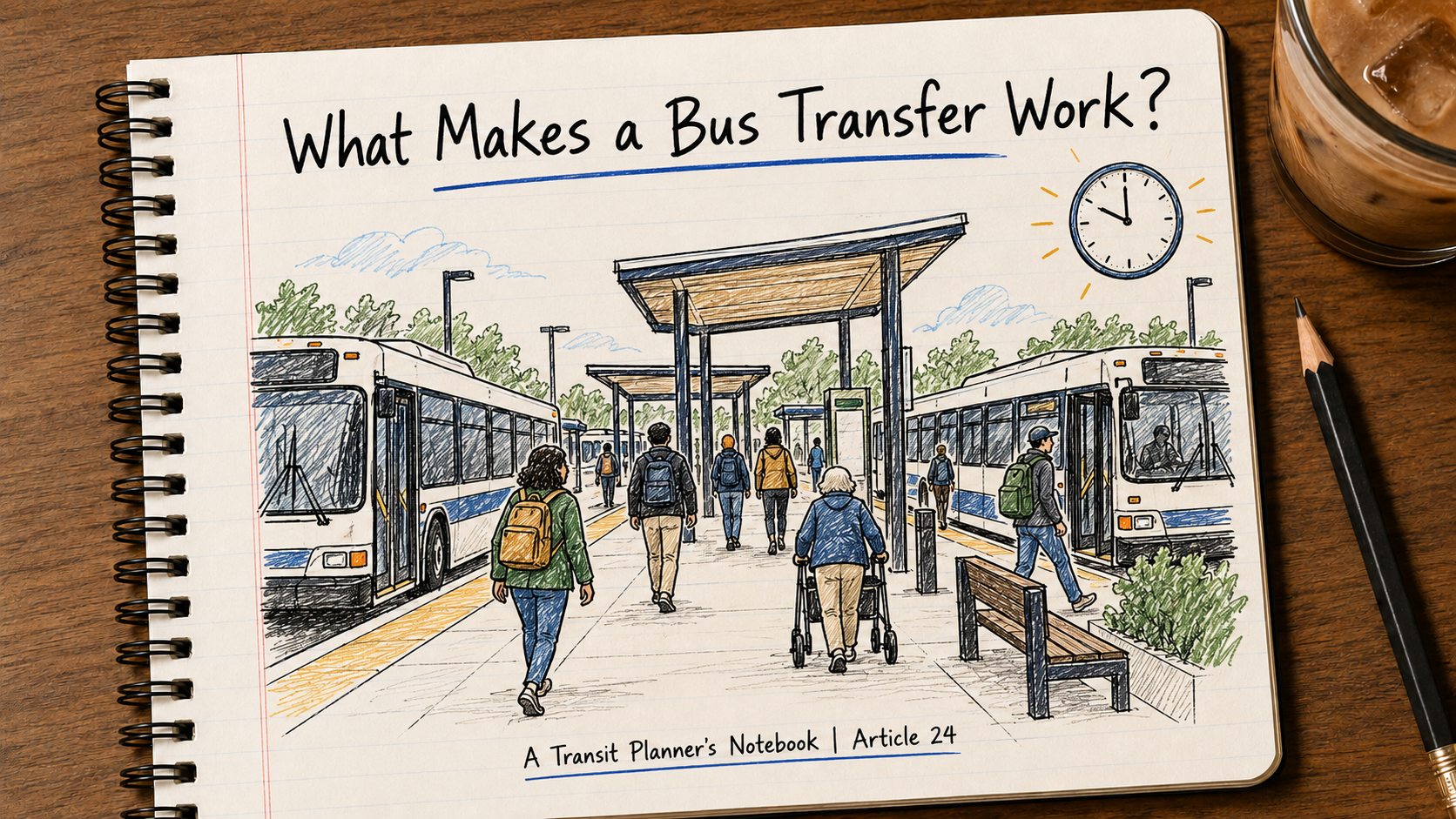
The first bus arrives on time. The connecting bus departs on time. A passenger still misses the connection.
That can happen when a timetable leaves too little time to get off one vehicle and reach the next.
A transfer is part of a passenger's journey. Making it work requires attention to the movement between buses as well as the schedules of the buses themselves.
Arrival Is the Beginning of the Transfer
When a bus reaches a transit center, its passengers are not instantly ready to board another bus.
They may need to wait for the doors to open, move through the aisle, collect belongings, and step or roll onto the platform. Then they must find the connecting boarding location and reach it.
The path may include a crossing, a ramp, another platform, or a walk around the building. Crowding and unfamiliar surroundings can add time.
A connection should be designed around that actual movement, with consideration for riders who walk at different speeds or use mobility devices.
Two Minutes on Paper
Consider a hypothetical bus scheduled to arrive at 10:00. The connecting route departs from another bay at 10:02.
The timetable provides two minutes. Whether that is enough depends on the location and the passenger's movement through it.
If reaching the next bus requires several minutes under ordinary conditions, the connection is already impractical before any traffic delay occurs.
The appropriate allowance varies by location. Two adjacent bays can present a different situation from stops on opposite sides of a large intersection.
Walking the path is a useful planning step. It often reveals details that are easy to overlook when comparing two timetable columns.
Ordinary Variation Needs Room Too
Even a realistic schedule cannot predict the exact arrival of every bus.
A connection with just enough time on a perfect trip may fail when the arriving bus encounters a short, ordinary delay. The result can be a recurring missed transfer even if the route's overall on-time performance appears acceptable.
Planners should review actual arrival patterns and determine how much connection time is appropriate. They also need to consider the wait imposed when everything operates on schedule.
There is a balance. Too little time produces fragile connections. Excessive transfer time lengthens journeys every day.
The Next Departure Changes the Stakes
Missing a connection to frequent service may produce a short additional wait. Missing an hourly departure can disrupt work, appointments, or childcare arrangements.
The final connection of the day deserves particular attention because there may be no later bus.
How Do Planners Decide When the First and Last Buses Run? and Why Are Weekend and Holiday Bus Schedules Different? explained why service span and day types matter. A transfer review needs both. A weekday connection may disappear on Saturday, and the useful last trip on one route may depend on an earlier departure elsewhere.
Both directions should be checked. A convenient trip to a destination does not establish that the return connection also works.
What Is a Timed Transfer?
A timed transfer is a deliberately coordinated connection. Routes are scheduled to meet so passengers can move between them with a planned amount of time available.
Coordinating that meeting can influence departure times beyond the transfer location. Each bus must still complete its route and reach its later assignments.
A planned connection also needs clear passenger information. Riders should be able to identify the correct bay, route, destination, and departure without having to guess.
Why Not Hold Every Connecting Bus?
Holding a bus can protect a connection, but the decision has consequences for passengers already aboard and for later trips.
A long hold may cause another connection to fail farther along the route. It can also consume recovery time and leave the bus late for its following assignment.
Agencies therefore use their own procedures for connection holds. Operators and dispatchers need clear instructions about when a hold is appropriate and who authorizes it.
Passengers should not have to assume that a bus will wait simply because a trip planner shows a connection.
Tags
This article reflects the author's personal experience and general industry knowledge. Agency practices, labor agreements, laws, funding requirements, and operating conditions vary.
Related Articles
Scheduling Explained3 min read
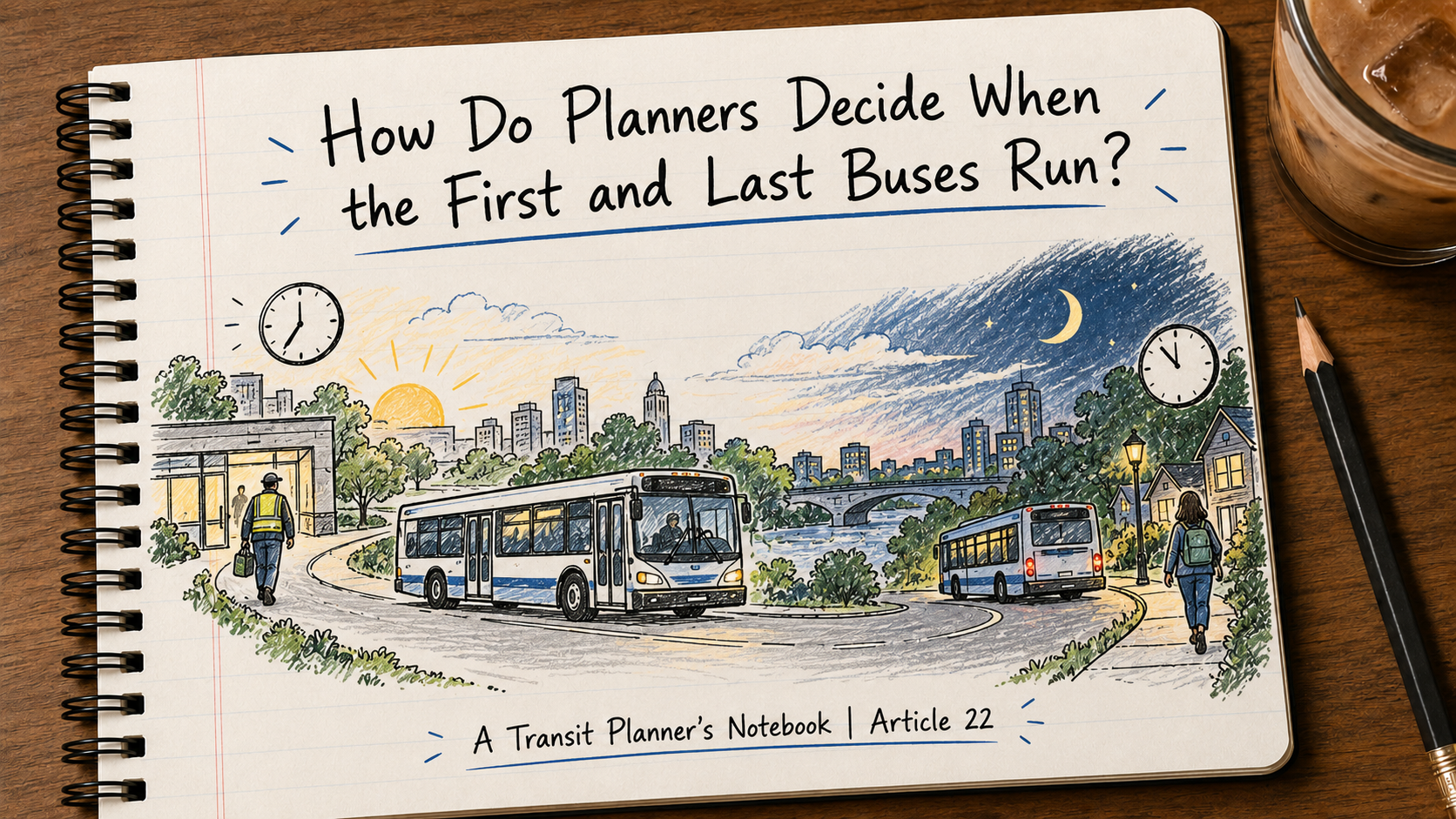
How Do Planners Decide When the First and Last Buses Run?
The first and last buses determine which daily activities transit can support. A useful service span must provide a practical arrival, workable connections, and an opportunity to return home.
Read Article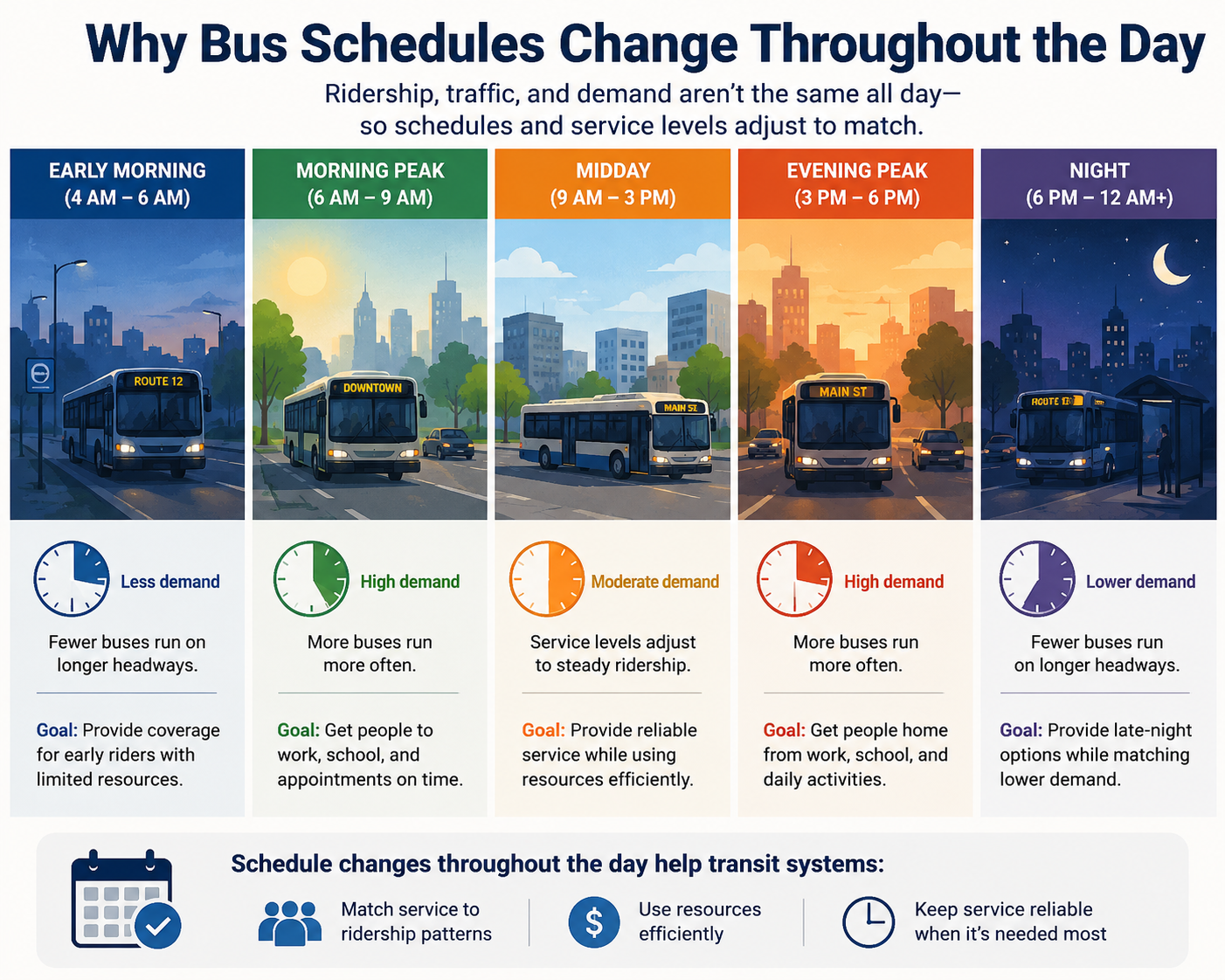
Scheduling Explained2 min read
Why Bus Schedules Change Throughout the Day
The same route may need more running time at 4:00 PM than at 6:00 AM. Transit schedules change throughout the day because traffic, passenger activity, school schedules, employment patterns, and other conditions rarely remain constant.
Read Article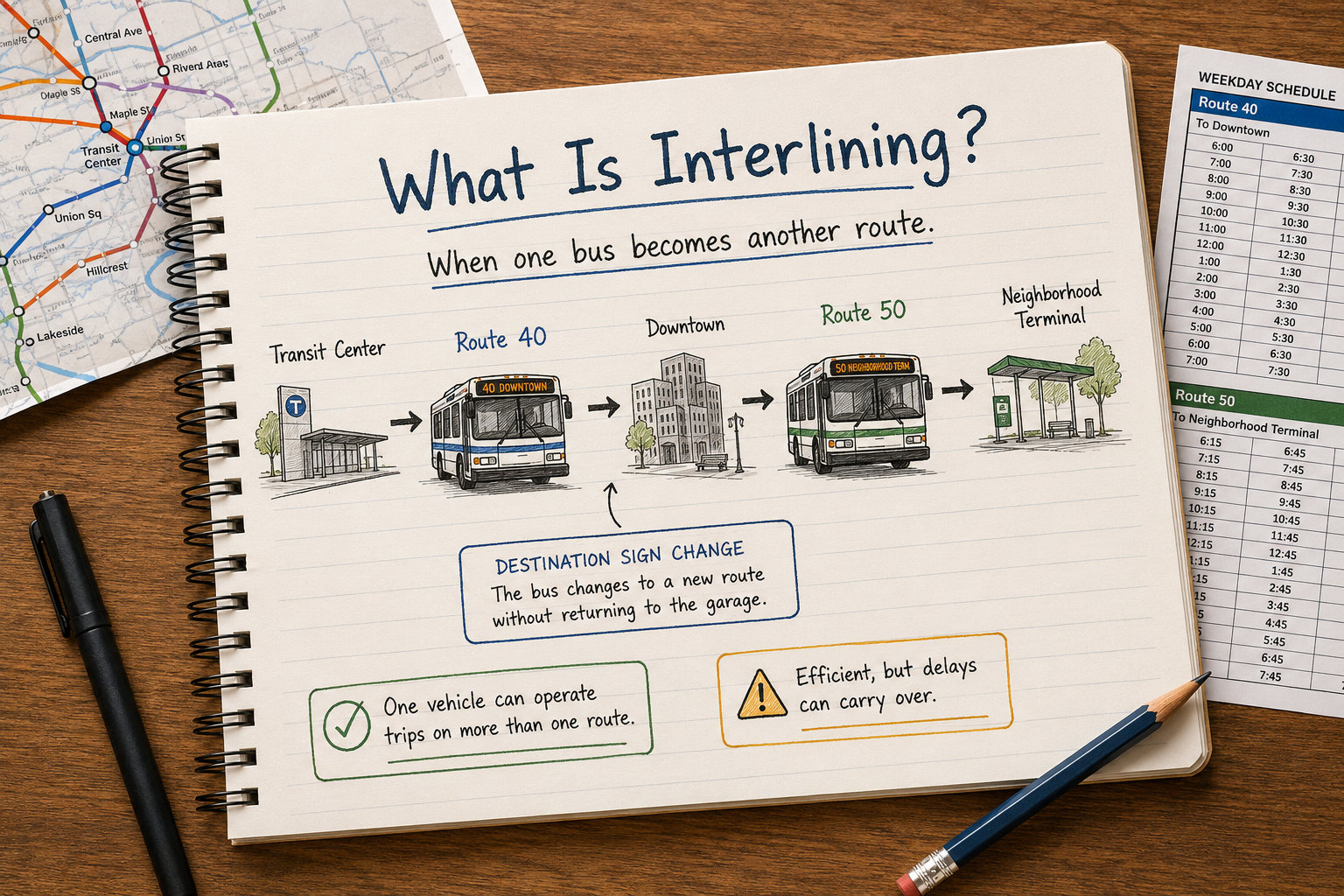
Scheduling Explained2 min read
What Is Interlining? When One Bus Becomes Another Route
A bus displaying Route 40 may later become Route 50 without returning to the garage. This practice, known as interlining, can improve vehicle efficiency and passenger connections, but it can also allow delays on one route to affect another.
Read Article