Skip to content
A Transit Planner's Notebook
  • Home
  • Articles
  • Topics
  • About
  • Contact

Archive

Articles

Practical explanations of transit planning, scheduling, and operations.

All Articles

7 articles

Transit Planning·October 26, 2026·3 min read

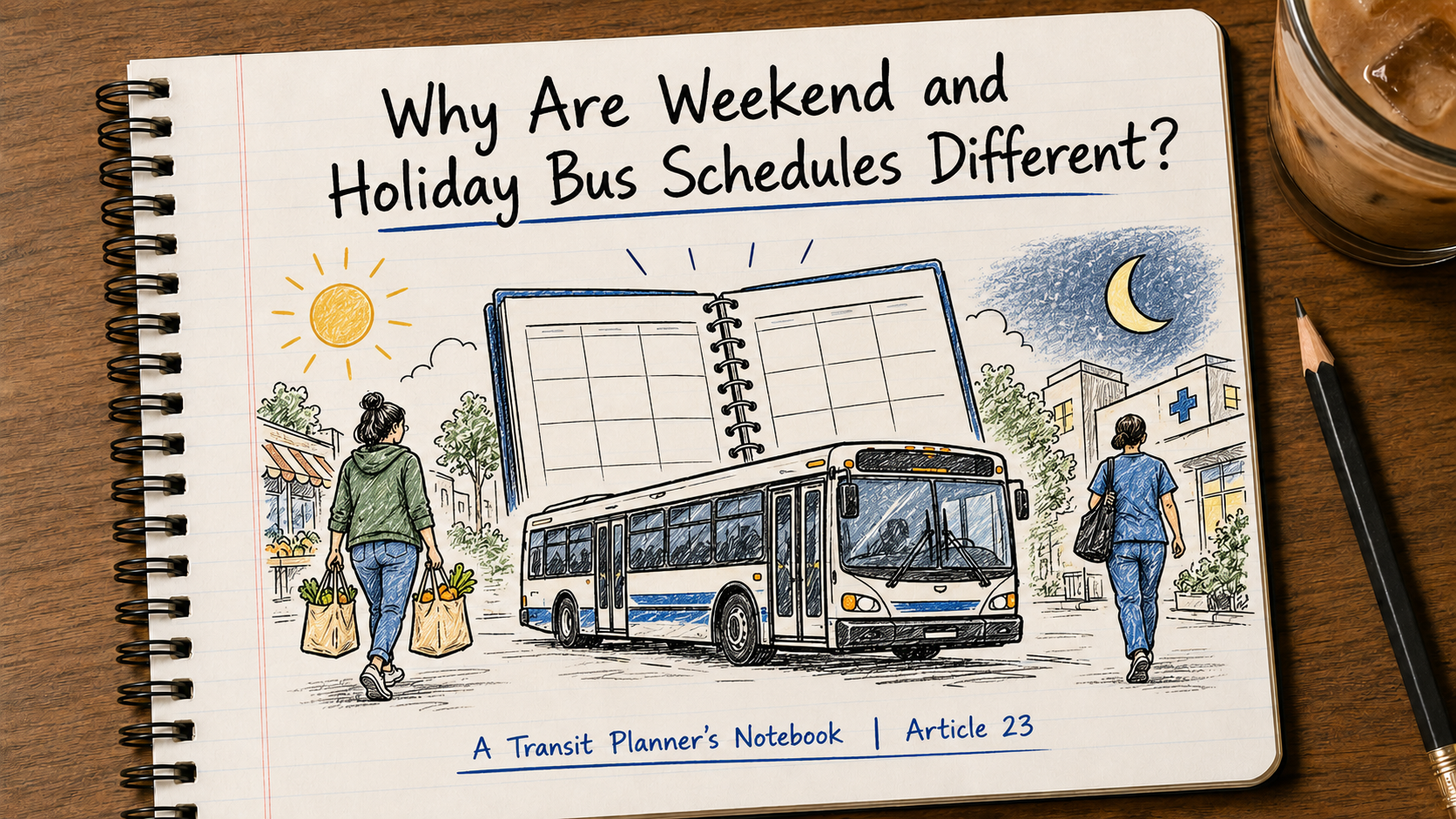
Why Are Weekend and Holiday Bus Schedules Different?

Weekends and holidays bring different travel needs, operating hours, and connections. A separate service day deserves its own review of whether passengers can complete the journeys they need.

Read Article
Transit Planning·October 19, 2026·3 min read

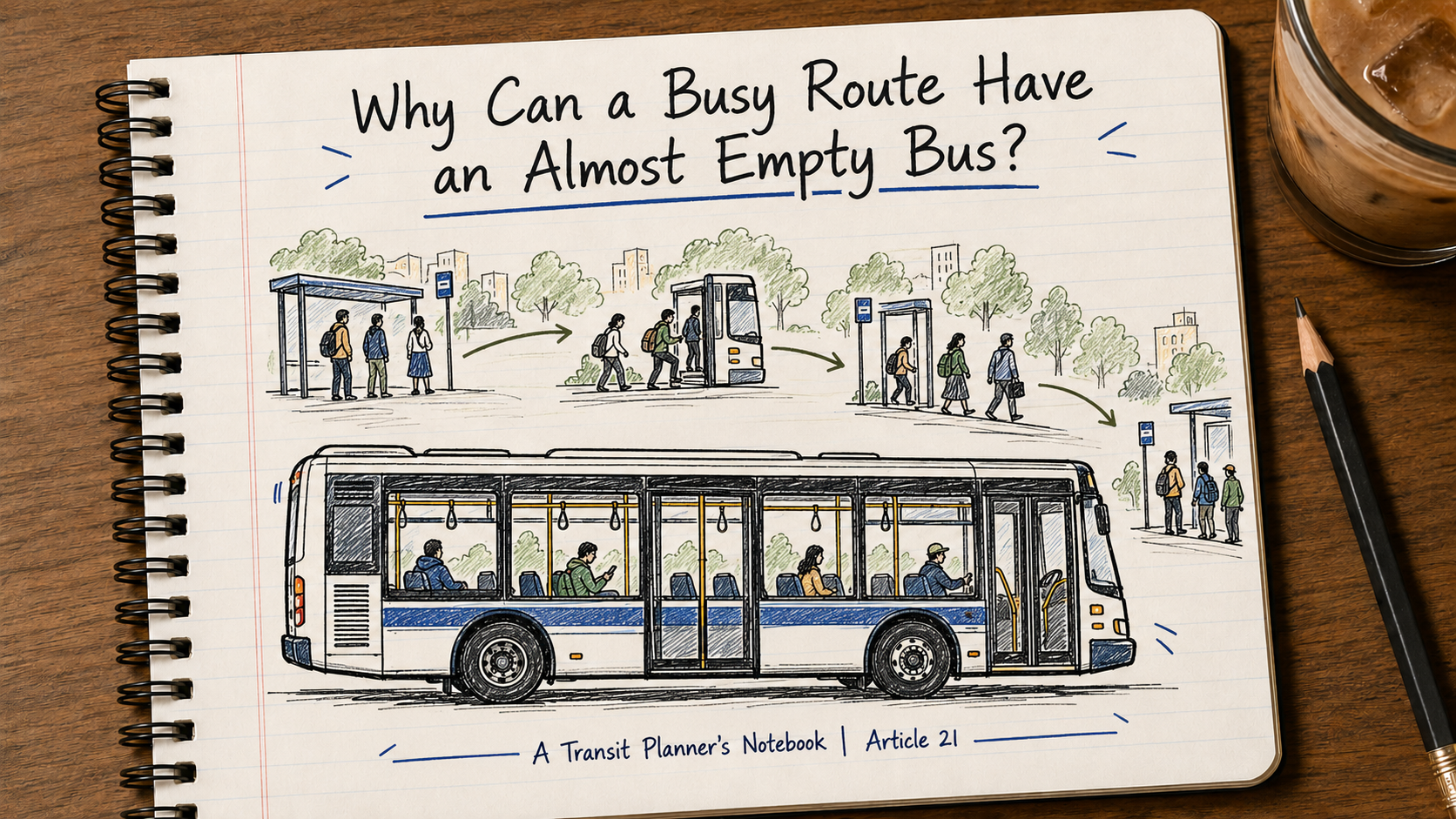
Why Can a Busy Route Have an Almost Empty Bus?

An almost empty bus is one moment in a longer trip. Understanding boardings, alightings, passenger loads, and turnover helps explain how a route can provide useful rides without looking busy at every stop.

Read Article

Planner's Notebook·October 15, 2026·2 min read

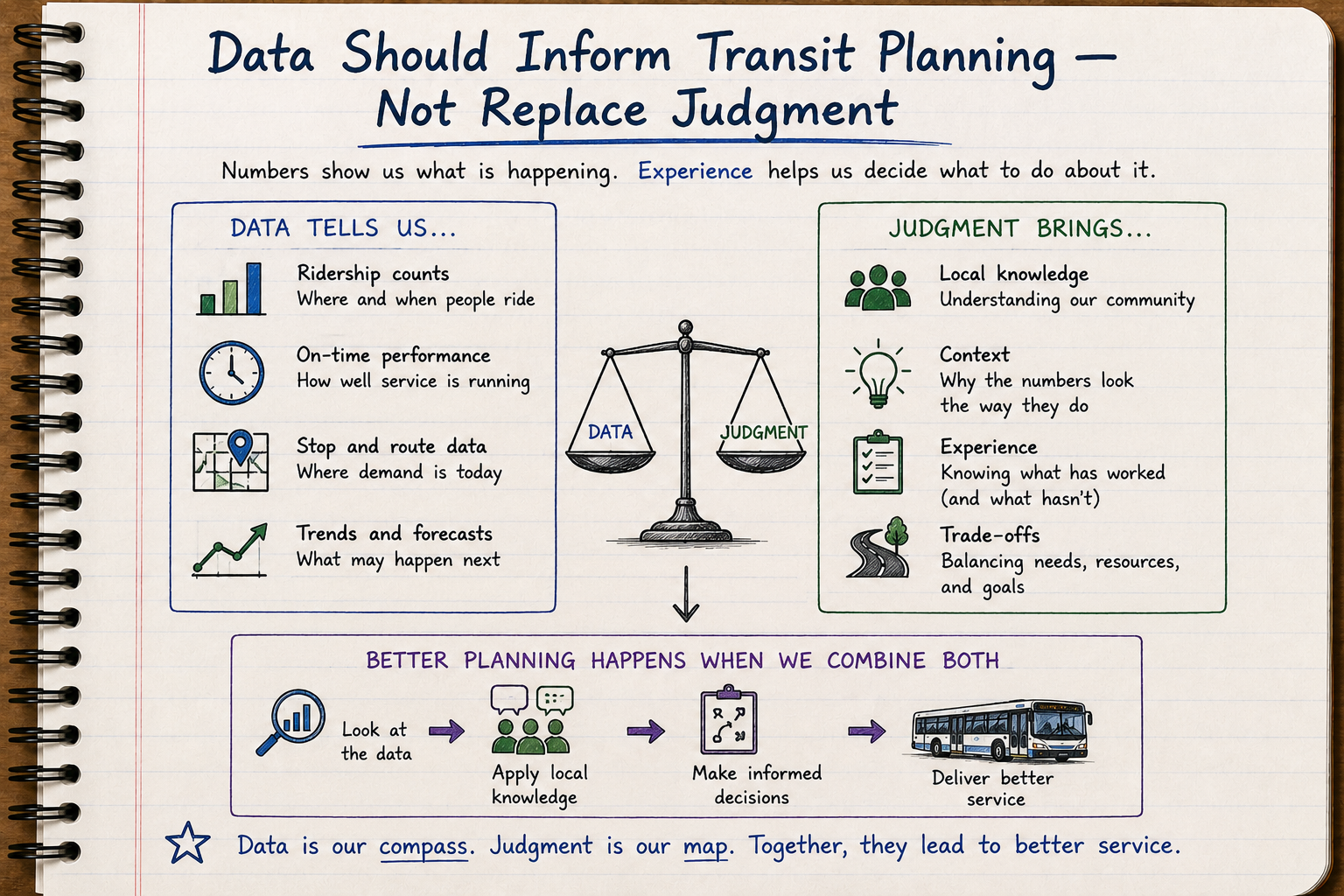
Data Should Inform Transit Planning - Not Replace Judgment

Modern transit planners have access to more data than ever before, but a spreadsheet cannot understand every reason behind a number. Good planning combines ridership, running time, and performance data with field knowledge, passenger needs, operator experience, and professional judgment.

Read Article

Transit Planning·October 12, 2026·2 min read

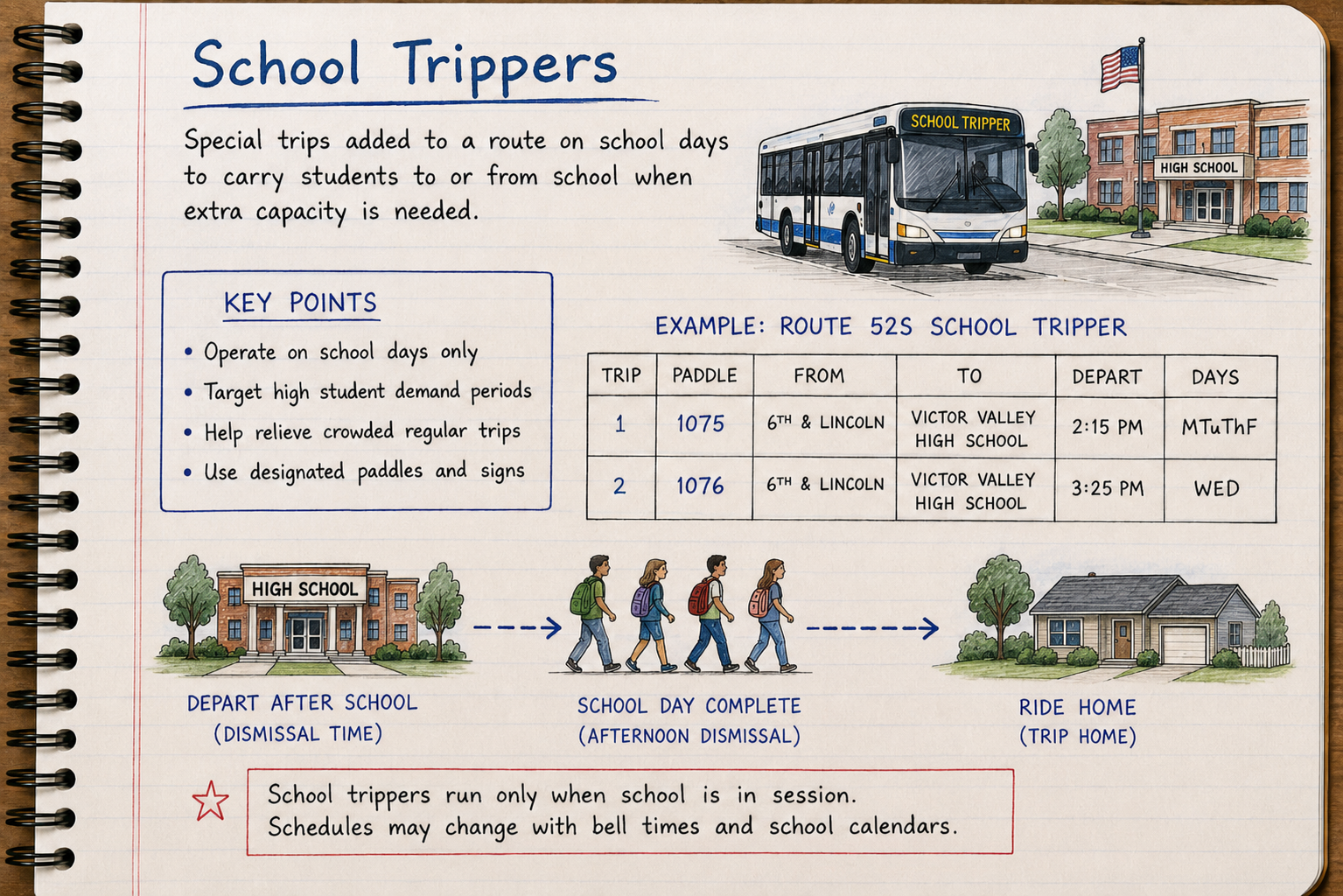
School Trippers: When One Extra Trip Solves a Very Specific Problem

School dismissal can create a large passenger load during a very short period. Instead of changing an entire route, transit agencies may use a school tripper - an additional scheduled trip designed to provide capacity exactly where and when it is needed.

Read Article

Scheduling Explained·September 24, 2026·2 min read

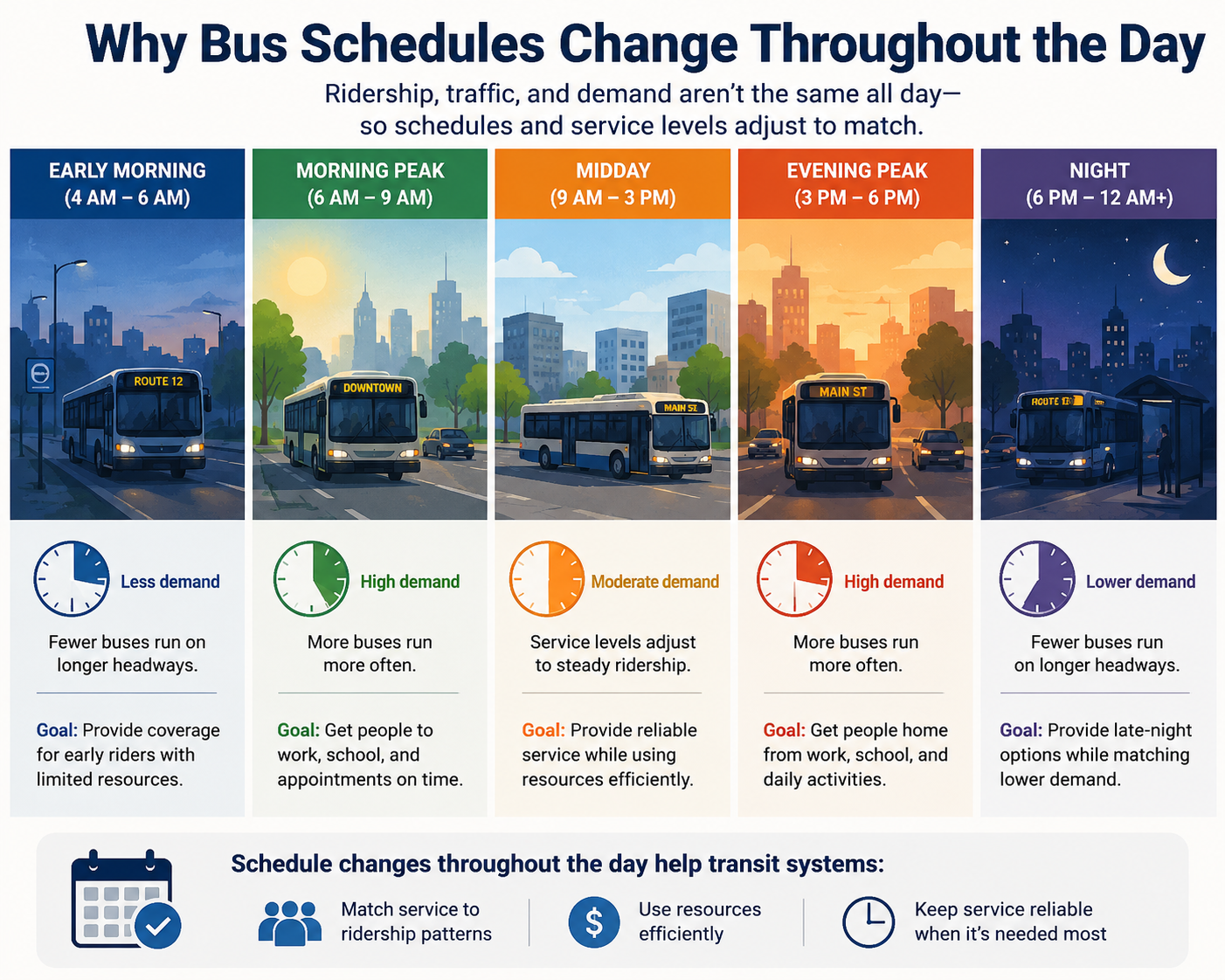
Why Bus Schedules Change Throughout the Day

The same route may need more running time at 4:00 PM than at 6:00 AM. Transit schedules change throughout the day because traffic, passenger activity, school schedules, employment patterns, and other conditions rarely remain constant.

Read Article

Transit Operations·September 10, 2026·6 min read

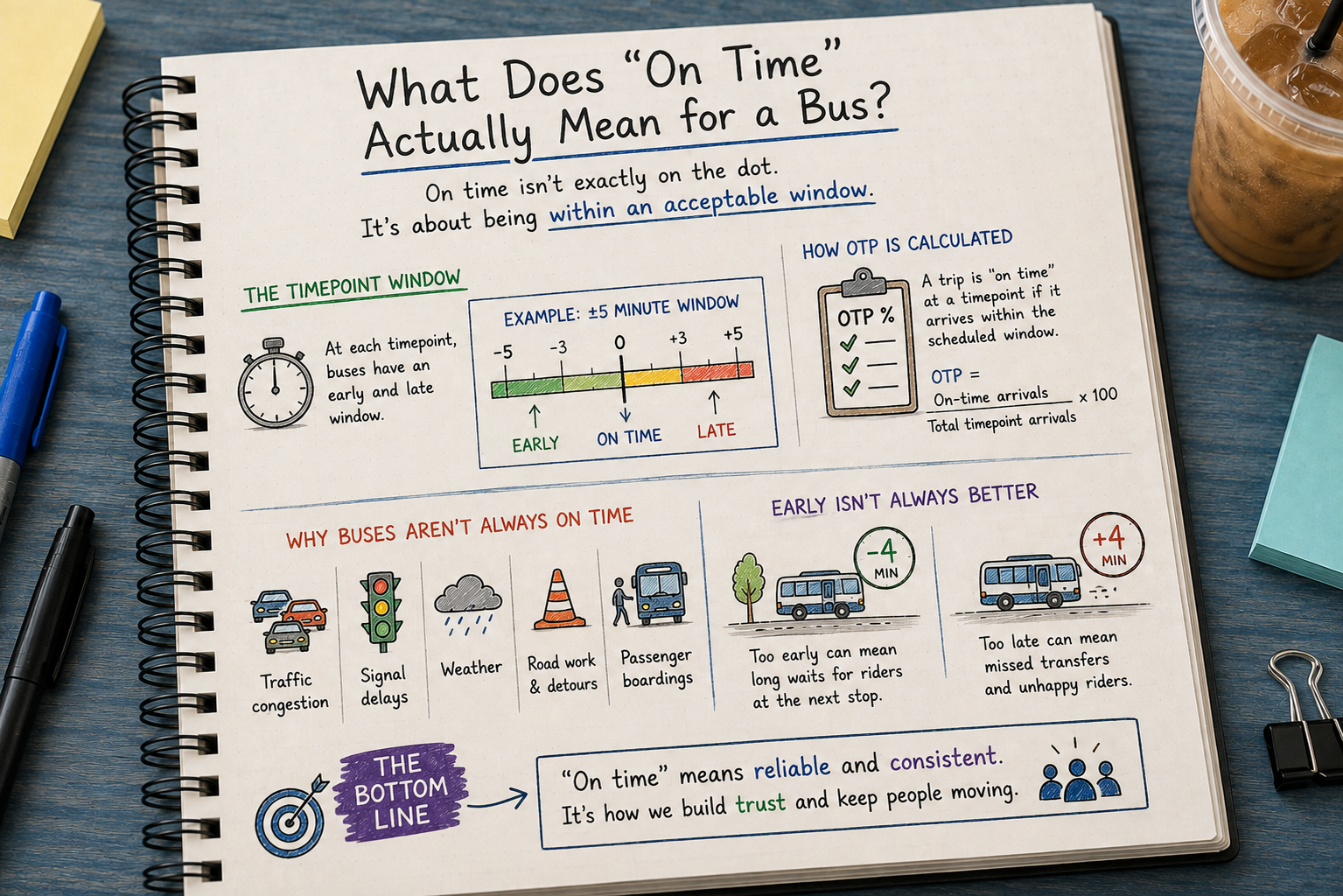
What Does “On Time” Actually Mean for a Bus?

On-time performance is one of transit’s most important service measures, but “on time” does not always mean arriving at the exact scheduled minute. Understanding early departures, late arrivals, timepoints, and schedule adherence helps explain what the numbers really measure.

Read Article

A Transit Planner's Notebook

Practical articles about transit planning, bus scheduling, operations, destination signs, technology, and transit history.

Built to explain the work behind the timetable.

Site

  • Home
  • Articles
  • Topics
  • About
  • Contact
  • Subscribe
  • RSS Feed

Topics

  • Transit Planning
  • Scheduling Explained
  • Transit Operations
  • Bus Stops and Facilities
  • Transit Technology
  • Destination Signs
  • Transit History
  • Planner's Notebook
  • Privacy Policy
  • Terms of Use
  • Disclaimer
  • Accessibility Statement

The views expressed on this site are personal and do not necessarily represent those of any employer, transit agency, contractor, or public organization.

© 2026 A Transit Planner's Notebook. All rights reserved.