Why Are Weekend and Holiday Bus Schedules Different?
How travel needs change across the week and why a service day matters
By Craig3 min read
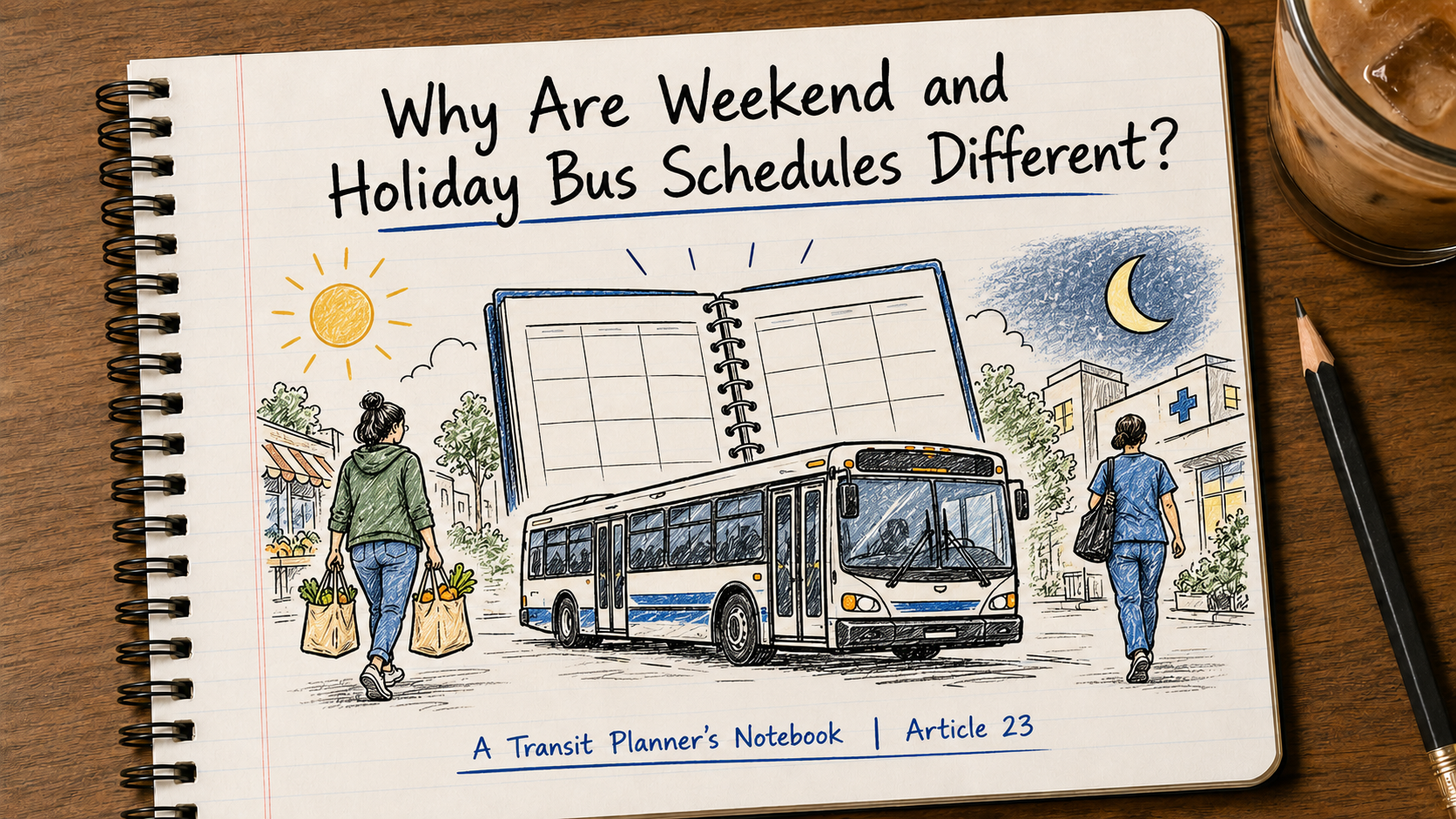
A passenger regularly catches a weekday bus to work. On Saturday, the same route leaves later, comes less often, or stops operating earlier in the evening.
The route number is familiar, but the available journeys have changed.
Weekend and holiday schedules reflect a different set of travel patterns. Understanding those patterns requires looking beyond the traditional weekday commute.
What Is a Service Day?
Transit agencies commonly publish separate schedules for weekdays, Saturdays, and Sundays. Holidays may follow one of those schedules or have another arrangement announced by the agency.
These are different day types. Each identifies a set of trips that operates on particular days.
A route may follow the same streets across the week while changing its first departure, last departure, frequency, or selected trips. Some routes may operate only on certain days.
That is why identifying the route is only part of planning a trip. The rider also needs the correct day type.
The Destinations Are on Different Schedules
Weekday service may carry substantial demand from schools, offices, industrial shifts, and regional commuting connections.
On a weekend, some of those destinations are closed or have different hours. At the same time, shopping, recreation, hospitality, healthcare, and other activities continue.
A hospital employee may begin work early on Sunday. A retail employee may finish after an office-oriented route's usual evening demand has faded. A passenger may need to buy groceries when the weekday schedule is unavailable.
Weekend planning needs to understand those journeys on their own terms. Simply reducing every weekday trip by the same amount can miss where and when service is most useful.
First and Last Trips Still Matter
How Do Planners Decide When the First and Last Buses Run? introduced service span, the hours during which service is available. Weekend changes to that span can have a larger effect than their appearance in the timetable suggests.
Imagine a hypothetical employee who starts work at 08:00. A weekday trip arrives at 07:30, while the first Saturday trip arrives at 08:30.
The difference is one hour in the timetable, but it changes whether transit can serve that work shift at all.
The same issue occurs at the end of the day. An earlier last trip may prevent the return journey even when the morning trip works well.
Fewer Trips Change the Consequences of a Miss
When buses come less often, an early departure or missed connection becomes more disruptive.
A rider who misses an hourly bus may face a long wait. Missing the last bus can end the available journey entirely.
This makes realistic schedules and clear information especially important. Reduced frequency does not reduce the need for dependable departures.
Planners also need to look for concentrated weekend demand. Several lightly used trips do not rule out a busy departure tied to a work shift, shopping period, or regional connection.
Check the Connecting Route Too
A Saturday trip may reach a transit center at a useful time, but the passenger's next route may run on a different pattern or have no Saturday service.
A connection that works every weekday can disappear even when both routes still operate. The departure times simply no longer line up.
Reviewing the whole journey helps identify these gaps. The outbound and return connections need attention, along with the first and last trips on each route involved.
A Holiday Is a Specific Date
Passengers should not have to infer the holiday schedule from the day of the week.
An agency might operate Sunday service on a holiday that falls on Monday. Another holiday might follow the normal weekday schedule. The actual arrangement must come from the agency's published information.
Notices should name the date, identify the schedule in effect, and explain any exceptions. Timetables, websites, trip planners, and stop notices should tell the same story.
The calendar information described in GTFS: The Data Behind Your Transit Trip Planner helps digital tools show the correct trips. Accurate calendar data still needs to be supported by clear public communication.
Tags
This article reflects the author's personal experience and general industry knowledge. Agency practices, labor agreements, laws, funding requirements, and operating conditions vary.
Related Articles
Transit Planning3 min read
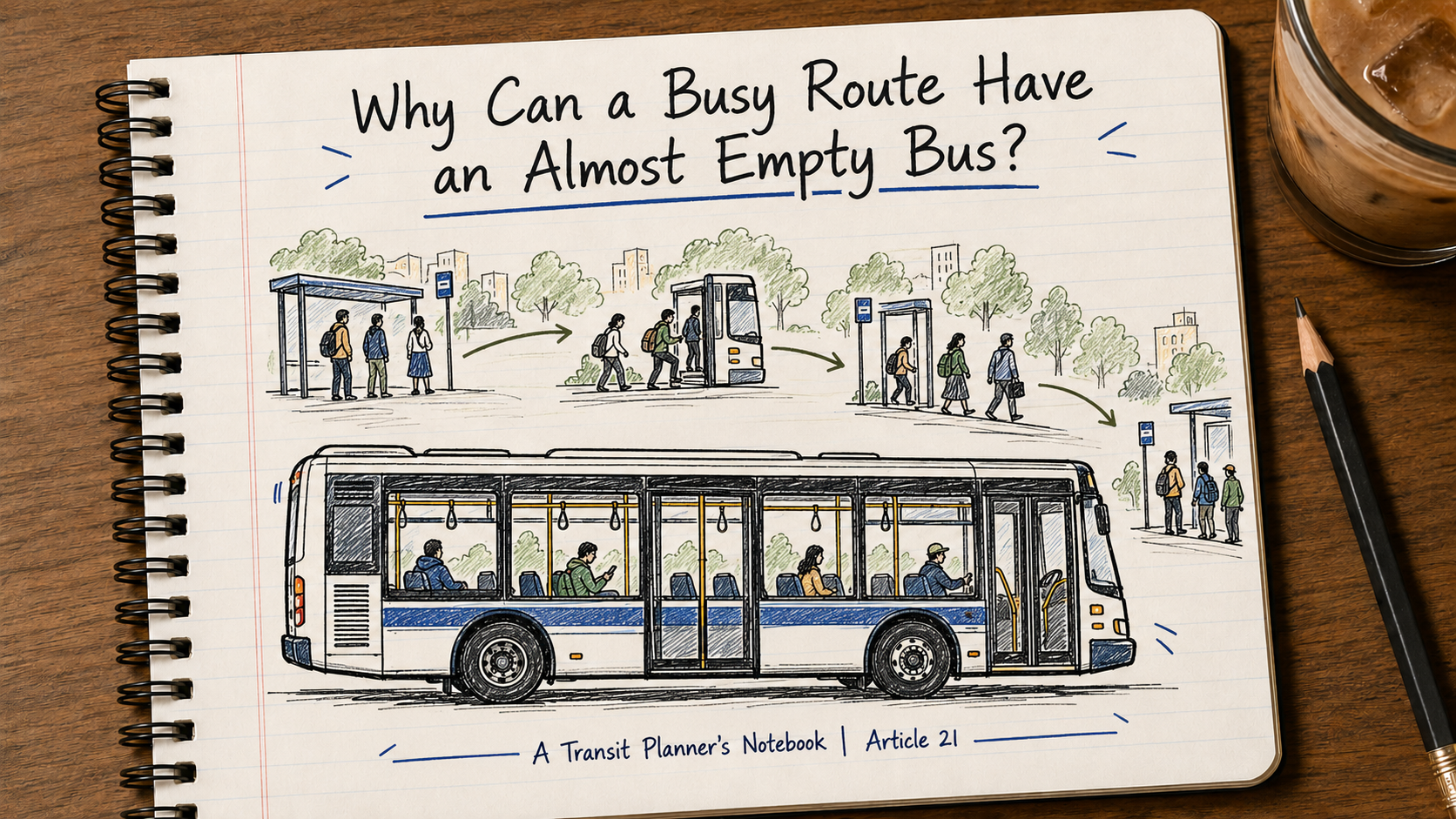
Why Can a Busy Route Have an Almost Empty Bus?
An almost empty bus is one moment in a longer trip. Understanding boardings, alightings, passenger loads, and turnover helps explain how a route can provide useful rides without looking busy at every stop.
Read Article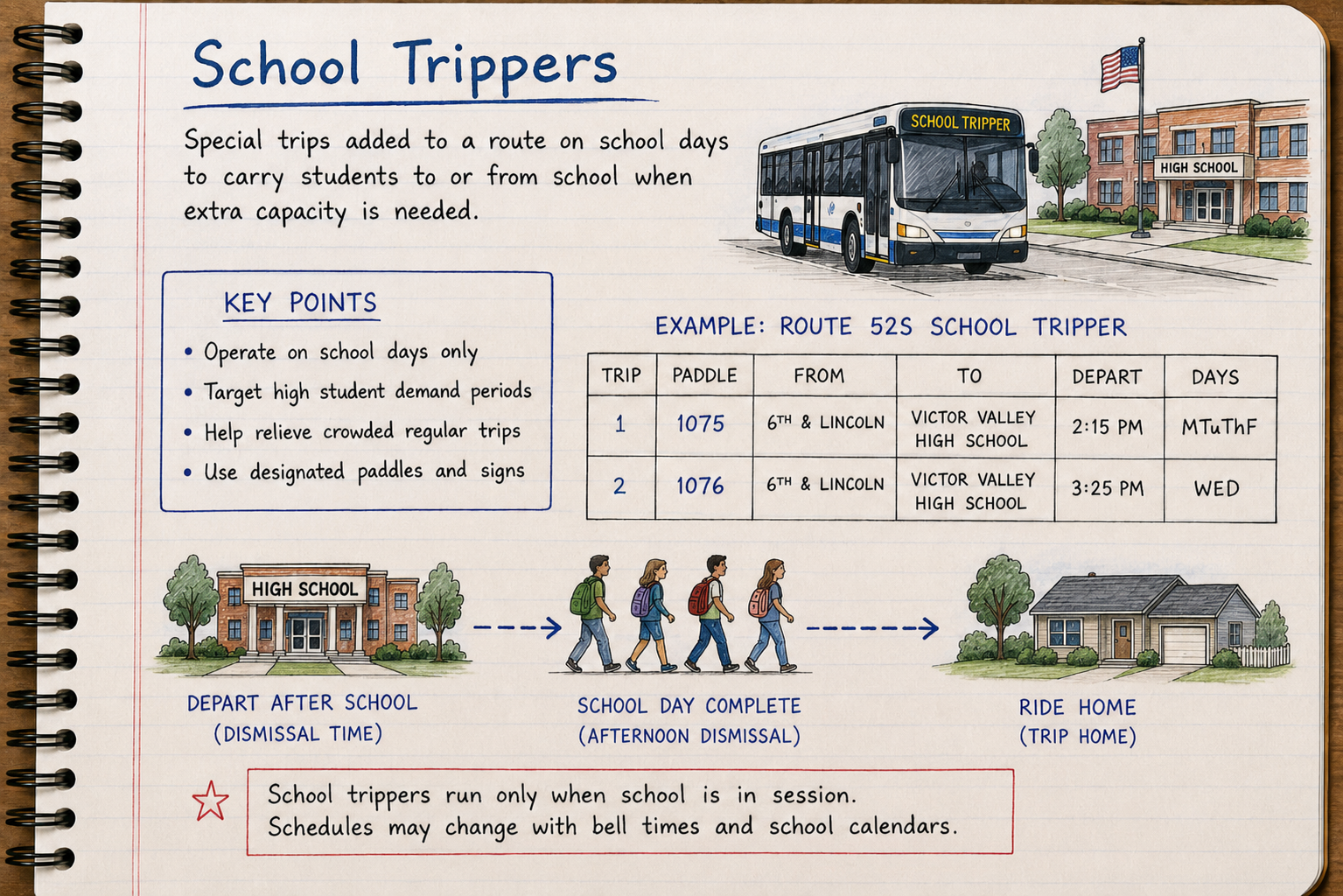
Transit Planning2 min read
School Trippers: When One Extra Trip Solves a Very Specific Problem
School dismissal can create a large passenger load during a very short period. Instead of changing an entire route, transit agencies may use a school tripper - an additional scheduled trip designed to provide capacity exactly where and when it is needed.
Read Article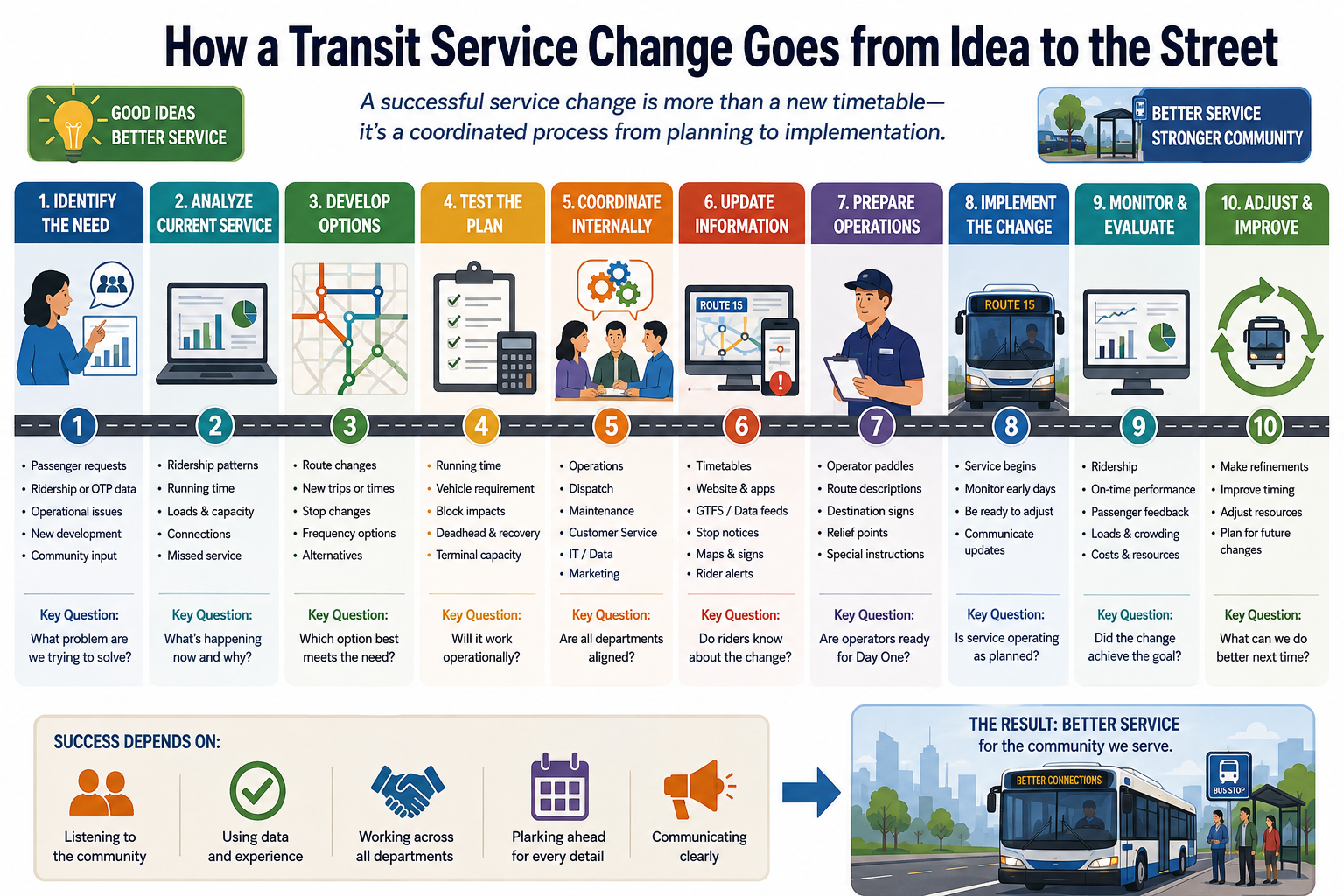
Transit Planning2 min read
How a Transit Service Change Goes from Idea to the Street
A service change can begin with a passenger request, operating problem, new development, performance issue, or planning study. Turning that idea into actual bus service requires far more than changing a line on a map or adding a departure to a timetable.
Read Article