School Trippers: When One Extra Trip Solves a Very Specific Problem
How targeted service can add capacity where passenger demand suddenly peaks
By Craig2 min read
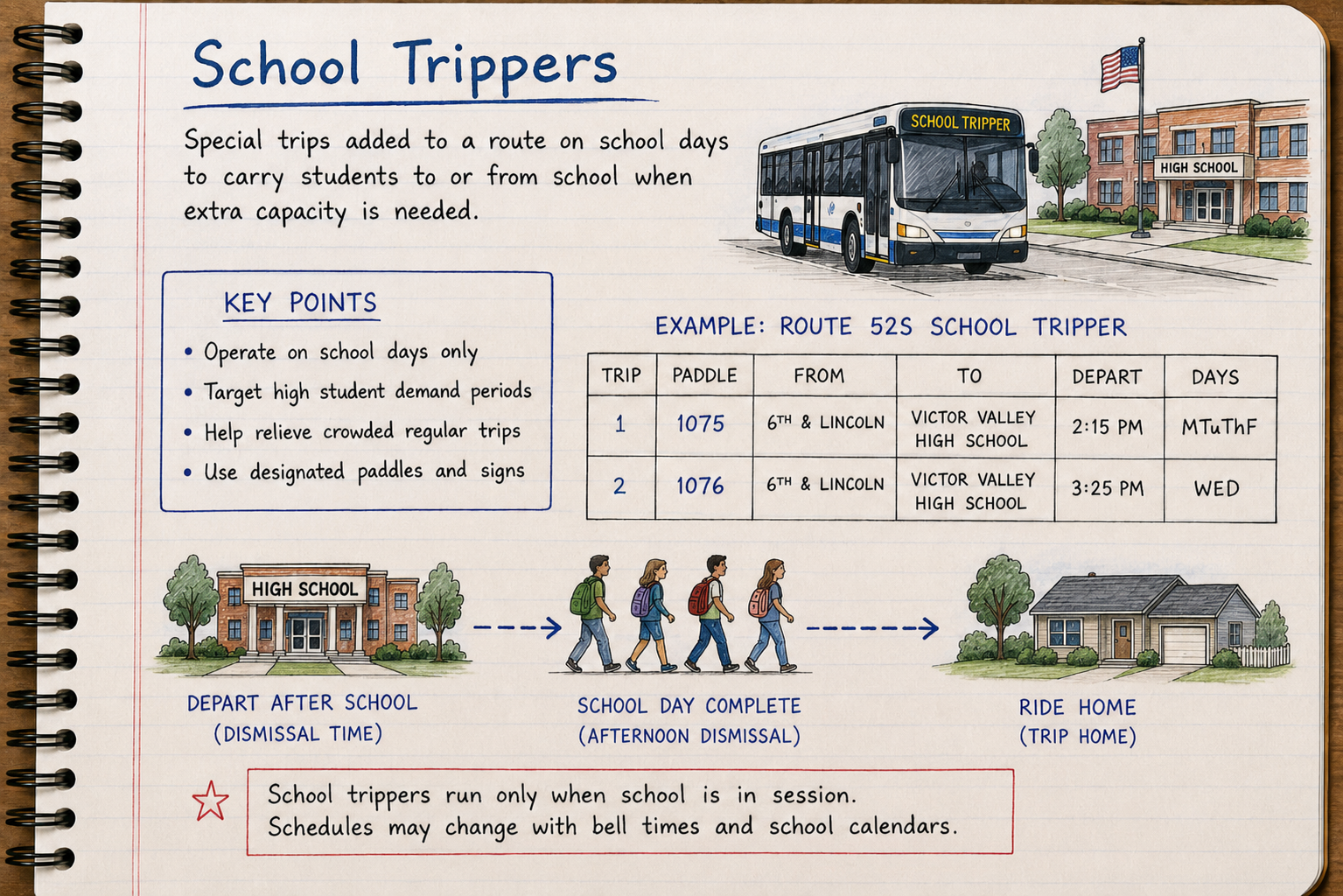
For most of the day, a route may have perfectly adequate capacity.
Then school lets out.
Within minutes, dozens of passengers may arrive at the same stops.
This is a good example of a problem that may not require changing the entire route.
It may require a tripper.
What Is a Tripper?
A tripper is an additional trip designed to address a specific period of demand.
School trippers are among the most familiar examples.
They may operate:
- Only on school days
- Only on certain weekdays
- Only during dismissal
- For only part of the regular route
Why Not Add Full-Day Service?
Because the additional demand may exist for only 30 minutes.
Adding a bus to the route for the entire day could be expensive and unnecessary.
A targeted tripper places resources where the demand actually occurs.
Timing Matters
A school tripper must be timed carefully.
If it operates too early, the students are not there.
If it operates too late, the regularly scheduled bus may already have become overcrowded.
Sometimes a tripper is deliberately scheduled just ahead of an existing trip.
This allows the extra bus to collect much of the sudden passenger load before the regular bus arrives.
The Starting Point Can Be Different
The tripper does not necessarily need to begin at the normal route terminal.
It may begin near the school or another high-demand stop.
That can reduce unnecessary mileage and place the bus exactly where additional capacity is needed.
The Public Needs to Understand It
Special trips can become confusing if passenger information is unclear.
The agency needs to decide:
- What route number to display
- What destination sign to use
- Which stops are served
- Whether it appears in trip-planning data
- How school-day operation is identified
The service may be operationally simple but still require careful passenger communication.
School Calendars Matter
A school tripper should not operate when school is closed unless there is another reason for the service.
That means planners may need to account for:
- Holidays
- Minimum days
- Summer vacation
- Teacher workdays
- Special schedules
Monitor the Results
After implementation, planners should review:
- Passenger loads
- Timing
- Interaction with the regular trip
- Operator feedback
The tripper may need to move several minutes earlier or later to perform its intended function.
Tags
This article reflects the author's personal experience and general industry knowledge. Agency practices, labor agreements, laws, funding requirements, and operating conditions vary.
Related Articles
Transit Planning3 min read
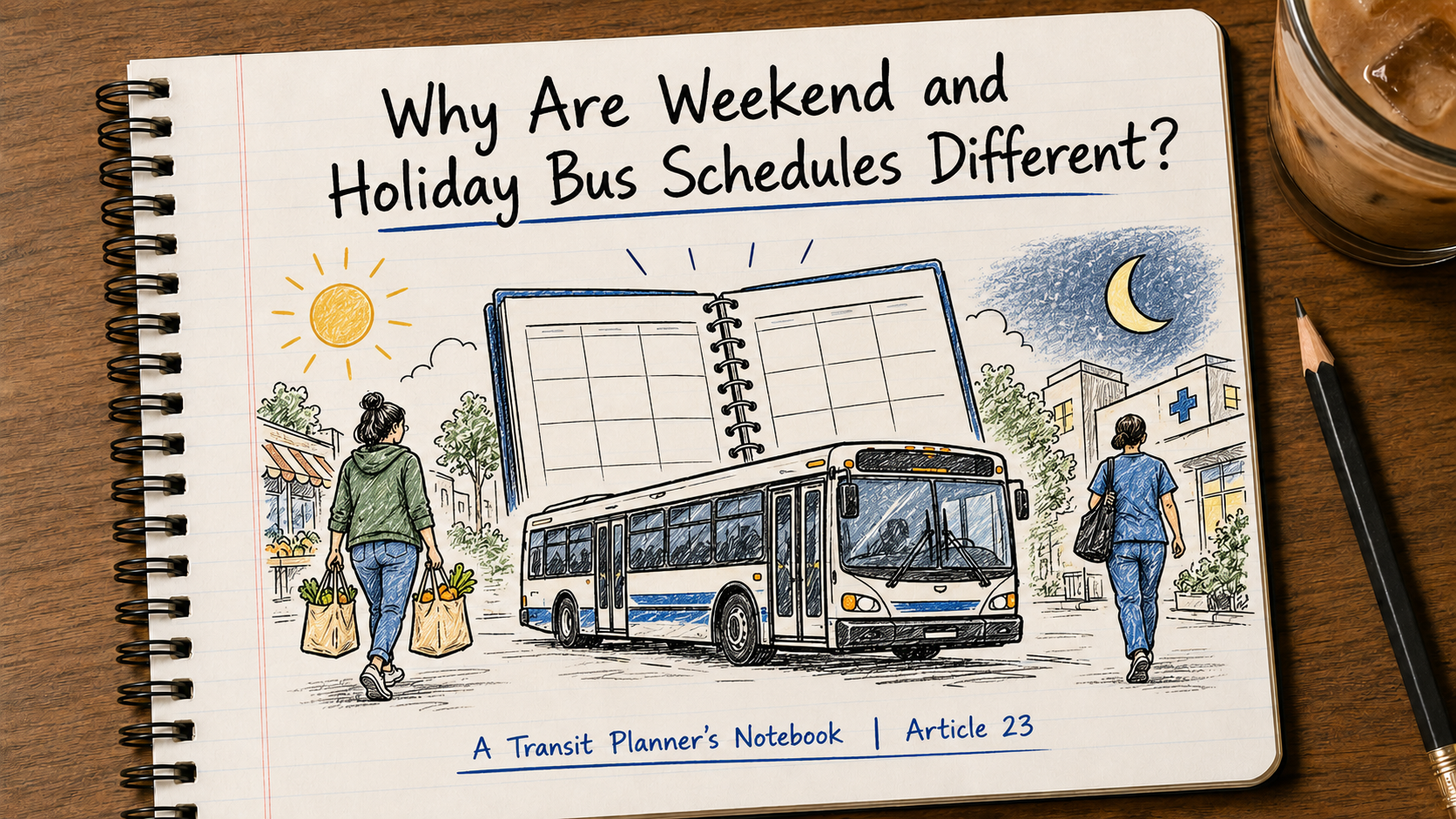
Why Are Weekend and Holiday Bus Schedules Different?
Weekends and holidays bring different travel needs, operating hours, and connections. A separate service day deserves its own review of whether passengers can complete the journeys they need.
Read Article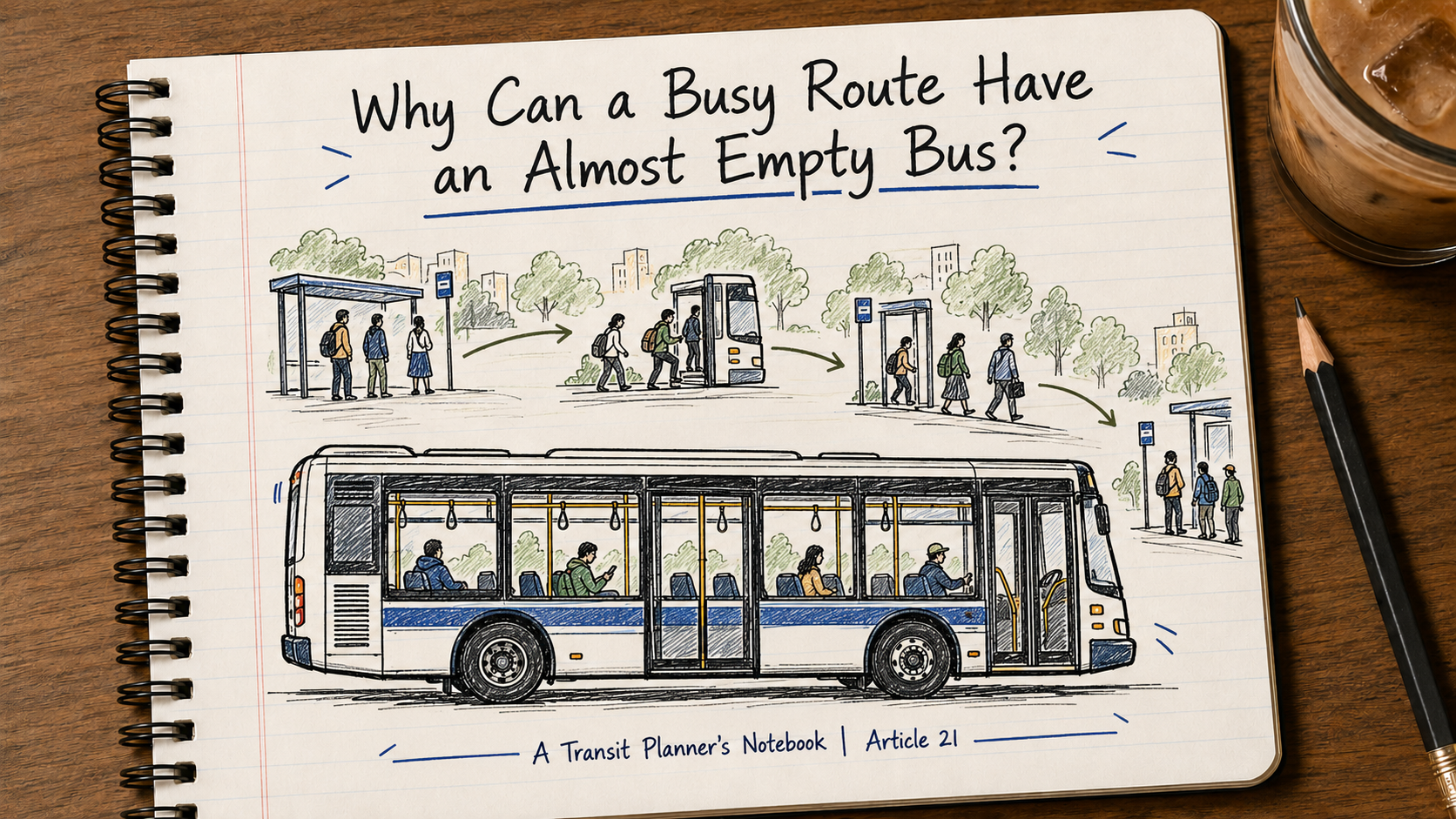
Transit Planning3 min read
Why Can a Busy Route Have an Almost Empty Bus?
An almost empty bus is one moment in a longer trip. Understanding boardings, alightings, passenger loads, and turnover helps explain how a route can provide useful rides without looking busy at every stop.
Read Article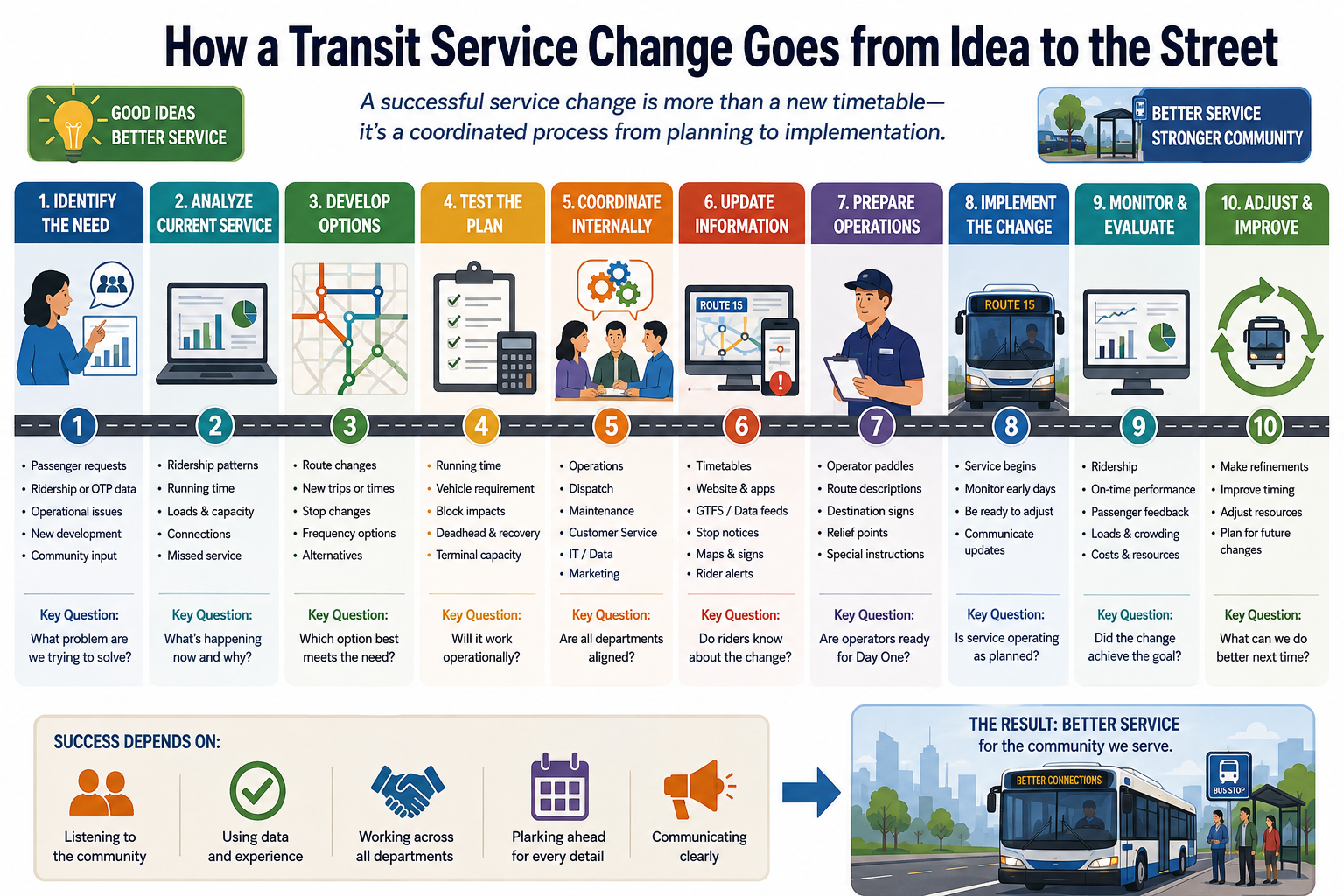
Transit Planning2 min read
How a Transit Service Change Goes from Idea to the Street
A service change can begin with a passenger request, operating problem, new development, performance issue, or planning study. Turning that idea into actual bus service requires far more than changing a line on a map or adding a departure to a timetable.
Read Article