Why Can a Busy Route Have an Almost Empty Bus?
How passenger turnover, direction, and time of day change the picture
By Craig3 min read
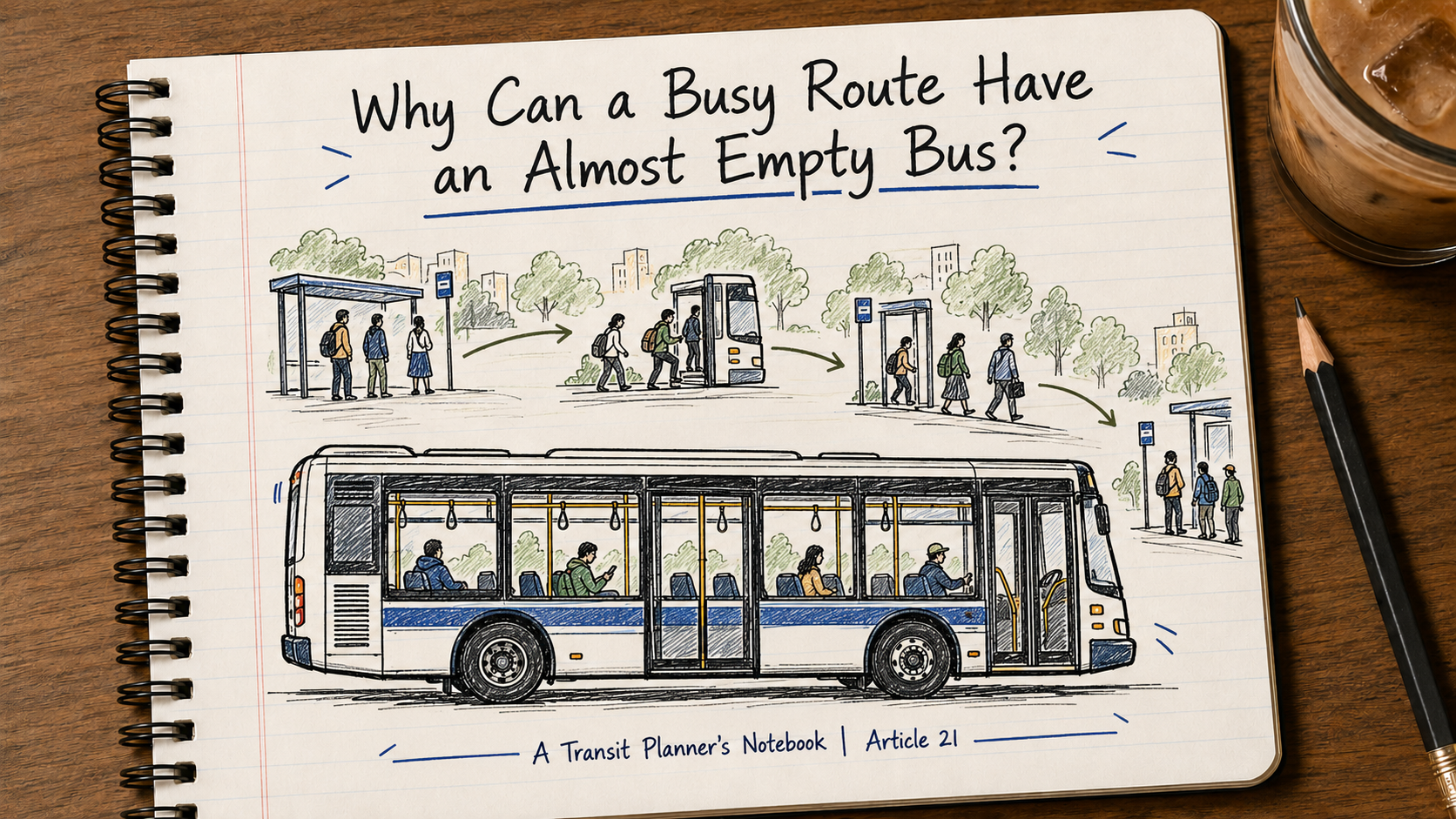
A bus passes with only three passengers aboard. Someone watching from the sidewalk concludes that the route must be wasting money.
That observation tells us something about that bus at that location. Understanding the route requires a wider view of where passengers board, where they leave, and how demand changes throughout the day.
In Data Should Inform Transit Planning — Not Replace Judgment, I discussed the importance of interpreting data in context. Passenger activity provides a useful place to put that idea into practice.
Three Different Questions
Transit planners use several measures to describe passenger activity. Three basic terms help explain what a bus is doing:
- Boardings count people getting on the bus.
- Alightings count people getting off.
- Passenger load describes how many people are aboard at a particular point along the trip.
These measures answer different questions. Boardings tell us how many rides began. Alightings show where those rides ended. The load tells us how many people needed space on the bus at the same time.
Confusion begins when someone treats one of those numbers as if it describes all the others.
Seats Can Be Used More Than Once
Consider a hypothetical trip with three groups of passengers.
Ten people board near the beginning of the route and leave at a shopping center. Farther along, another ten board and travel to a college. After they leave, a third group of ten boards and rides to the terminal.
The trip provided 30 boardings. Its largest passenger load was ten.
Anyone watching the bus between those groups might see a nearly empty vehicle. Someone watching at the college might see ten people get off. Both observations are accurate, but neither gives the complete passenger count for the trip.
This movement of passengers on and off the bus is often called passenger turnover. A seat can serve several people during one trip as their journeys begin and end at different stops.
Location Changes the Picture
A bus can carry its heaviest load through the middle of a route and arrive at the terminal with very few passengers.
That may happen because the largest destinations are located before the end of the line. Most passengers have already reached work, school, shopping, or another connection.
The remaining segment still deserves review. Planners may ask whether the terminal serves an important destination, provides a turnaround, or connects with another route. They also examine how many people use that segment repeatedly.
An almost empty arrival is a reason to investigate the pattern. The investigation needs information from the rest of the trip as well.
Direction and Time Matter
Passenger demand rarely moves equally in both directions at every hour.
A route may carry a strong morning flow toward employment and a much lighter flow away from it. Later, that pattern may reverse. A school, hospital, industrial area, or regional connection can create a similar imbalance.
The bus providing the busy trip may also need to make the lighter trip to return to where its next passengers will board. Whether that is the best operating arrangement depends on the full schedule and the alternatives available.
Comparing a lightly used afternoon trip with a crowded morning trip without considering their different purposes can produce a misleading conclusion.
A Boarding Is Not a Count of Unique People
A passenger who takes two buses to reach a destination boards twice. That produces one boarding on each bus, even though the person is completing one journey.
The return trip produces additional boardings.
This distinction matters when someone reads that a system provided a certain number of passenger trips. A boarding-based total describes rides on vehicles. It does not tell us how many separate individuals used the system.
What Should a Planner Look At?
A useful review compares the same trips over several comparable days. It considers the number of boardings, the busiest segment, the direction of travel, and the time of day.
Operators can help identify where loads build and where they disappear. Passenger counts can show whether those observations are typical. Together, they help distinguish a consistently weak segment from an unrepresentative snapshot.
Tags
This article reflects the author's personal experience and general industry knowledge. Agency practices, labor agreements, laws, funding requirements, and operating conditions vary.
Related Articles
Transit Planning3 min read
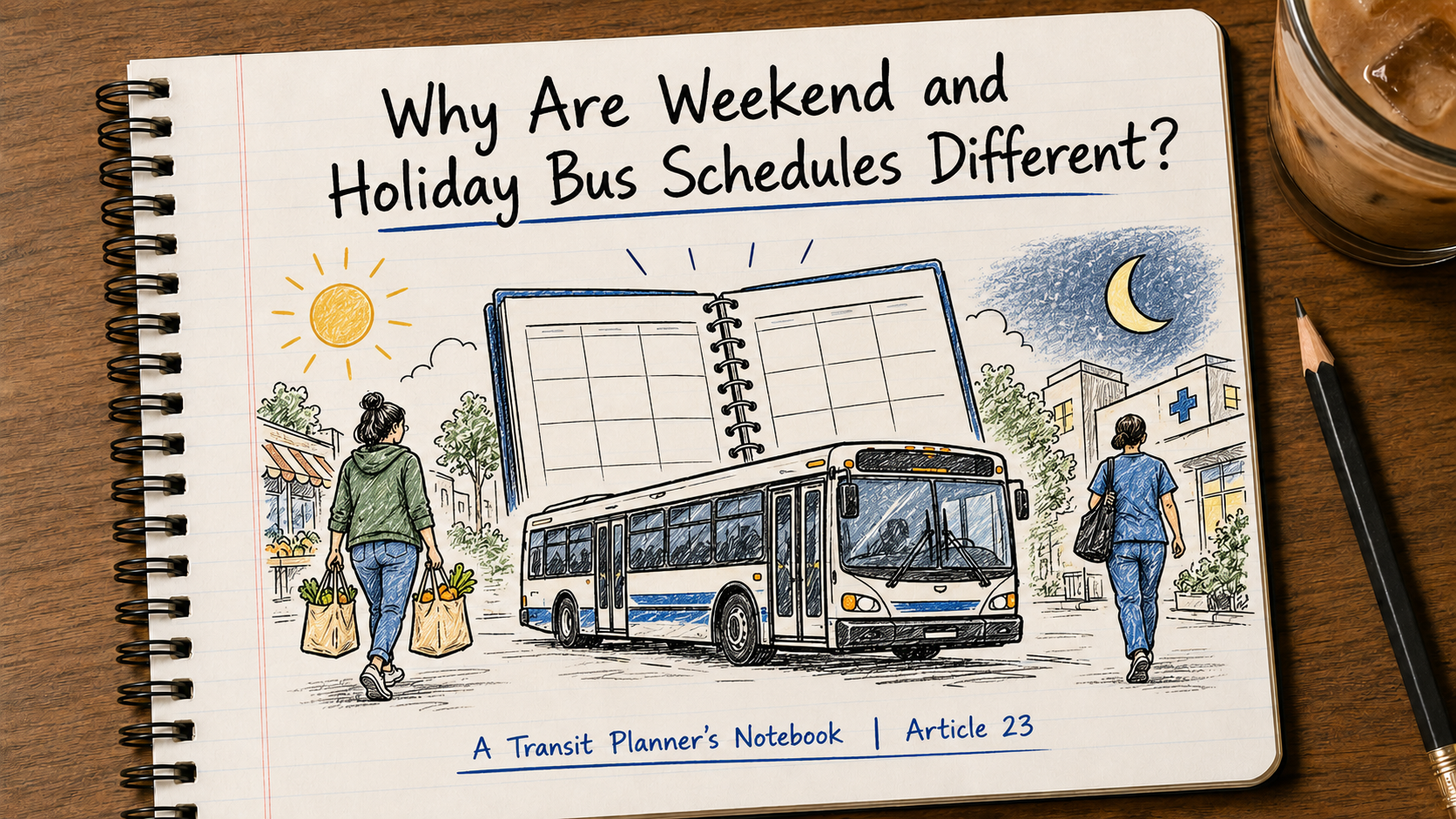
Why Are Weekend and Holiday Bus Schedules Different?
Weekends and holidays bring different travel needs, operating hours, and connections. A separate service day deserves its own review of whether passengers can complete the journeys they need.
Read Article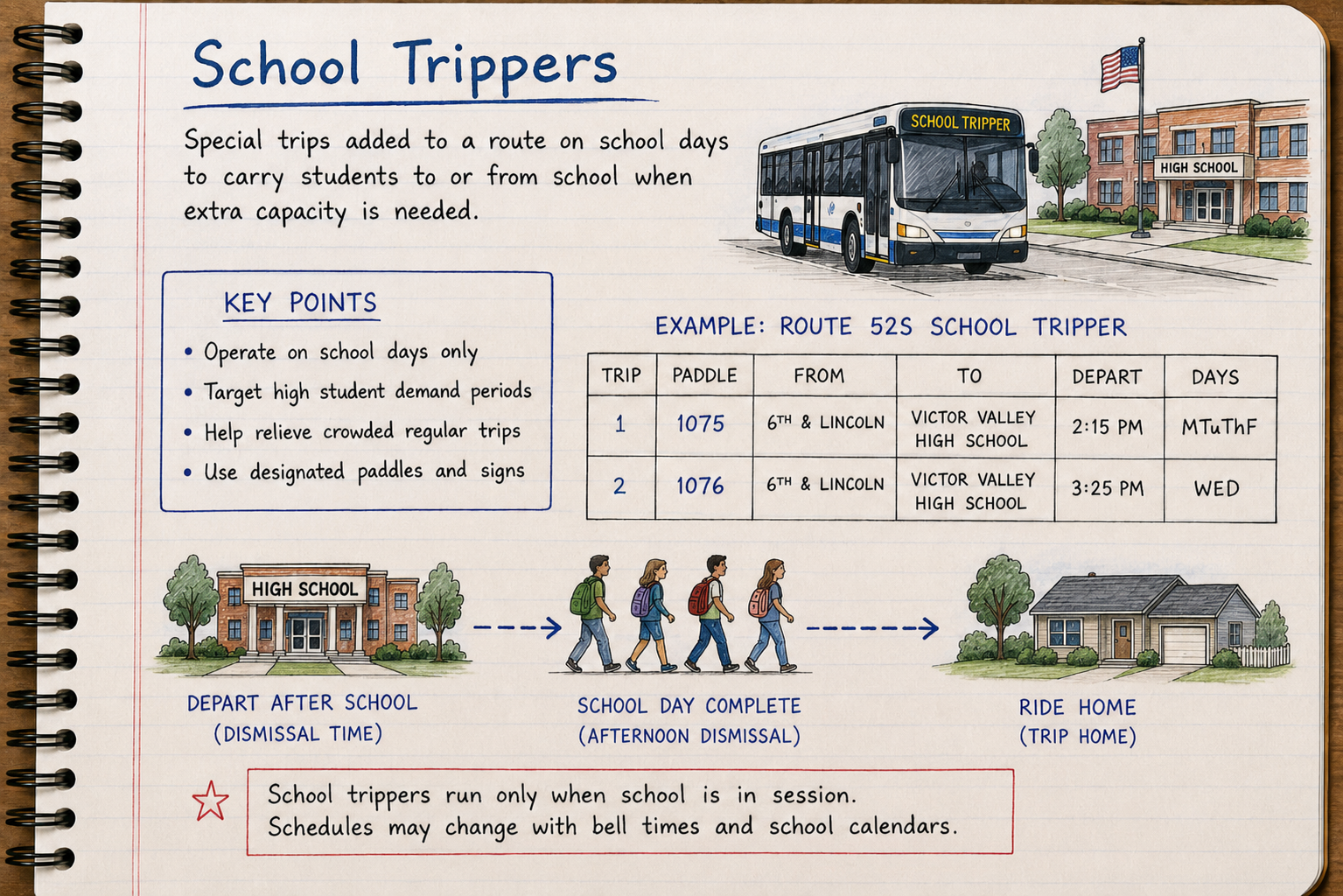
Transit Planning2 min read
School Trippers: When One Extra Trip Solves a Very Specific Problem
School dismissal can create a large passenger load during a very short period. Instead of changing an entire route, transit agencies may use a school tripper - an additional scheduled trip designed to provide capacity exactly where and when it is needed.
Read Article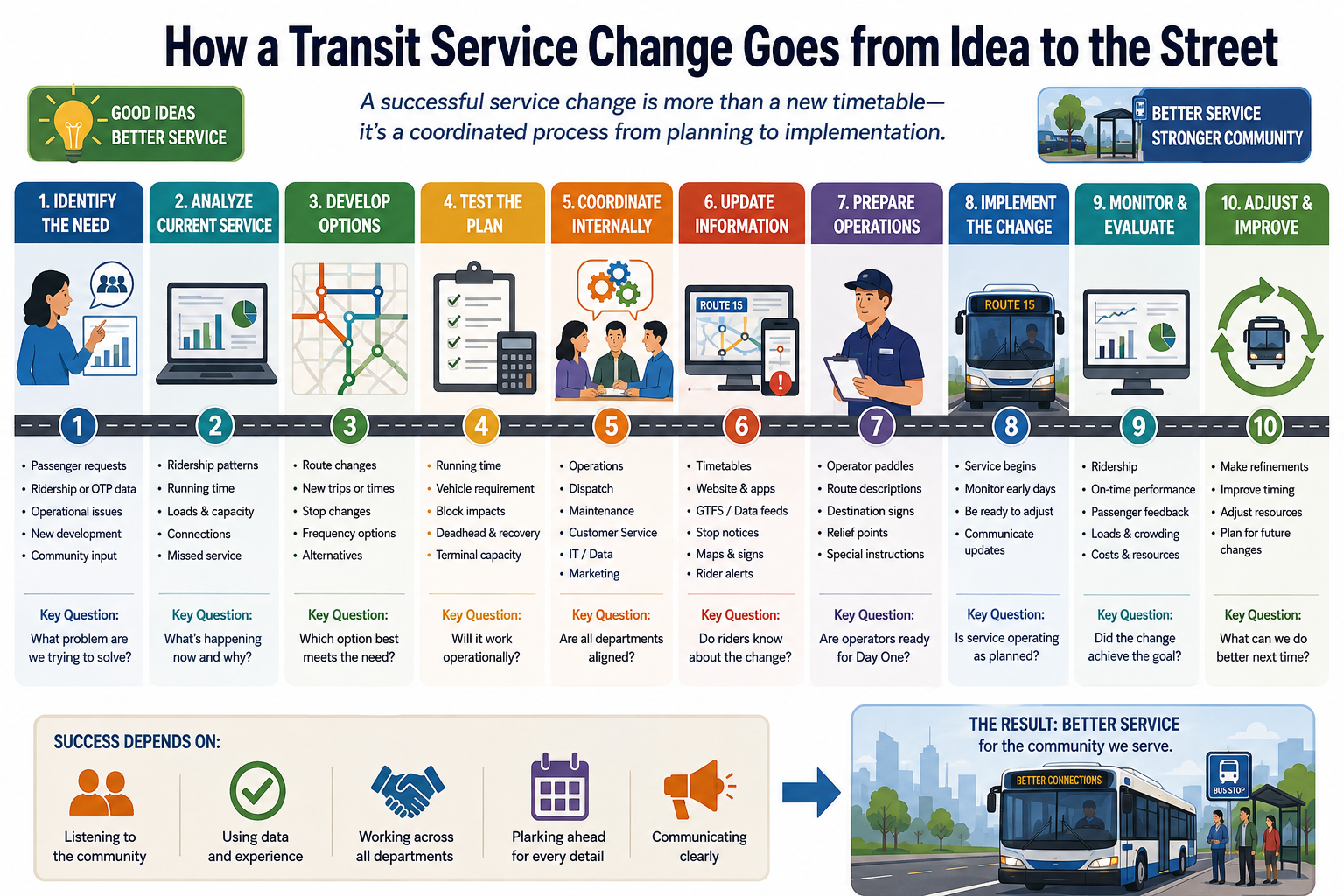
Transit Planning2 min read
How a Transit Service Change Goes from Idea to the Street
A service change can begin with a passenger request, operating problem, new development, performance issue, or planning study. Turning that idea into actual bus service requires far more than changing a line on a map or adding a departure to a timetable.
Read Article