Same Route Number, Different Destinations
What the destination sign tells you that the route number leaves out.
By Craig2 min read
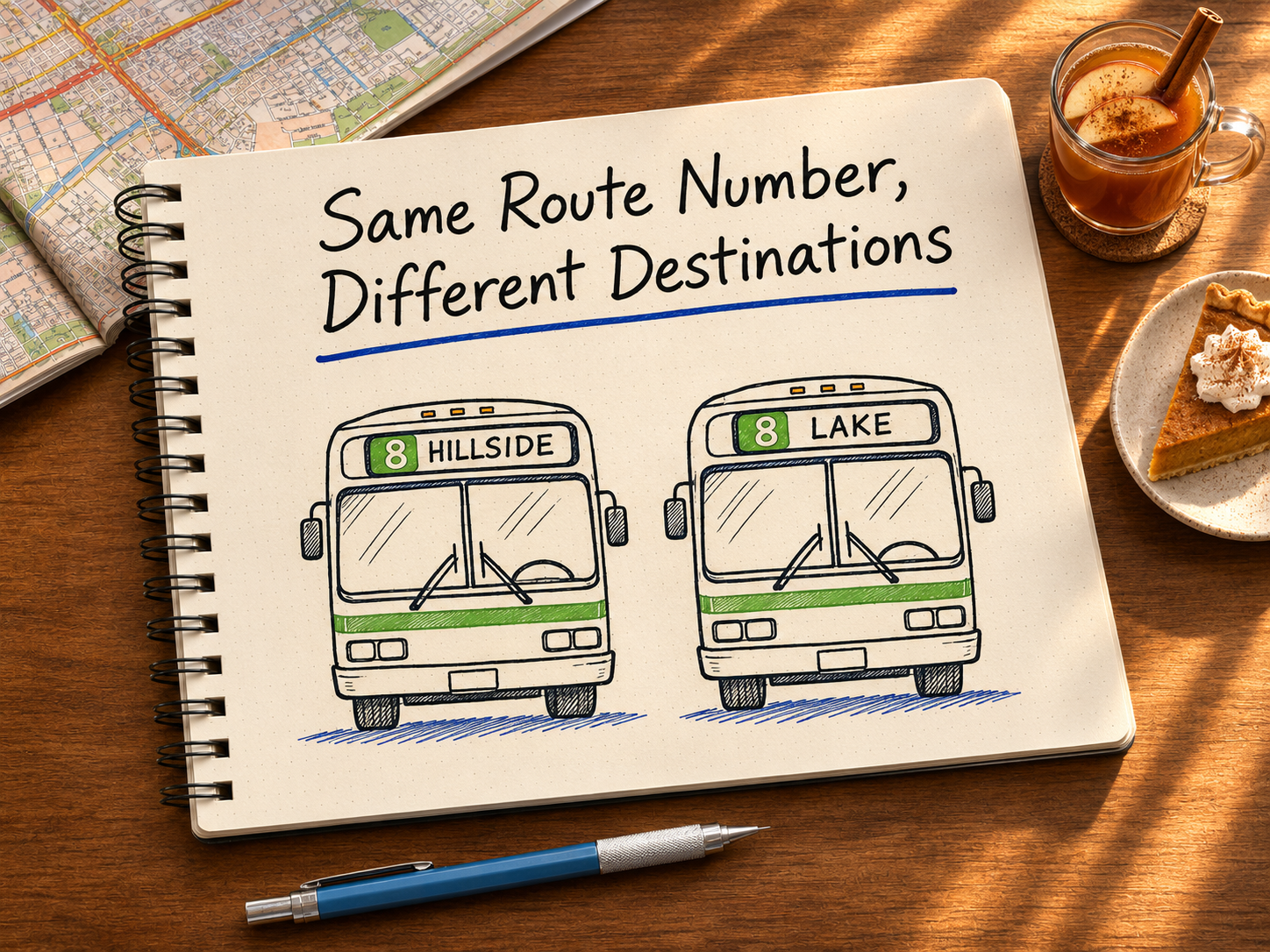
Suppose a timetable change is intended to make the bus to the lake easier to find. A week later, both branches are running on time, but people at the library are still asking which bus to board. What would tell the planner whether the change helped? Spend a few departures at the stop and look at the choice those passengers actually face.
One number can cover more than one path
Imagine Route 8 leaves downtown and follows Main Street to the library. From there, some trips go to Hillside and others go to the lake. If you’re headed to the library, either bus works. If you’re headed to the lake, the word beside the 8 matters as much as the number.
Follow one trip across the timetable
A scheduler calls the ordered set of stops a trip serves its pattern. A route can have several patterns. The distinction matters when you read the timetable. Put your finger on your boarding time and follow that same trip to your destination. If there’s a dash in the Lake column, check the timetable key before treating that trip as an option. The next printed time in the column may belong to a different bus.
Imagine the 09:00 departure from downtown shows 09:12 at the library and 09:28 at Hillside. The 09:15 departure shows 09:27 at the library and 09:45 at Lake. Someone reading only the downtown column sees a bus at 09:00. Following that trip across the page shows why the 09:15 is the first useful departure for the lake.
What the rider sees at the curb
There’s also a decision for the person programming the destination sign. Suppose both signs say “via Main Street.” That’s accurate right up to the point where a rider needs to tell the buses apart. “8 Hillside” and “8 Lake” give the person at the curb something they can use before the doors open.
Consider the return trip. Both buses may now display “Downtown.” That works if the remaining stops are the same. A rider boarding downtown for the trip home faces a different choice, even though the map shows the same two branches in both directions. The information needed changes with the direction of travel.
Check the trip in each place it appears
The printed timetable can be correct while an app still describes both trips as Route 8 to Main Street. GTFS: The Data Behind Your Transit Trip Planner explains how the schedule reaches those apps. For this check, select a particular departure and compare its listed stops and destination with the timetable and the sign the operator is instructed to display.
Here’s the desk check I’d use. Pick a stop the two trips share, then look at the map, the timetable and the front sign from the perspective of someone making that trip for the first time. Can they identify the correct bus while both are still in sight?
Tags
This article reflects the author's personal experience and general industry knowledge. Agency practices, labor agreements, laws, funding requirements, and operating conditions vary.
Related Articles
Transit Planning3 min read
Why Can't Every Neighborhood Have Frequent Bus Service?
Nearby service and frequent service each help passengers, but limited resources can force choices between them. Understanding coverage, community layout, and complete journeys makes those choices easier to assess.
Read Article
Transit Planning3 min read
Why Does the Bus Take the Long Way Around?
An indirect route can improve access to an important destination while adding time for through passengers. Evaluating that choice means comparing walking, waiting, riding, and the effect on the operating schedule.
Read Article
Transit Planning3 min read
Why Are Weekend and Holiday Bus Schedules Different?
Weekends and holidays bring different travel needs, operating hours, and connections. A separate service day deserves its own review of whether passengers can complete the journeys they need.
Read Article