Why Can't Every Neighborhood Have Frequent Bus Service?
The choices involved in reaching more places with a limited service budget
By Craig3 min read
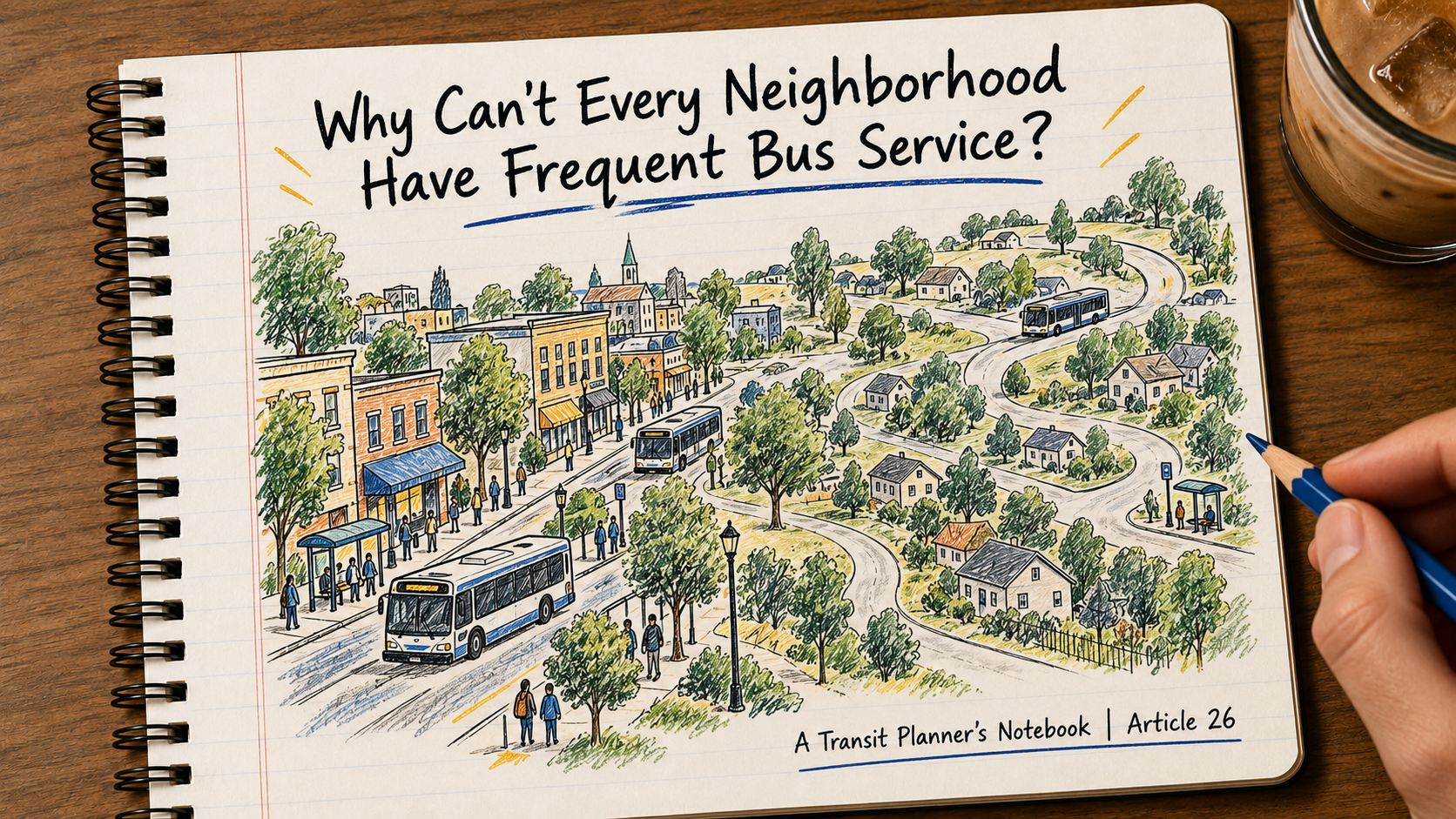
Residents want a bus near their homes. They also want that bus to come often enough to be useful.
Those are reasonable expectations. Meeting both everywhere becomes difficult when a transit agency has a limited operating budget and destinations are spread across a large area.
Understanding that problem begins with two familiar questions: where does the service go, and how often does it come?
Coverage and Frequency
Coverage describes the places transit reaches. Frequency describes how often buses operate.
A route through a neighborhood increases geographic coverage. Additional trips on an existing route improve frequency.
Both can make service more useful, but they solve different problems. A nearby bus that comes only a few times a day may offer limited flexibility. A frequent route farther away may be difficult to reach.
Drawing more route lines on the map does not, by itself, show how many practical journeys the system provides.
Two Plans with the Same Budget
Imagine two hypothetical plans with the same total operating budget.
The first spreads service across more streets and reaches more neighborhoods. Because the available operating time is distributed among those routes, each receives fewer trips.
The second concentrates service along fewer corridors. Those corridors receive more frequent trips, while some neighborhoods have a longer walk or need another way to reach transit.
The first plan helps more people find a nearby route. The second reduces waiting and creates more travel opportunities along the corridors it serves.
Neither description is enough to choose a plan. The next step is to examine who can reach the service, which destinations are connected, and what people can actually accomplish with the available trips.
Community Layout Changes What Is Possible
A continuous street connecting housing, stores, schools, and employment can allow one route to serve several purposes.
A community with winding streets, dead ends, disconnected developments, and widely separated destinations may require much more bus travel to provide similar access.
The bus may have to enter a neighborhood and return along the same road. A nearby destination may have no direct street connection. Walking routes can also be indirect.
These conditions affect both coverage and operating cost. Population alone cannot explain the service requirement; the arrangement of streets and destinations matters too.
Frequency Changes the Value of a Route
More frequent service gives passengers additional choices about when to leave. It can also reduce the wait after a missed bus and make transfers easier to use.
That flexibility can matter for appointments that finish at uncertain times, variable work shifts, or journeys involving several activities.
On a route with very limited departures, a small delay at a destination may mean a long wait for the trip home. Service span matters as well: frequent midday service cannot provide an evening journey after the buses stop running.
The foundations from the earlier discussions of service span, day types, and transfers therefore remain part of the coverage discussion.
Essential Access Belongs in the Decision
Passenger demand is important, but it is one part of the review.
A less densely populated area may contain people with few transportation alternatives. A particular route may provide access to medical care, groceries, or a regional connection that cannot be reached another practical way.
Walking conditions also affect whether a frequent corridor is a usable substitute for neighborhood service. A route across a high-speed road or beyond an inaccessible walking path may be nearby geographically and difficult to reach in practice.
These considerations should be described plainly. They help the community understand the needs being balanced and the consequences of each option.
A Choice About Public Priorities
Planners can compare alternatives and explain the operating effects. Agency leadership and the public also have a role in establishing the priorities the service is expected to meet.
A proposal should make those choices visible:
- Which places gain access?
- Which passengers receive more frequent trips?
- Who has a longer walk, wait, or transfer?
- Are important daily journeys still possible?
- Can the agency operate the plan consistently?
Additional resources can expand the available choices. When resources remain fixed, a change in one part of the network needs to be considered alongside its effects elsewhere.
Tags
This article reflects the author's personal experience and general industry knowledge. Agency practices, labor agreements, laws, funding requirements, and operating conditions vary.
Related Articles
Transit Planning2 min read
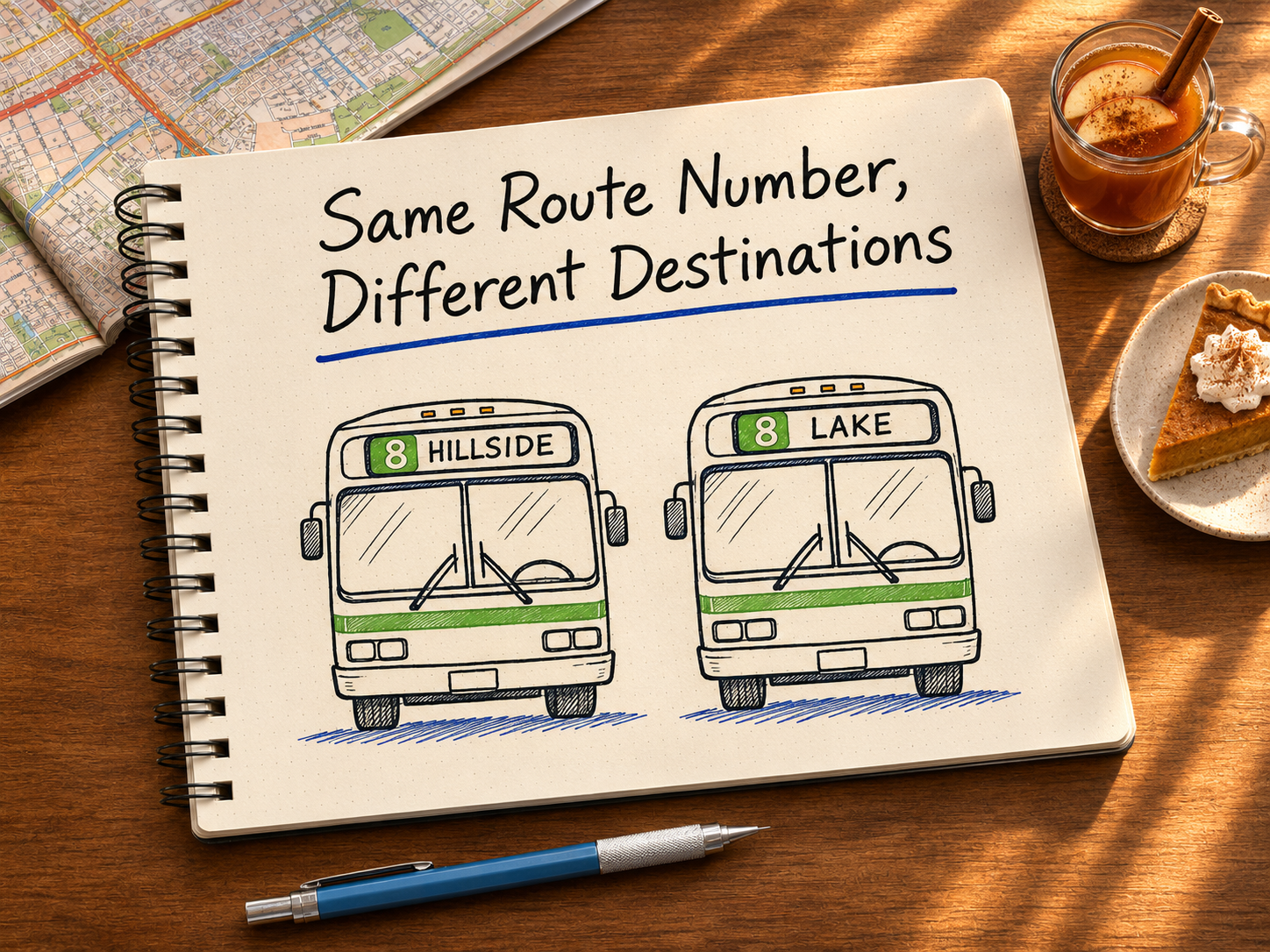
Same Route Number, Different Destinations
Two buses pull up to the same stop with the same number on the front. One will take you to the lake. The other turns toward Hillside. Both operators have the right sign up. How would you know which one to board?
Read Article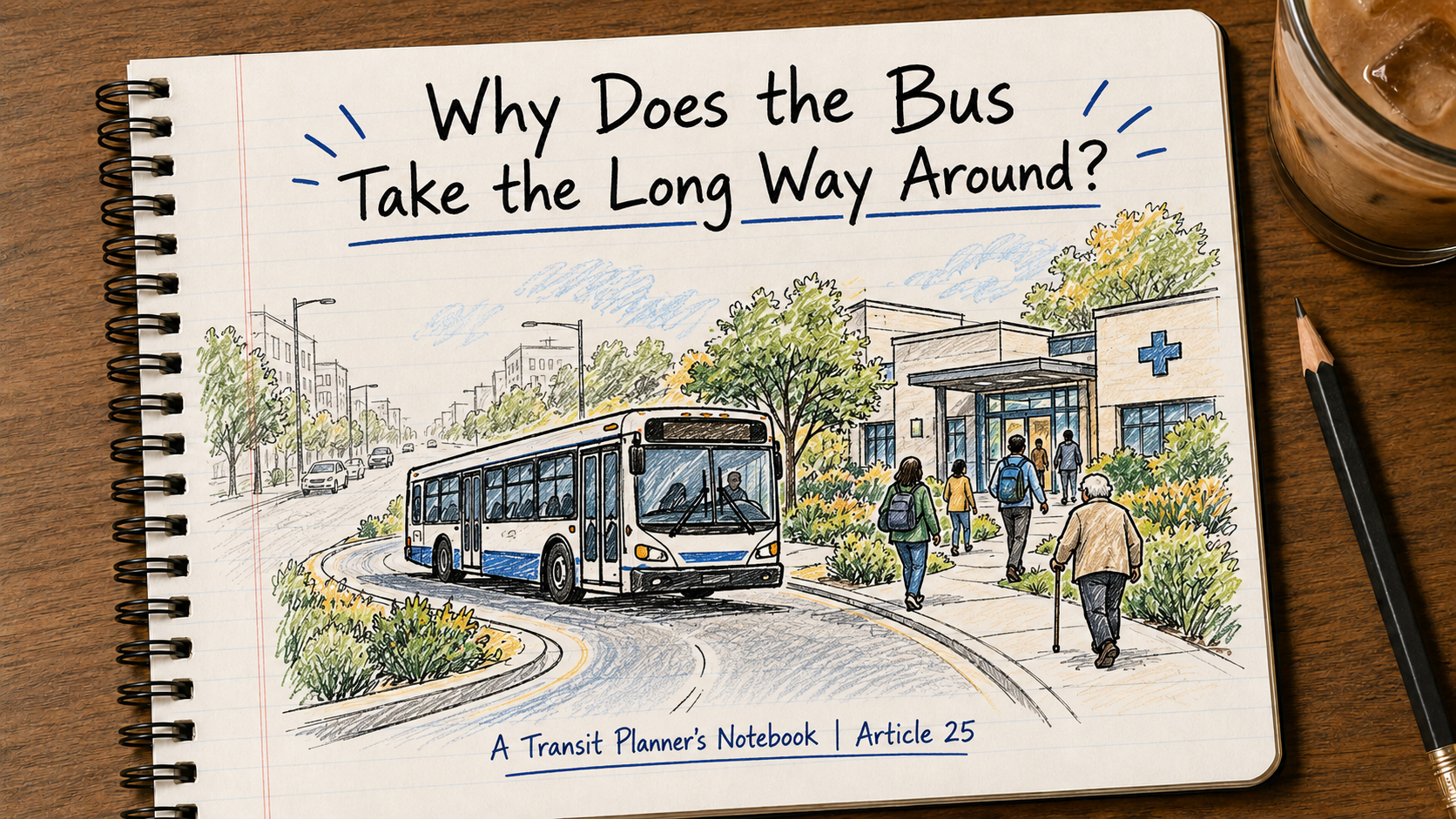
Transit Planning3 min read
Why Does the Bus Take the Long Way Around?
An indirect route can improve access to an important destination while adding time for through passengers. Evaluating that choice means comparing walking, waiting, riding, and the effect on the operating schedule.
Read Article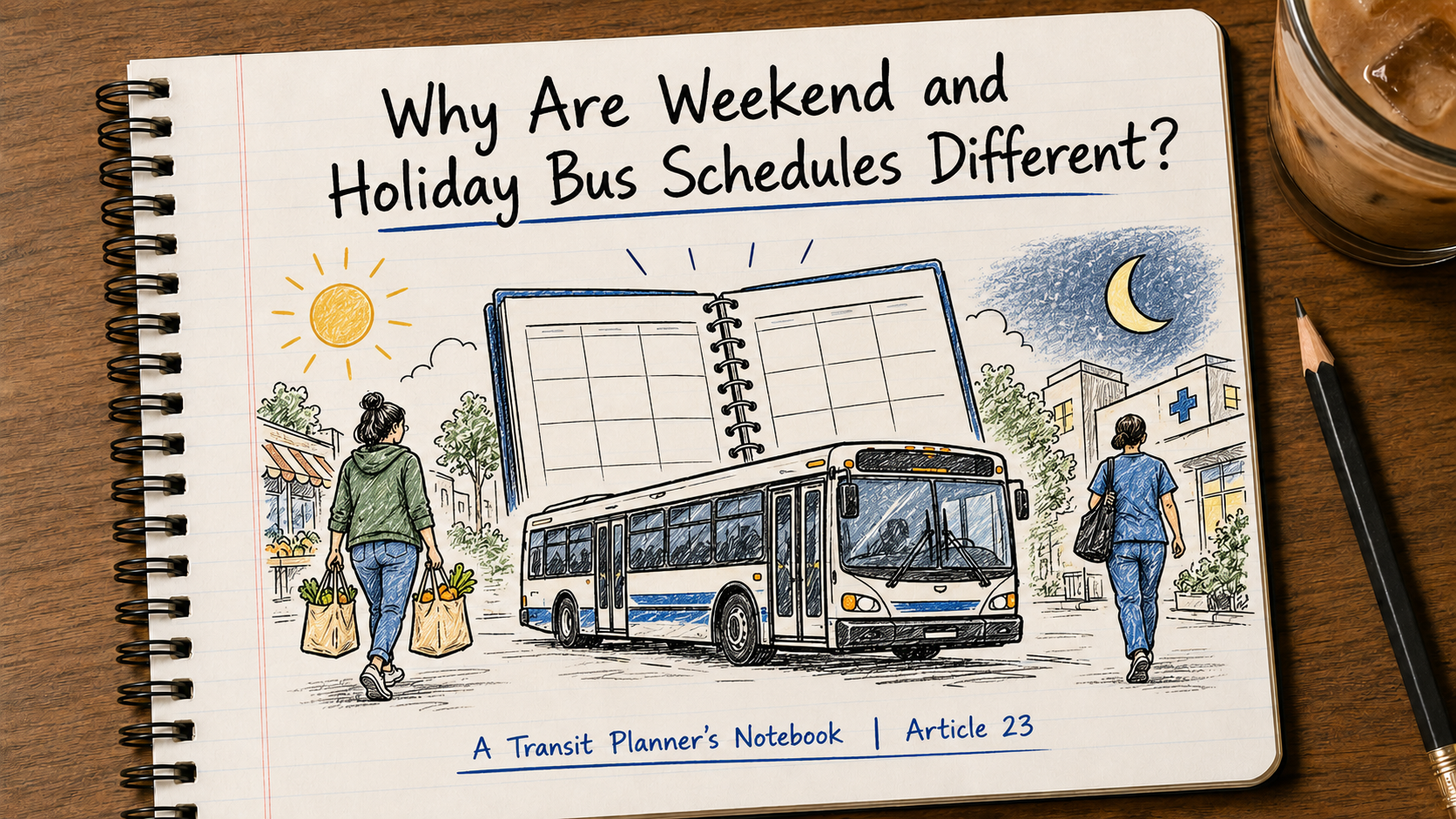
Transit Planning3 min read
Why Are Weekend and Holiday Bus Schedules Different?
Weekends and holidays bring different travel needs, operating hours, and connections. A separate service day deserves its own review of whether passengers can complete the journeys they need.
Read Article