Why Does This Bus Turn Back Here?
How a scheduled short turn puts more trips on the busiest part of a line.
By Craig2 min read
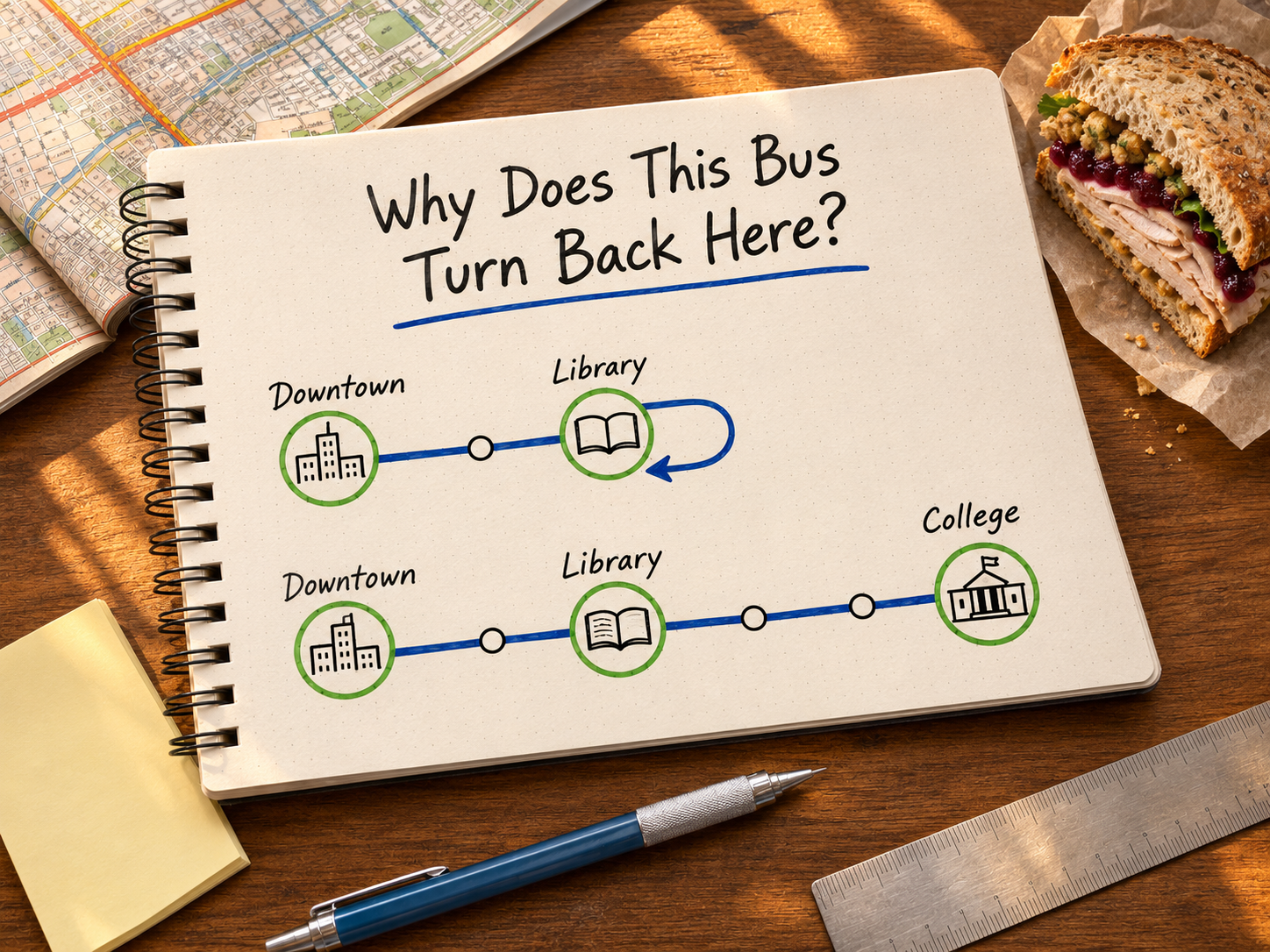
A student watches the 08:20 bus leave with room aboard. The operator has said it ends at the library. The student needs the college, one stop farther along. Why schedule a bus that comes so close to the destination and then turns back?
Where the extra trip does the most work
Picture a route from downtown to a college by way of a library. Between downtown and the library, riders fill seats in both directions. Beyond the library, there’s room on most trips. One option is a scheduled short turn — a published trip that covers only part of the line before the bus turns back.
The useful evidence is how many people are aboard along each section. A full bus leaving downtown can be nearly empty past the library because many people got off there. A count at the college alone would miss the crowd. A count at downtown alone could make the entire line look equally busy.
Read the timetable beyond the turn
Suppose buses leave downtown at 08:00, 08:20 and 08:40. The first and third go to the college. The middle trip ends at the library. For someone headed to the library, those departures are 20 minutes apart. For a student headed to the college, the gap is 40 minutes. A poster promising “every 20 minutes” needs to say where that promise applies.
Look at arrivals as well as departures. If the college-bound bus gets students to class five minutes late, inserting a library trip between the college trips does little for them. It may still help by carrying library passengers who would otherwise fill seats on the college bus. Those are separate benefits to check on the street.
Where does the operator turn the bus?
The library also has to work from the operator’s seat. Where does the last passenger get off? Which streets take the bus back into position? Is there somewhere to wait if the return trip leaves in six minutes? A library with a convenient public entrance may have a parking lot that makes a poor bus terminal.
The two sides of the street deserve a look. A useful drop-off beside the library may be several blocks from the first stop on the way back. Include the turn, the drive between stops and the scheduled recovery before assigning the return trip. Then check where a passenger waiting for that trip will actually stand.
Scheduled and unscheduled turns
Dispatch may also turn a bus back early during a disruption. The difference for riders is what they could plan on when they left home. The scheduled short turn belongs in the timetable, on the trip planner and on the front sign from the start.
When both kinds of turn use the same location, the public information has different jobs. For the regular trip, riders can choose their departure before leaving home. During a disruption, a rider already aboard needs to know where to get off and how to continue
Tags
This article reflects the author's personal experience and general industry knowledge. Agency practices, labor agreements, laws, funding requirements, and operating conditions vary.
Related Articles
Scheduling Explained3 min read
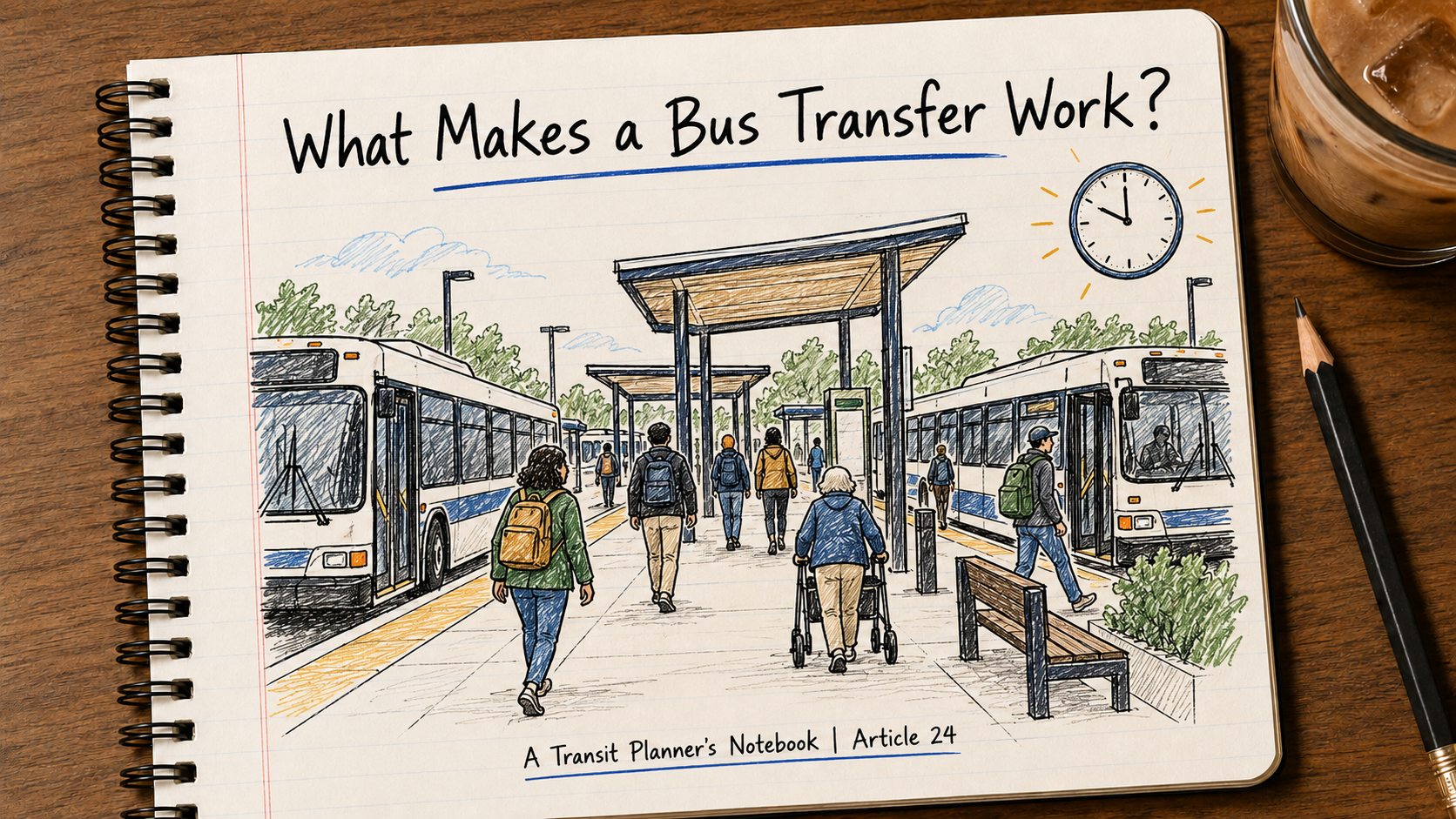
What Makes a Bus Transfer Work?
A connection needs time for passengers to leave one bus, reach the next boarding location, and board again. Good transfer planning considers ordinary variation and the consequences of missing the next departure.
Read Article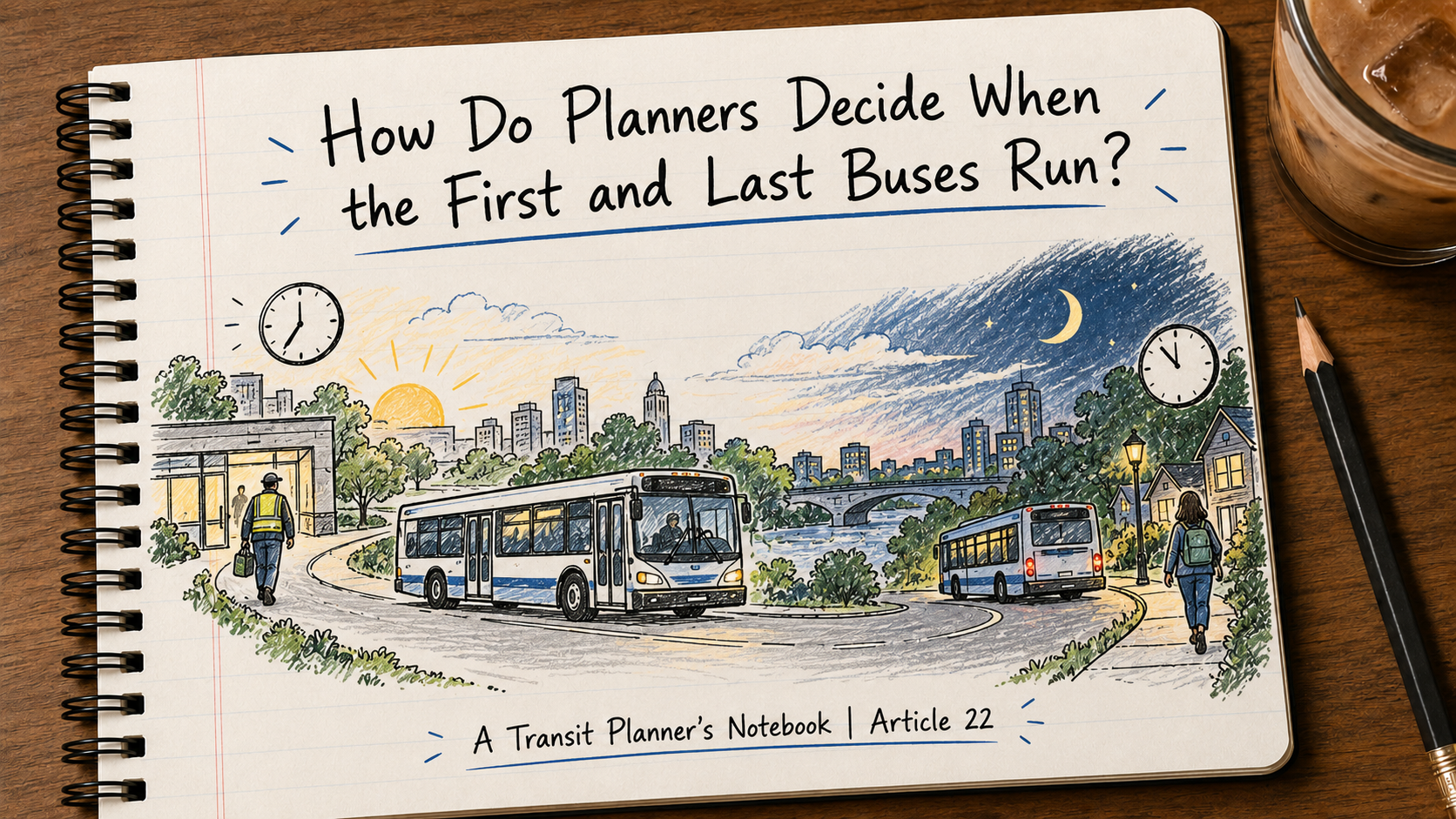
Scheduling Explained3 min read
How Do Planners Decide When the First and Last Buses Run?
The first and last buses determine which daily activities transit can support. A useful service span must provide a practical arrival, workable connections, and an opportunity to return home.
Read Article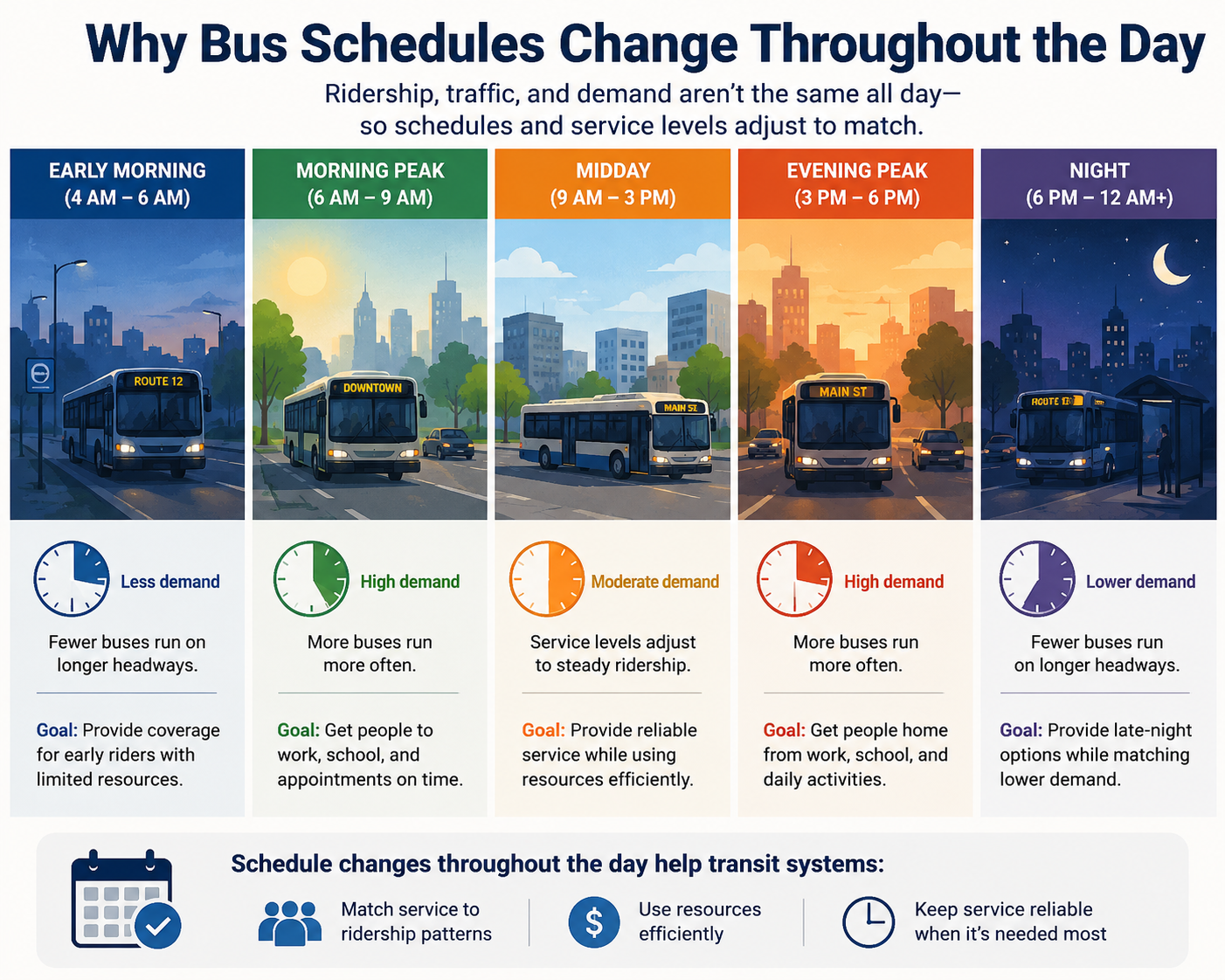
Scheduling Explained2 min read
Why Bus Schedules Change Throughout the Day
The same route may need more running time at 4:00 PM than at 6:00 AM. Transit schedules change throughout the day because traffic, passenger activity, school schedules, employment patterns, and other conditions rarely remain constant.
Read Article