Why Does the Bus Take the Long Way Around?
How planners weigh a direct ride against access to important destinations
By Craig3 min read
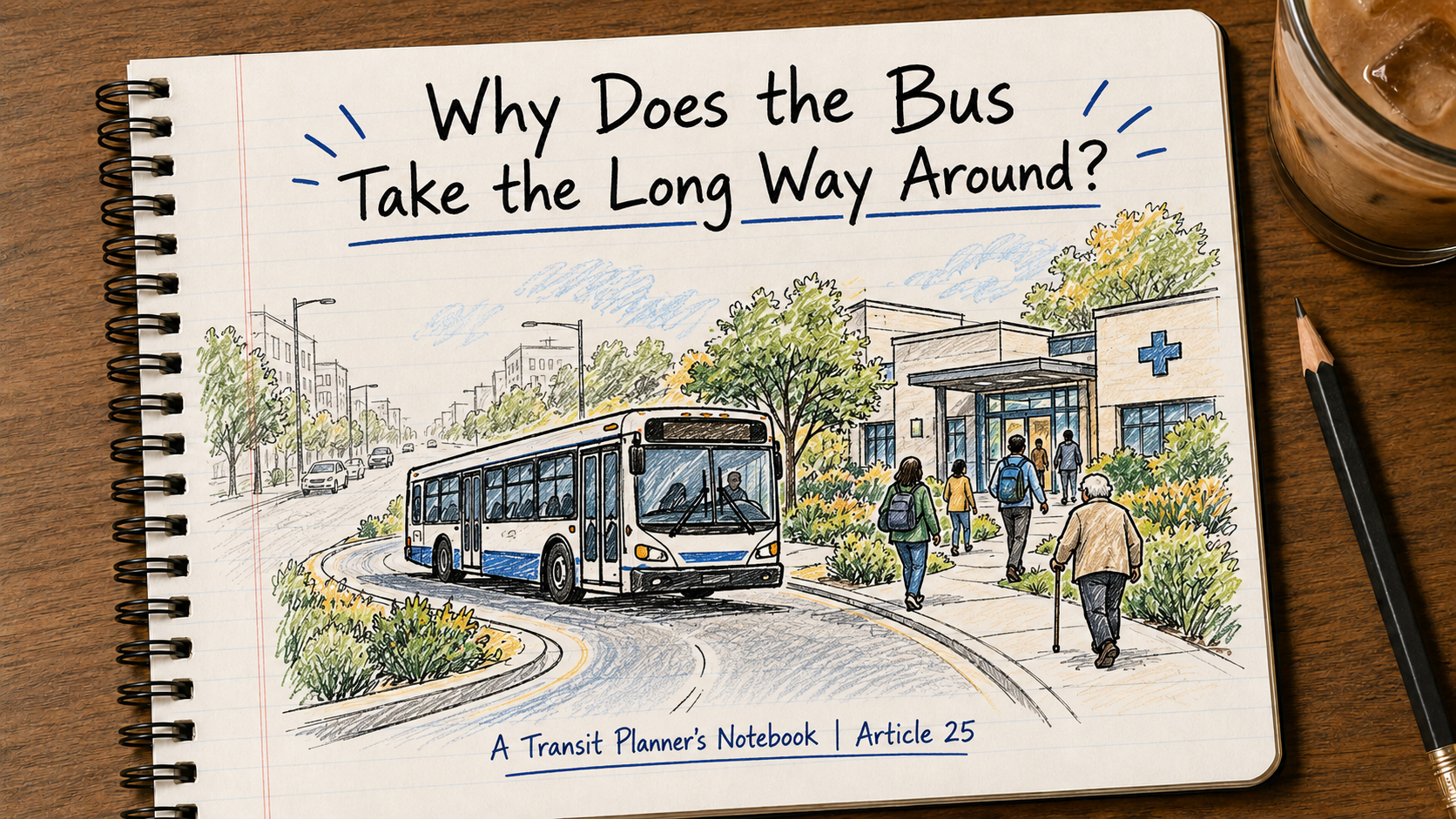
A passenger looks at a route map and notices that the bus turns away from the main road, travels through a shopping area, and then returns to the road it left.
For someone riding through, that movement adds time. For someone whose destination is inside the shopping area, it may make the trip practical.
The planning question is how much access the extra travel provides and what it costs other passengers in time.
Why Routes Leave the Direct Path
A route deviation takes the bus away from a more direct path to serve another location.
That location might be a clinic, college, senior housing development, employment center, or important transfer point. In other cases, the street layout itself requires an indirect path because there is no suitable through street.
The line on the map has a purpose. Evaluating it requires understanding that purpose and checking whether the benefit still justifies the extra travel.
A deviation that was useful when a major destination opened may need another look if that destination closes or travel patterns change.
Who Gains and Who Spends More Time?
Consider a hypothetical clinic located away from the main road. Serving its entrance adds eight minutes to the bus trip.
Passengers visiting the clinic may gain a much shorter walk. That can be especially valuable when the alternative involves a steep grade, a difficult crossing, or a long path from the street to the entrance.
Passengers staying aboard for destinations farther along the route spend eight additional minutes riding. They may also have a connection to make.
Both groups have legitimate travel needs. A useful review identifies how many people use the deviation, who travels through it, when those trips occur, and what alternatives exist.
The decision should be explained through those consequences rather than through whether the route looks tidy.
A Short Distance Can Be a Difficult Walk
The map may show the clinic only a short distance from the main road. The actual walking route can be longer.
A fence may block the nearest entrance. A parking lot may have no direct pedestrian path. The main road may be difficult to cross, or the destination's public entrance may be on the opposite side of the property.
For some passengers, a short walk on paper can be a serious obstacle in practice.
Planners need to examine the route people can actually use. Why Can’t a Bus Stop Just Be Put Here? discussed this principle in relation to bus stops. The same principle matters when deciding whether a bus should enter a property or remain on the main street.
Compare the Whole Journey
One alternative might be a stop on the main road with an improved walking connection. Another might be a connecting route serving the destination.
Those options need a complete comparison.
The main-road stop may shorten the ride but lengthen the walk. A connecting route may avoid delaying through passengers but add a transfer and a wait. If that route runs infrequently or stops early, it may fail to provide a useful replacement.
The transfer considerations in What Makes a Bus Transfer Work? belong in this discussion. Saving minutes aboard one bus may offer little benefit if the passenger then spends much longer waiting for another.
Extra Travel Affects Later Trips
The bus's work continues after the deviation.
Additional running time can reduce recovery, move a connection, or delay the next trip. If the schedule has no room for the added travel, maintaining the existing frequency may require a different operating plan or more resources.
Traffic within a shopping center or around a school can also vary substantially by time of day. The planner needs realistic travel times for the conditions the bus will encounter.
A proposed deviation therefore needs a schedule review as well as a map review.
Keep the Pattern Understandable
Serving a deviation on selected trips may be appropriate in some circumstances, but different patterns can make the route harder to understand.
Passengers need to know which trips reach their destination. Operators need clear instructions, and timetables, destination signs, maps, and trip planners need to agree.
An operating compromise loses value if riders cannot tell which bus to use.
Tags
This article reflects the author's personal experience and general industry knowledge. Agency practices, labor agreements, laws, funding requirements, and operating conditions vary.
Related Articles
Transit Planning3 min read
Why Are Weekend and Holiday Bus Schedules Different?
Weekends and holidays bring different travel needs, operating hours, and connections. A separate service day deserves its own review of whether passengers can complete the journeys they need.
Read Article
Transit Planning3 min read
Why Can a Busy Route Have an Almost Empty Bus?
An almost empty bus is one moment in a longer trip. Understanding boardings, alightings, passenger loads, and turnover helps explain how a route can provide useful rides without looking busy at every stop.
Read Article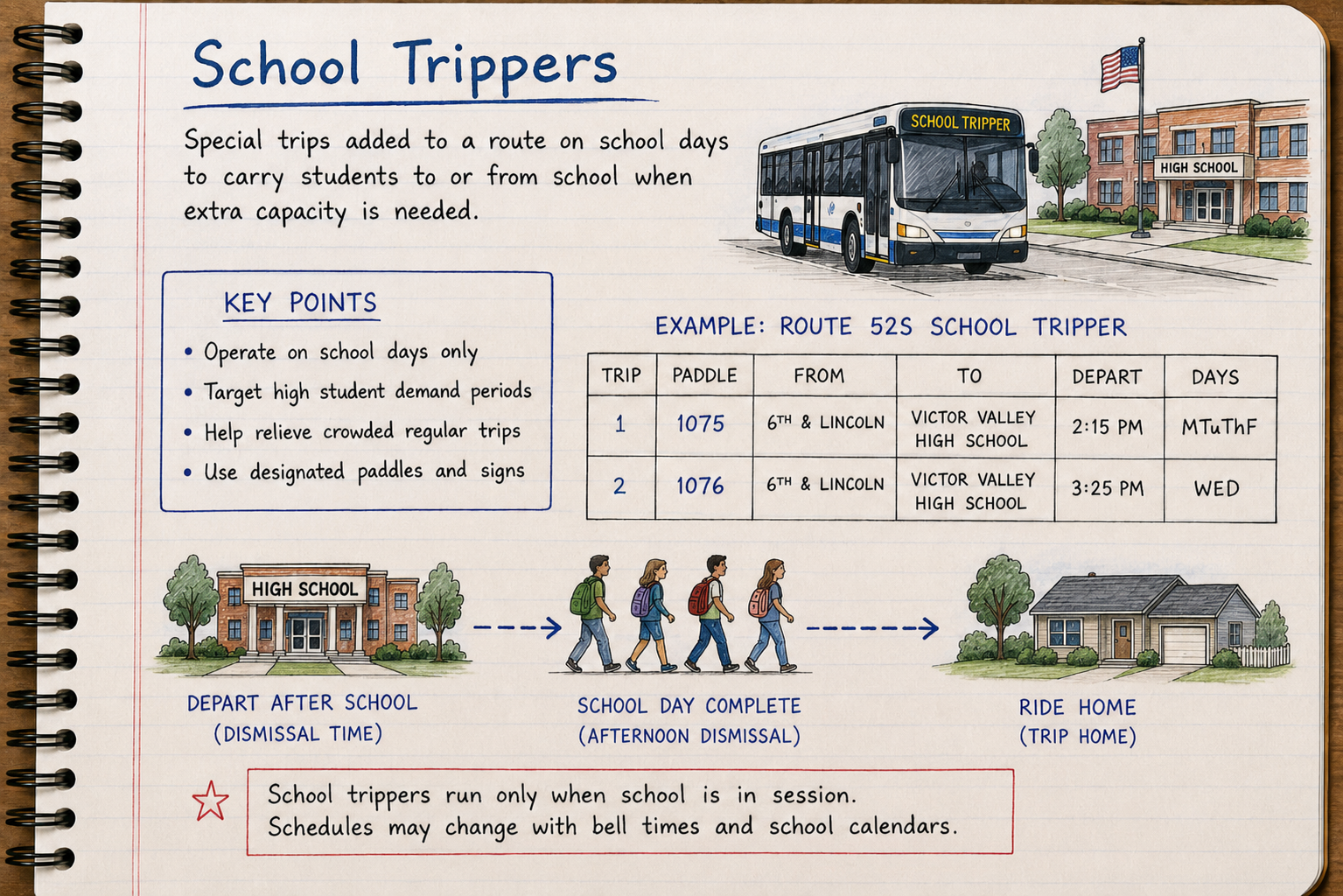
Transit Planning2 min read
School Trippers: When One Extra Trip Solves a Very Specific Problem
School dismissal can create a large passenger load during a very short period. Instead of changing an entire route, transit agencies may use a school tripper - an additional scheduled trip designed to provide capacity exactly where and when it is needed.
Read Article