Skip to content
A Transit Planner's Notebook
  • Home
  • Articles
  • Topics
  • About
  • Contact

Archive

Articles

Practical explanations of transit planning, scheduling, and operations.

All Articles

7 articles

Transit Planning·October 26, 2026·3 min read

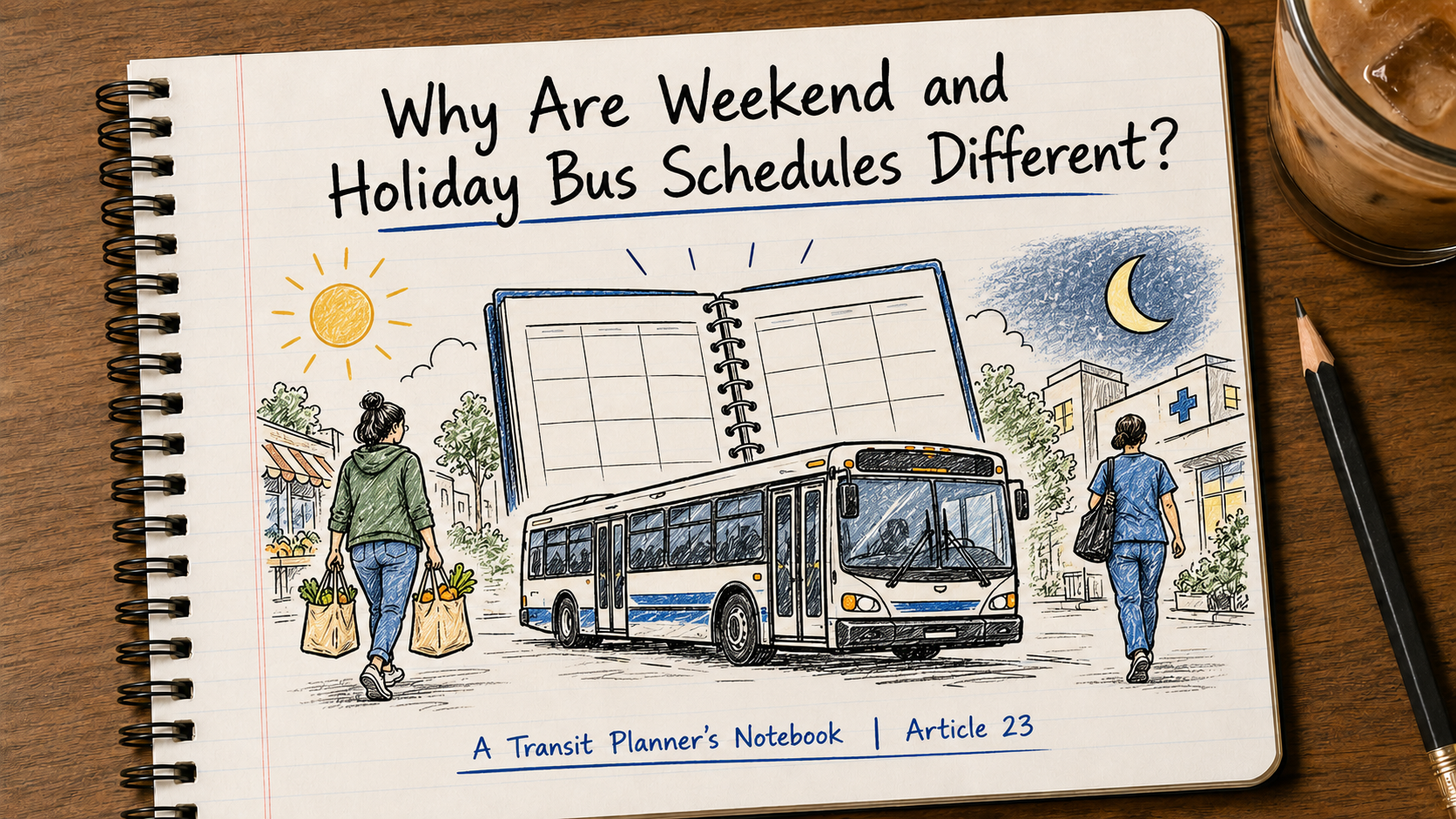
Why Are Weekend and Holiday Bus Schedules Different?

Weekends and holidays bring different travel needs, operating hours, and connections. A separate service day deserves its own review of whether passengers can complete the journeys they need.

Read Article
Scheduling Explained·October 22, 2026·3 min read

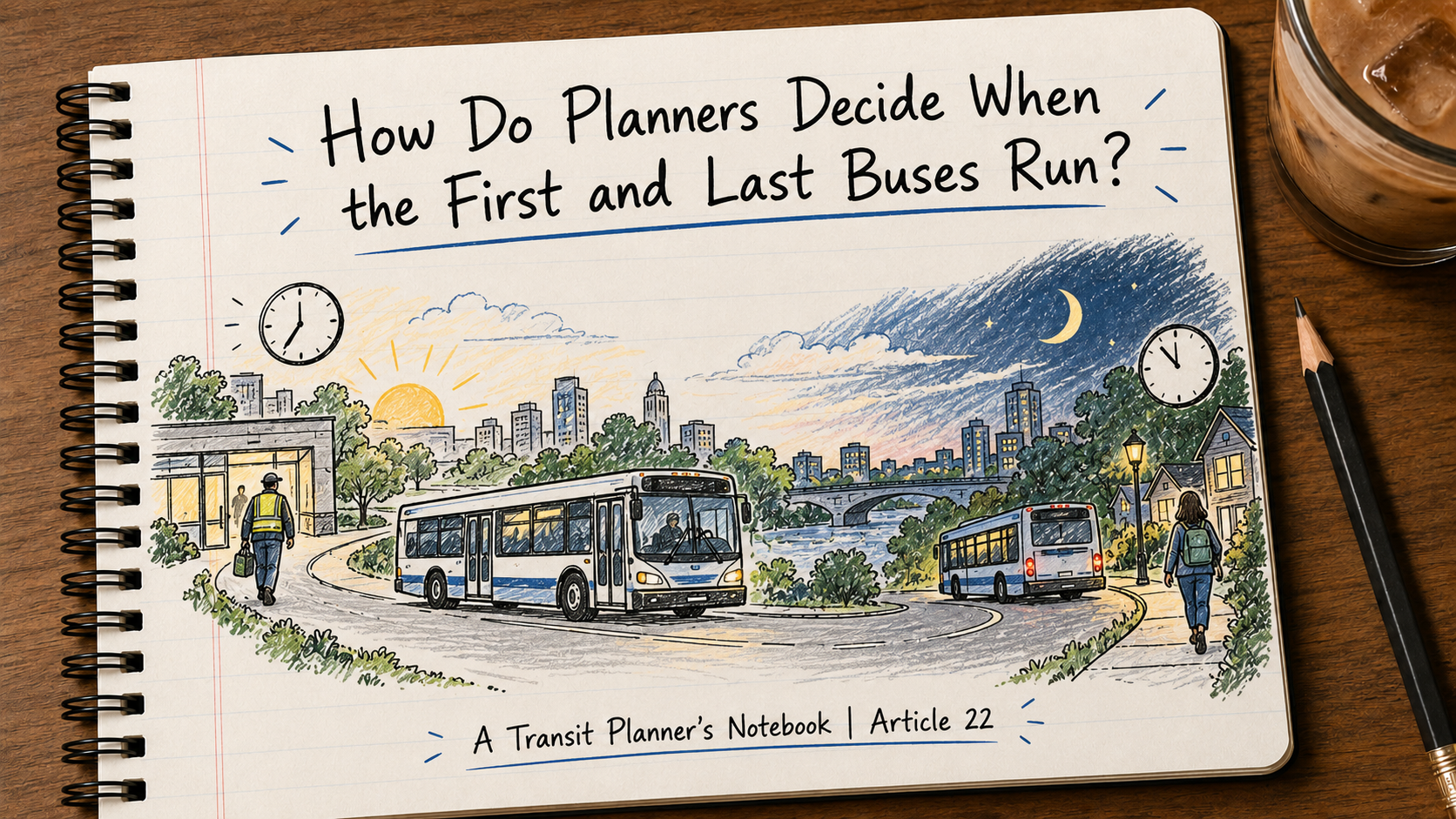
How Do Planners Decide When the First and Last Buses Run?

The first and last buses determine which daily activities transit can support. A useful service span must provide a practical arrival, workable connections, and an opportunity to return home.

Read Article

Transit Planning·October 19, 2026·3 min read

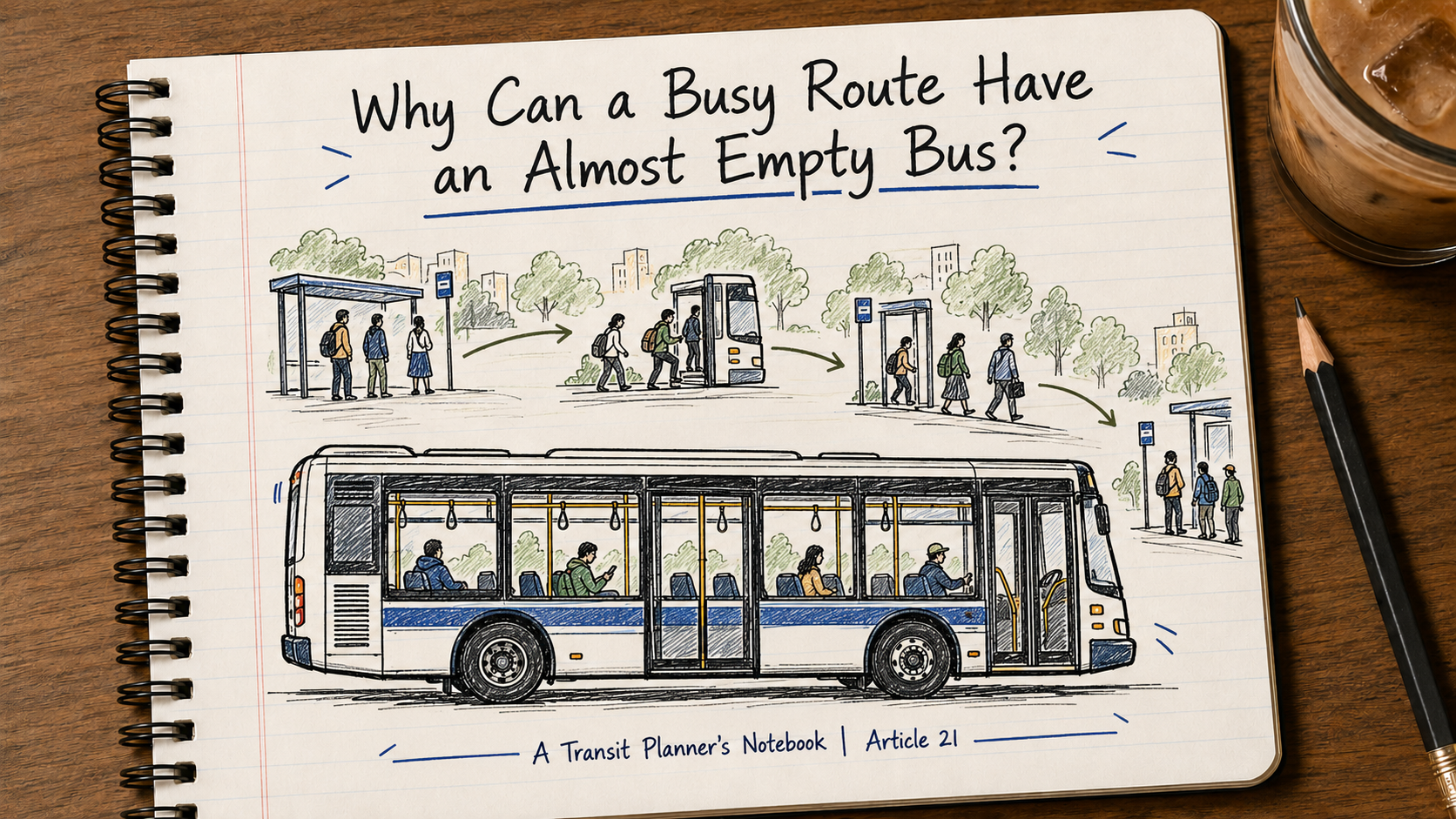
Why Can a Busy Route Have an Almost Empty Bus?

An almost empty bus is one moment in a longer trip. Understanding boardings, alightings, passenger loads, and turnover helps explain how a route can provide useful rides without looking busy at every stop.

Read Article

Transit Operations·October 6, 2026·1 min read

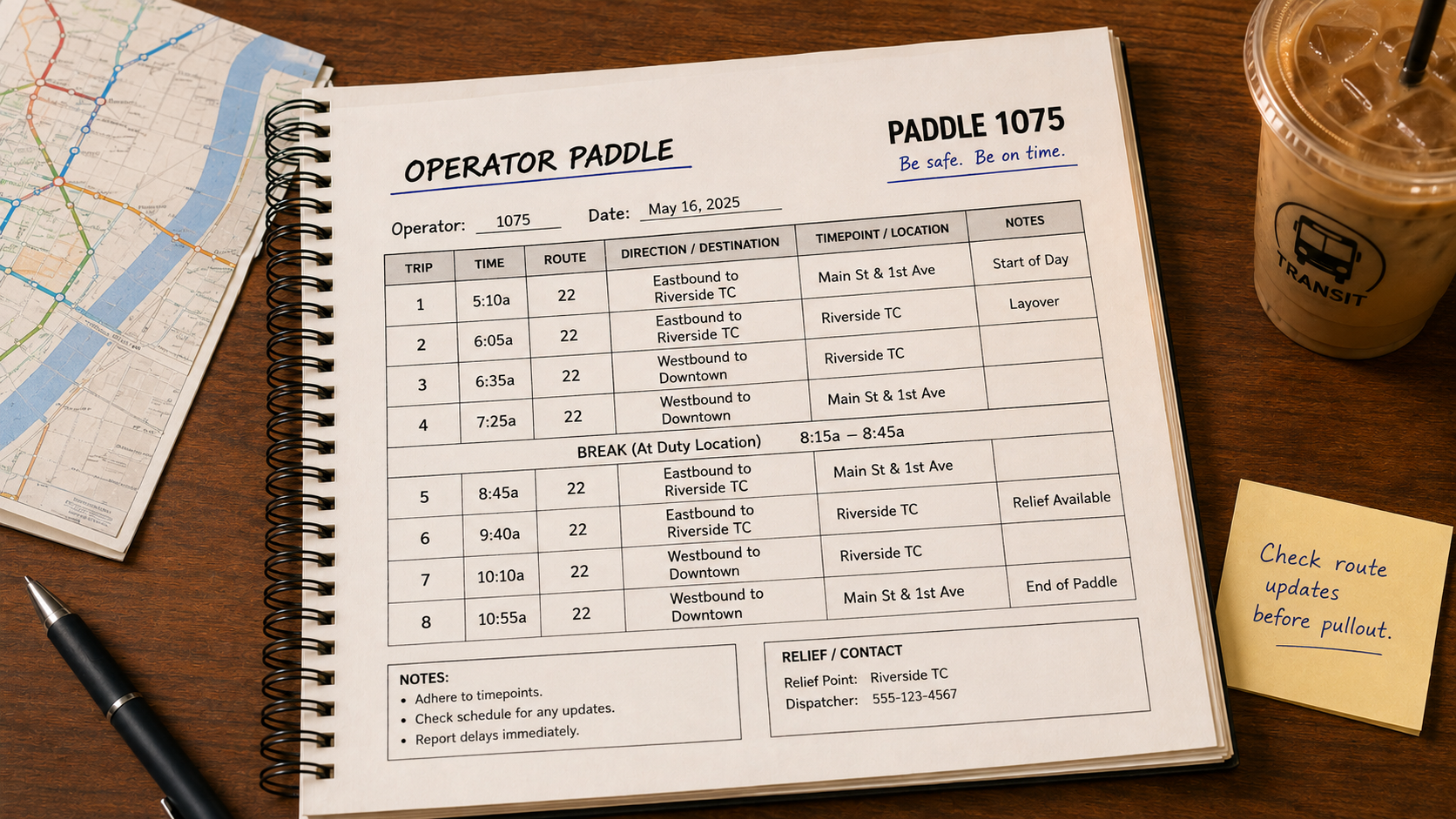
What Is an Operator Paddle?

Passengers see a timetable designed for travel planning. Operators need something more detailed. An operator paddle translates scheduled trips, timepoints, breaks, route changes, and other instructions into the working schedule used to operate the service.

Read Article

Transit Technology·October 1, 2026·2 min read

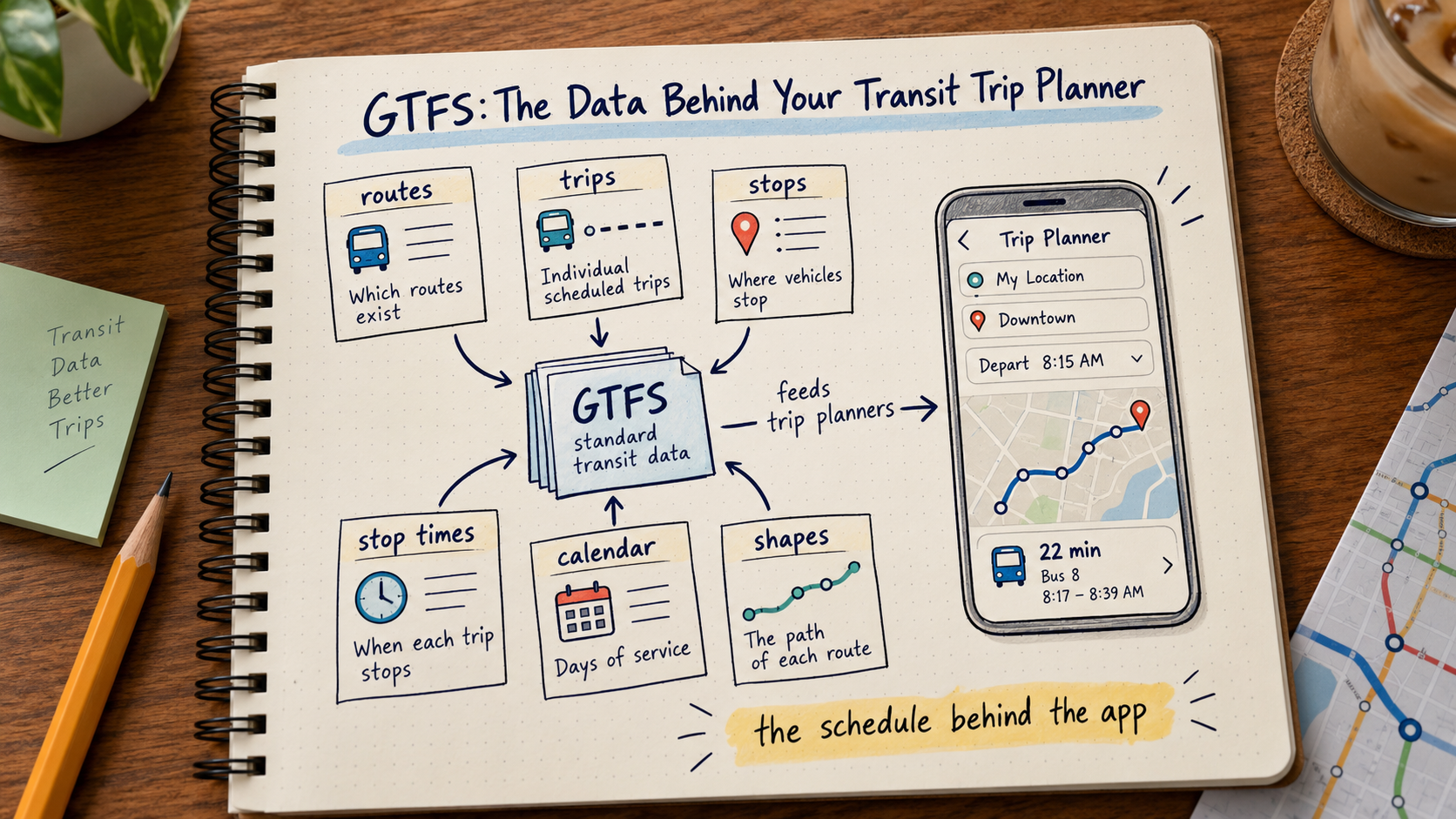
GTFS: The Data Behind Your Transit Trip Planner

When a trip-planning app shows a route, stop, departure time, or transfer, much of that information may come from GTFS. This standardized collection of transit data allows agencies to publish schedules in a format understood by trip planners and other transportation applications.

Read Article

Scheduling Explained·September 17, 2026·3 min read

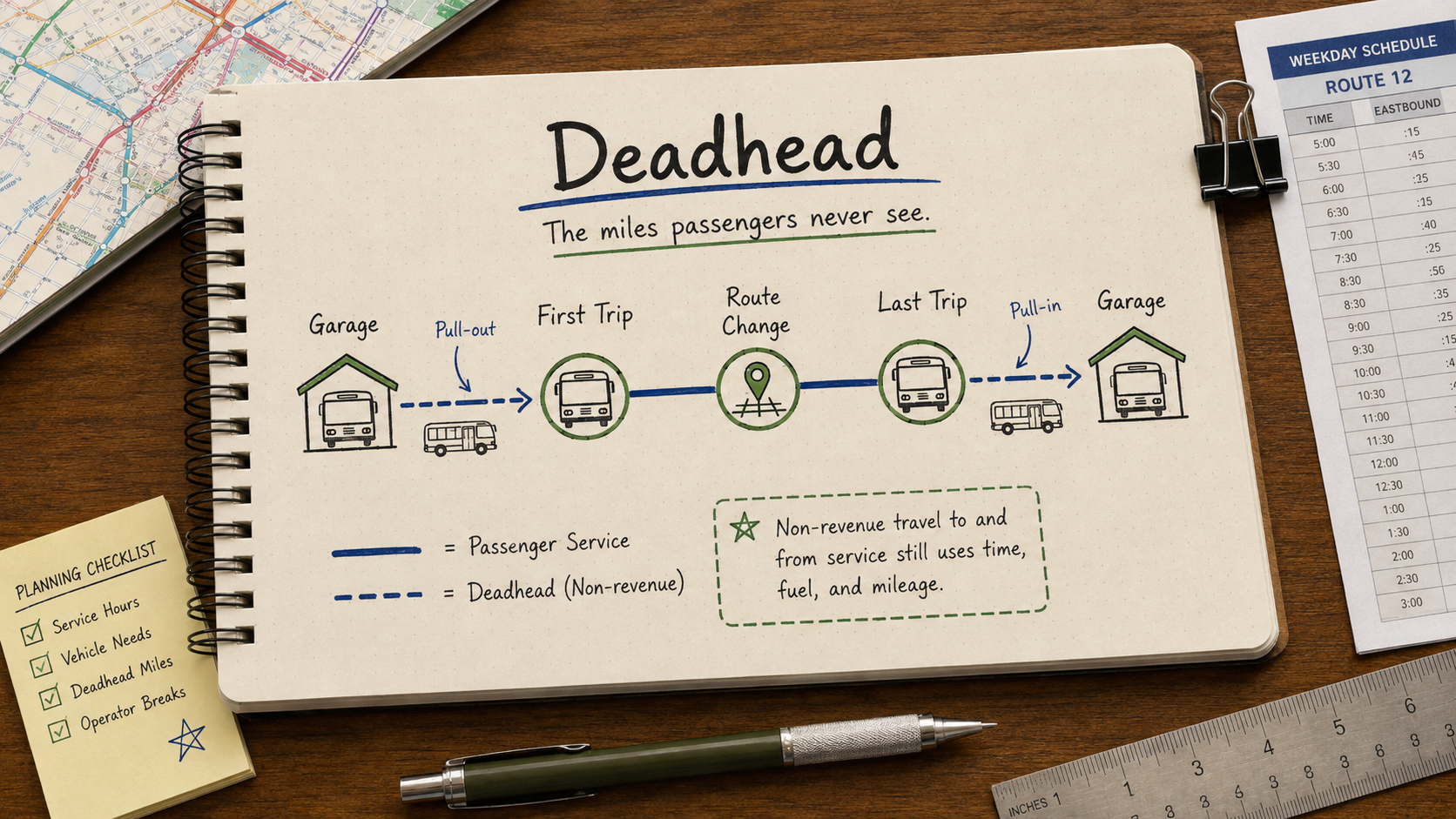
Deadhead: The Miles Passengers Never See

Not every mile a transit bus travels carries passengers. Deadhead movements connect garages, routes, terminals, and assignments, and although they never appear in the public timetable, they consume time, mileage, fuel, electricity, and operating resources.

Read Article

A Transit Planner's Notebook

Practical articles about transit planning, bus scheduling, operations, destination signs, technology, and transit history.

Built to explain the work behind the timetable.

Site

  • Home
  • Articles
  • Topics
  • About
  • Contact
  • Subscribe
  • RSS Feed

Topics

  • Transit Planning
  • Scheduling Explained
  • Transit Operations
  • Bus Stops and Facilities
  • Transit Technology
  • Destination Signs
  • Transit History
  • Planner's Notebook
  • Privacy Policy
  • Terms of Use
  • Disclaimer
  • Accessibility Statement

The views expressed on this site are personal and do not necessarily represent those of any employer, transit agency, contractor, or public organization.

© 2026 A Transit Planner's Notebook. All rights reserved.