What Is an Operator Paddle?
How the public timetable becomes a working set of instructions for the person driving the bus
By Craig1 min read
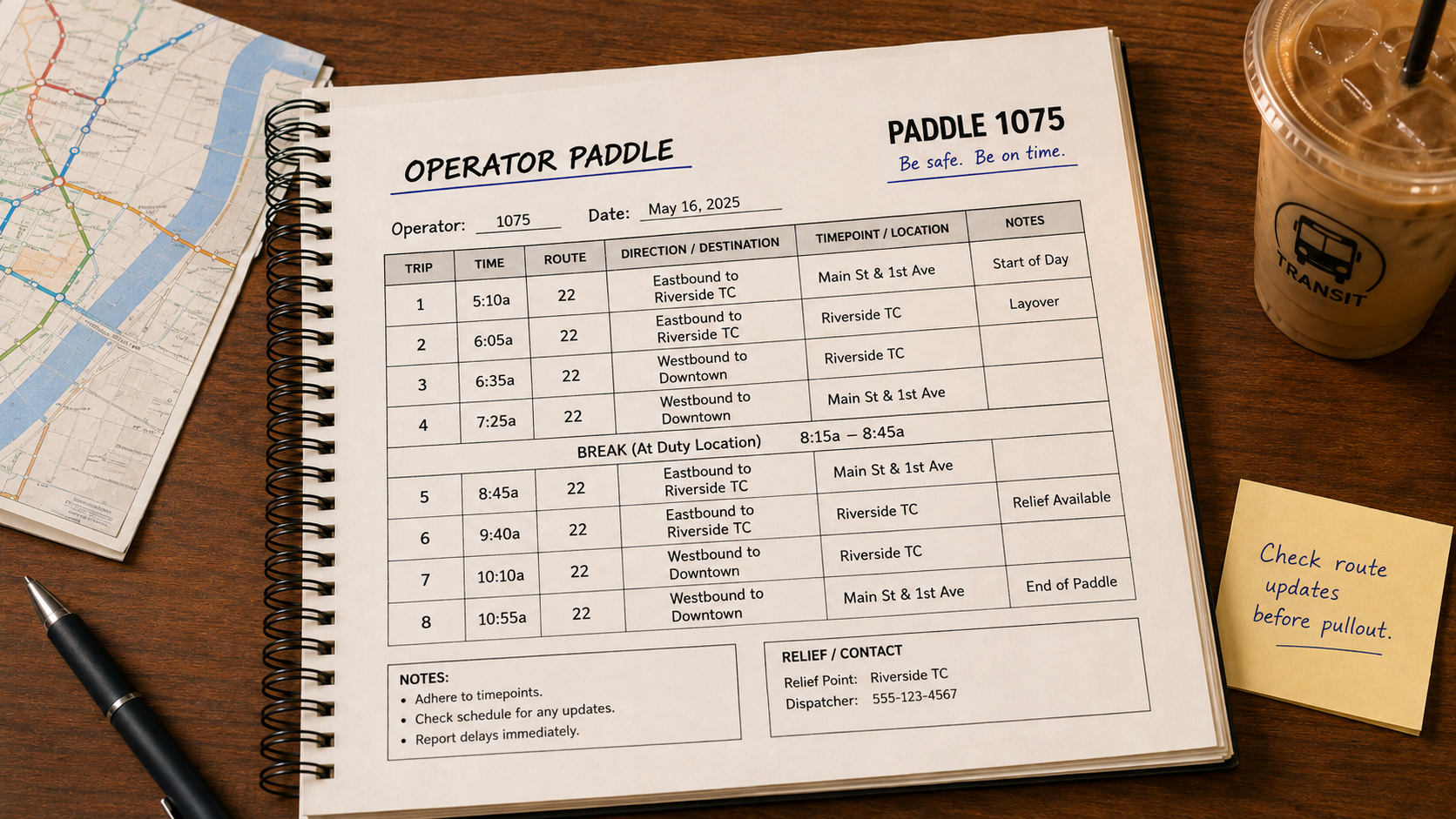
A public timetable tells passengers when the bus should arrive.
It does not contain everything an operator needs to know.
For that, transit systems often use a document commonly called a paddle.
What Is a Paddle?
Terminology varies by agency, but a paddle is generally an operator-facing schedule showing the work assigned during a run or piece of work.
It may contain:
- Trip times
- Timepoints
- Route numbers
- Directions
- Block information
- Pull-out instructions
- Pull-in information
- Relief points
- Breaks
- Special notes
It is far more detailed than the public timetable.
Passenger Information Versus Operating Information
The passenger needs to know:
Route 50 leaves the transit center at 8:00.
The operator may need to know:
- Which bus assignment is operating the trip
- Where the trip begins
- Which pattern to operate
- What destination sign to display
- Where the next trip starts
- Whether a relief occurs afterward
The paddle connects the published service with the operator's workday.
Accuracy Matters
A small paddle error can create a real operational problem.
An incorrect time might cause:
- An early departure
- A missed connection
- A late pull-out
An incorrect destination code might confuse passengers.
An incorrect route pattern could send a bus the wrong way.
This is why operating documents need careful review.
Service Changes Affect Paddles
Whenever schedules change, operator materials may need to change as well.
A five-minute adjustment to one trip can affect:
- The following trip
- Recovery
- Relief times
- Meal periods
- Connections
The public may see one changed departure.
The operator schedule may require several corresponding revisions.
Digital Access
Historically, operator materials were often distributed on paper.
Many agencies now make them available electronically as well.
That can improve access and reduce outdated copies, provided employees can reliably find the current version.
Version control matters.
Tags
This article reflects the author's personal experience and general industry knowledge. Agency practices, labor agreements, laws, funding requirements, and operating conditions vary.
Related Articles
Transit Operations6 min read
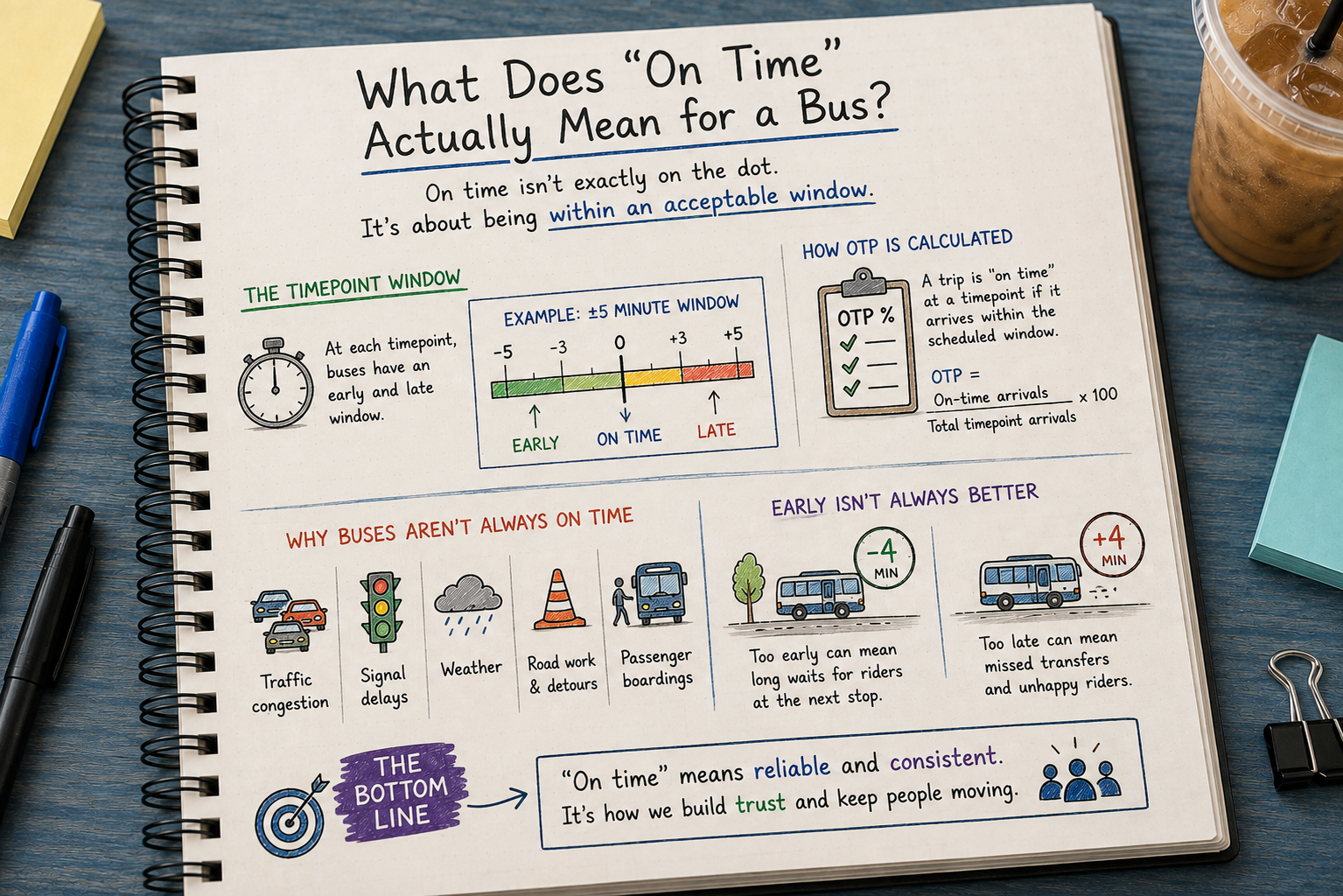
What Does “On Time” Actually Mean for a Bus?
On-time performance is one of transit’s most important service measures, but “on time” does not always mean arriving at the exact scheduled minute. Understanding early departures, late arrivals, timepoints, and schedule adherence helps explain what the numbers really measure.
Read Article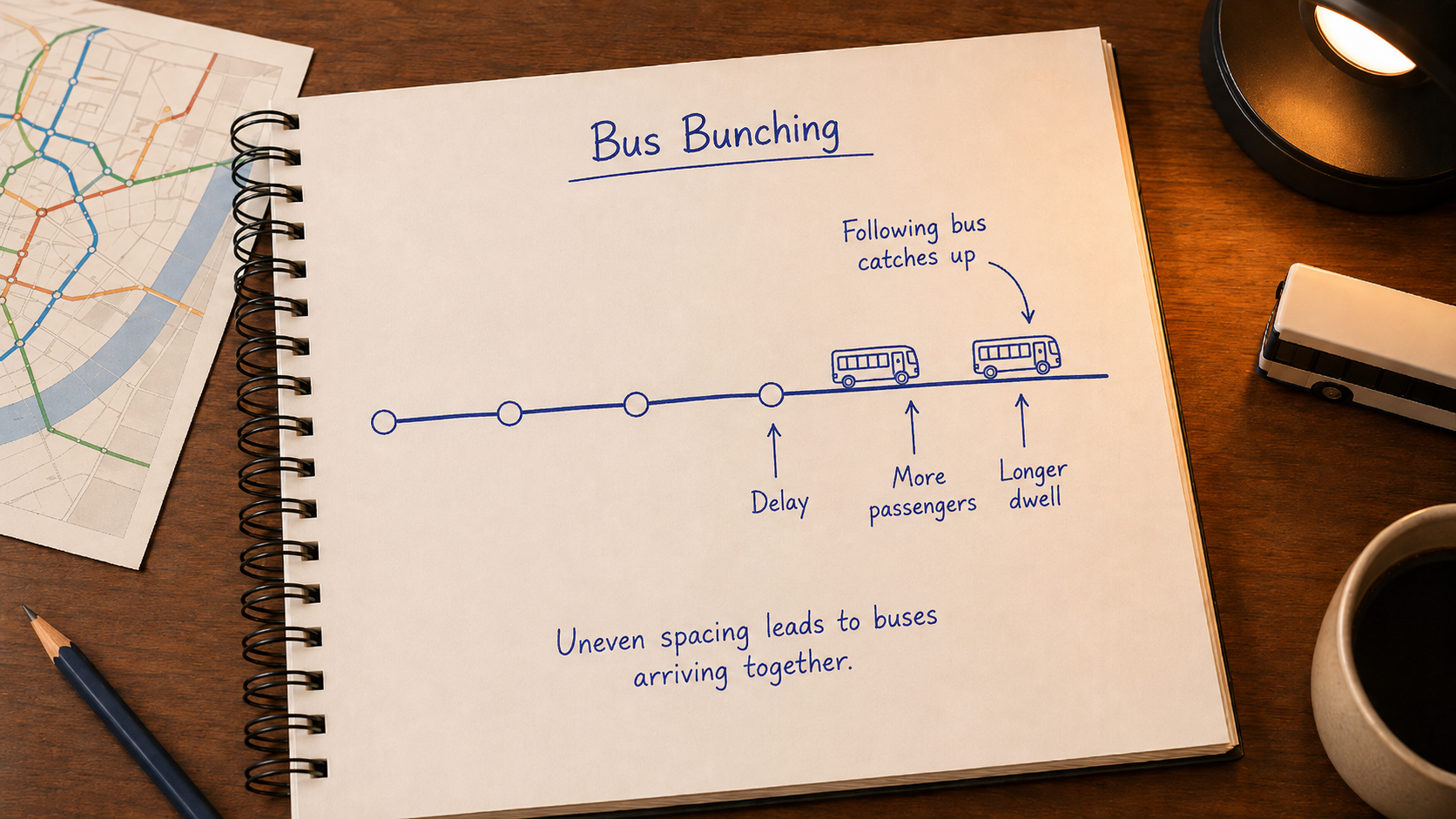
Transit Operations5 min read
Why Buses Bunch—and Why the Second Bus Cannot Always Just Pass
Bus bunching often begins with a small delay that causes one bus to carry more passengers while the following bus catches up. This article explains how bunching develops, why simply passing is not always the answer, and how transit agencies try to restore proper spacing.
Read Article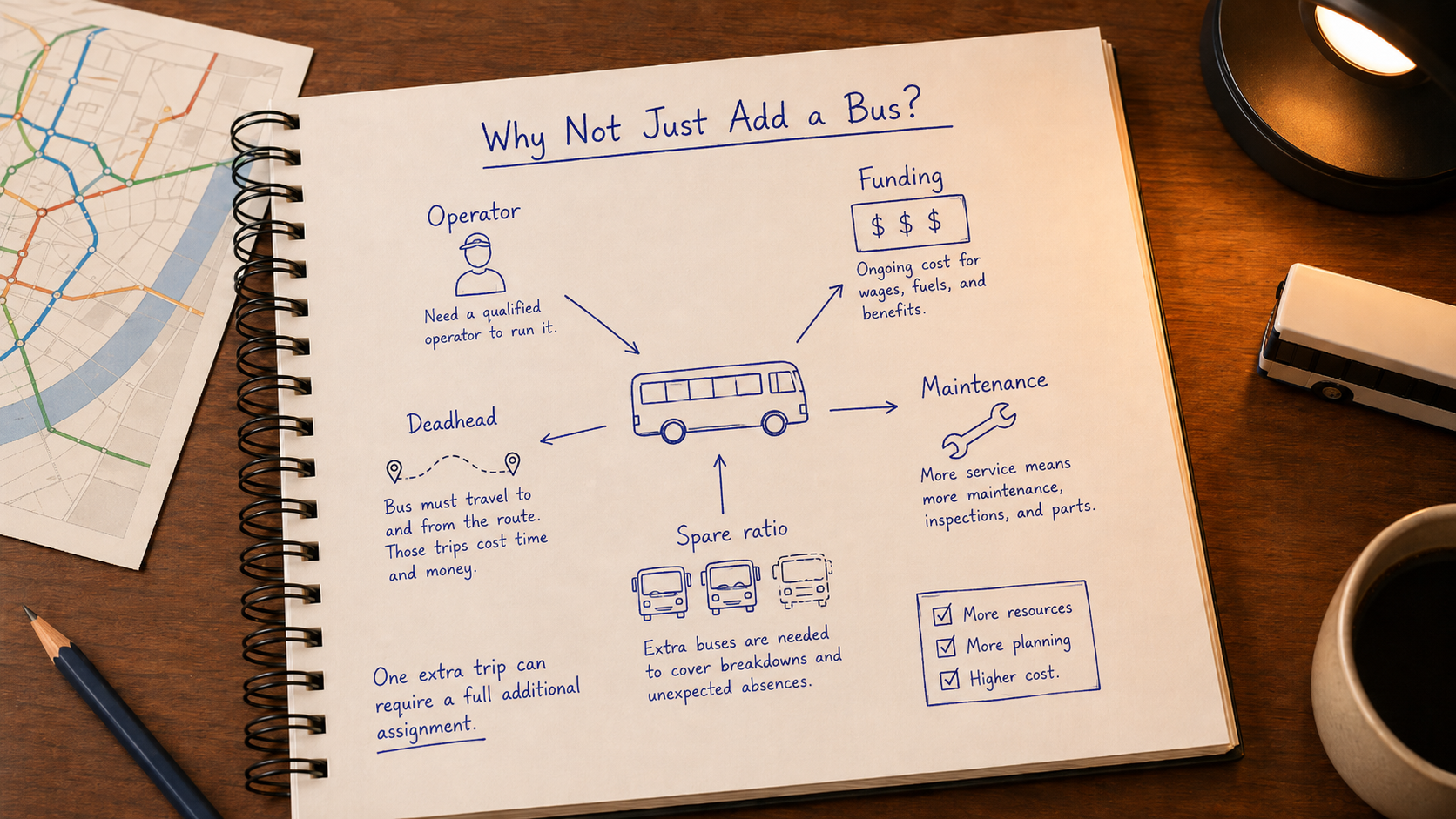
Transit Operations10 min read
Why Can't the Transit Agency Just Add Another Bus?
Adding service involves more than finding an available bus. Operators, funding, maintenance, deadhead time, spare vehicles, terminal space, and the structure of the existing schedule all determine whether an additional trip can actually be operated.
Read Article