Why Do Operators Change While the Bus Stays in Service?
How a vehicle's block connects with the work assigned to its operators
By Craig3 min read
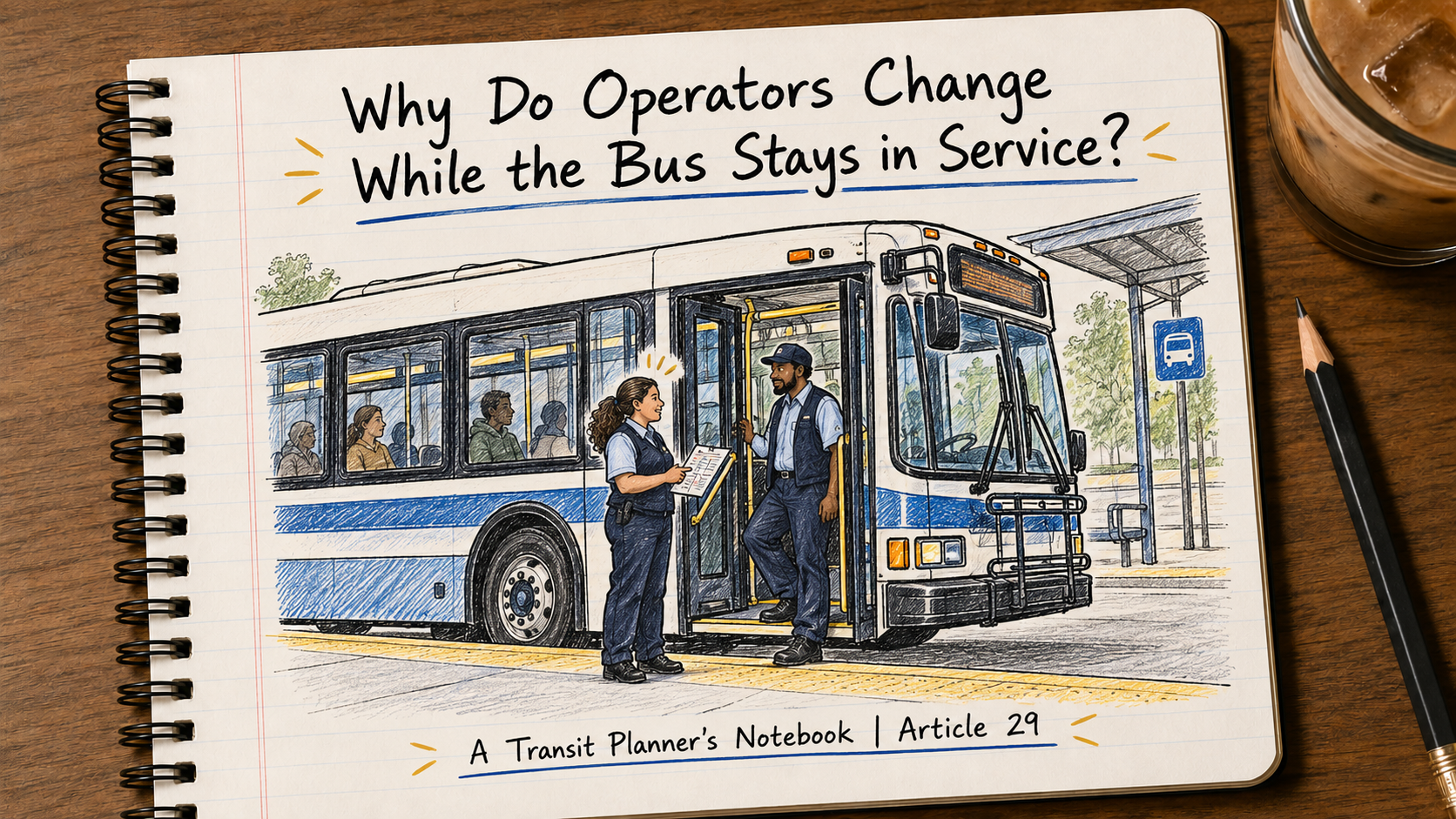
A bus reaches a transit center. Another operator is waiting beside the boarding area.
The two operators exchange a few words, one leaves, and the other takes the driver's seat. The bus continues providing service.
Passengers may wonder why the vehicle's work continues while the person operating it changes. The answer begins with the distinction between a bus assignment and an operator assignment.
The Block Follows the Bus
What Is a Bus Block? introduced the block, the sequence of work assigned to a vehicle during the service day.
That block can include passenger trips, travel without passengers, and time between assignments. It may continue across a long operating day.
One operator does not necessarily perform all that work. The bus can remain in service while different operators cover portions of its assignment.
Following the same vehicle through the day therefore gives a different picture from following one person's work.
A Run Follows the Operator's Assignment
Agencies use different terminology, but a run commonly describes an operator's assigned work.
That assignment may include a portion of one block or work associated with more than one block. It also needs to account for the activities required to reach and perform that work.
For an introductory example, imagine a bus that provides morning, midday, and evening service. One operator handles the earlier portion. Another takes over later at an established location.
The passenger service continues through that handoff. The people performing it have separate work assignments.
Building those assignments involves additional scheduling considerations. Understanding the handoff comes first.
What Is a Relief?
An operator relief is the handoff from one operator to another. The location where it occurs is commonly called a relief point.
A relief changes the person driving. A vehicle exchange changes the bus. Both events can occur during daily operations, and they require different arrangements.
For example, passengers may see an operator arrive on foot or in a support vehicle while their bus stays at the same bay. In a vehicle exchange, another bus must be brought into the operating plan.
Keeping those terms distinct helps explain what operations staff are coordinating.
The Location Has to Work
A good relief point needs to accommodate the handoff safely and practically.
There must be a suitable place for the bus to stop and for the incoming operator to reach it. The outgoing operator also needs a workable way to leave the location after the handoff.
A transit center may offer useful access, but it still has limited space and other buses to accommodate. A convenient point on a map can create difficulties if the bus blocks another movement or the relieving operator cannot reach it reliably.
The relief needs to fit the service as it actually operates.
Getting to the Bus Takes Time
An operator assigned to begin work on a bus away from the operating facility needs a way to reach that bus.
Depending on the agency's arrangements, that may involve a support vehicle, a trip on another transit service, a walk, or another approved method.
The travel time and vehicle availability need coordination. Scheduling a handoff at 12:00 does not make it workable if the incoming operator cannot reach the location until 12:10.
The bus's arrival can vary too. A delayed bus may affect the handoff and the outgoing operator's next movement. Dispatch may need to manage the resulting problem.
Working Information Supports the Handoff
What Is an Operator Paddle? explained the operator paddle. Relief locations, times, and instructions are among the details that operating documents may need to show.
The operators also need an appropriate way to pass along relevant information about the bus or service, following the agency's procedures.
When a service change moves a trip, the relief arrangement may need to move with it. The corresponding instructions must agree so that both operators are working from the same current plan.
What Passengers Experience
Passengers may remain aboard during a routine relief where the agency permits it. Other circumstances may require different instructions.
A clear explanation helps riders understand whether their trip is continuing and when the bus will depart. Passengers should follow the operating instructions given for that location and situation.
Tags
This article reflects the author's personal experience and general industry knowledge. Agency practices, labor agreements, laws, funding requirements, and operating conditions vary.
Related Articles
Transit Operations3 min read
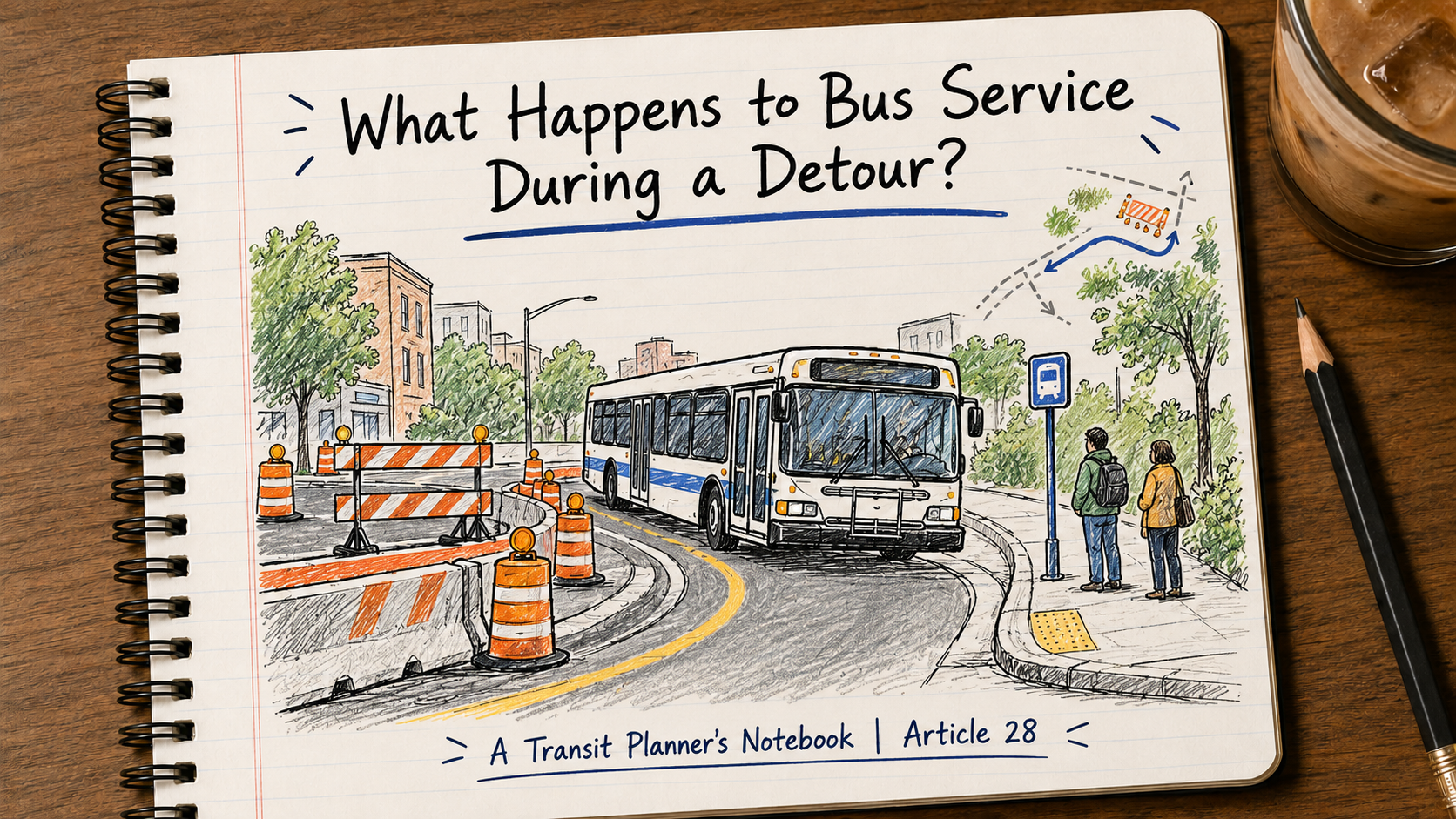
What Happens to Bus Service During a Detour?
A road closure creates a temporary service problem for both the bus and its passengers. A workable detour needs a suitable path, usable temporary stops, attention to travel time, and consistent instructions.
Read Article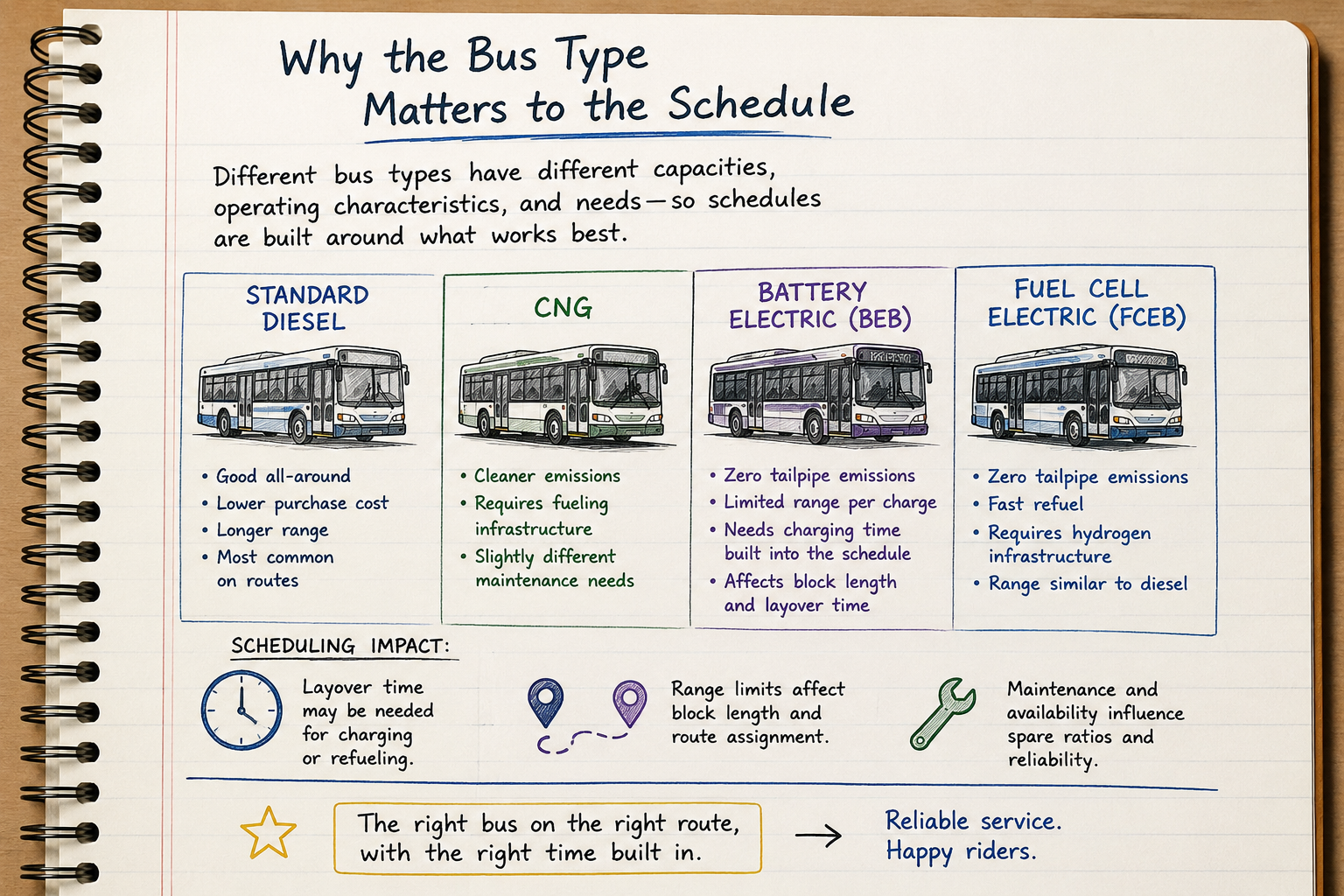
Transit Operations2 min read
Why the Bus Type Matters to the Schedule
A bus is not always interchangeable with every other bus in the fleet. Passenger capacity, route geometry, block mileage, fuel type, battery range, charging needs, and other vehicle characteristics can determine which assignments are practical.
Read Article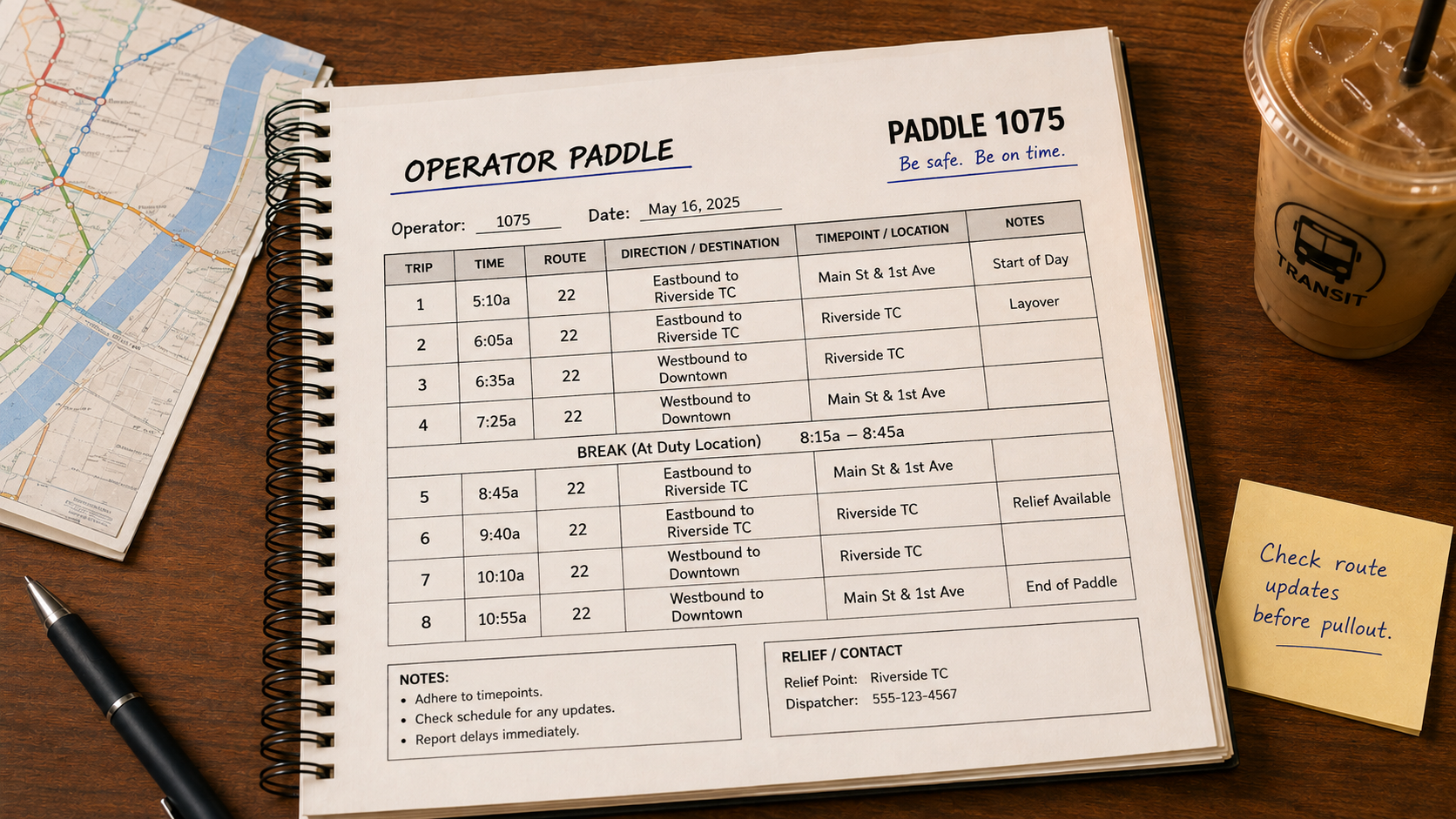
Transit Operations1 min read
What Is an Operator Paddle?
Passengers see a timetable designed for travel planning. Operators need something more detailed. An operator paddle translates scheduled trips, timepoints, breaks, route changes, and other instructions into the working schedule used to operate the service.
Read Article