Why the Bus Type Matters to the Schedule
How capacity, range, fueling, charging, terrain, and vehicle characteristics affect daily assignments
By Craig2 min read
A transit agency has an available bus.
A trip needs a bus.
Problem solved?
Not necessarily.
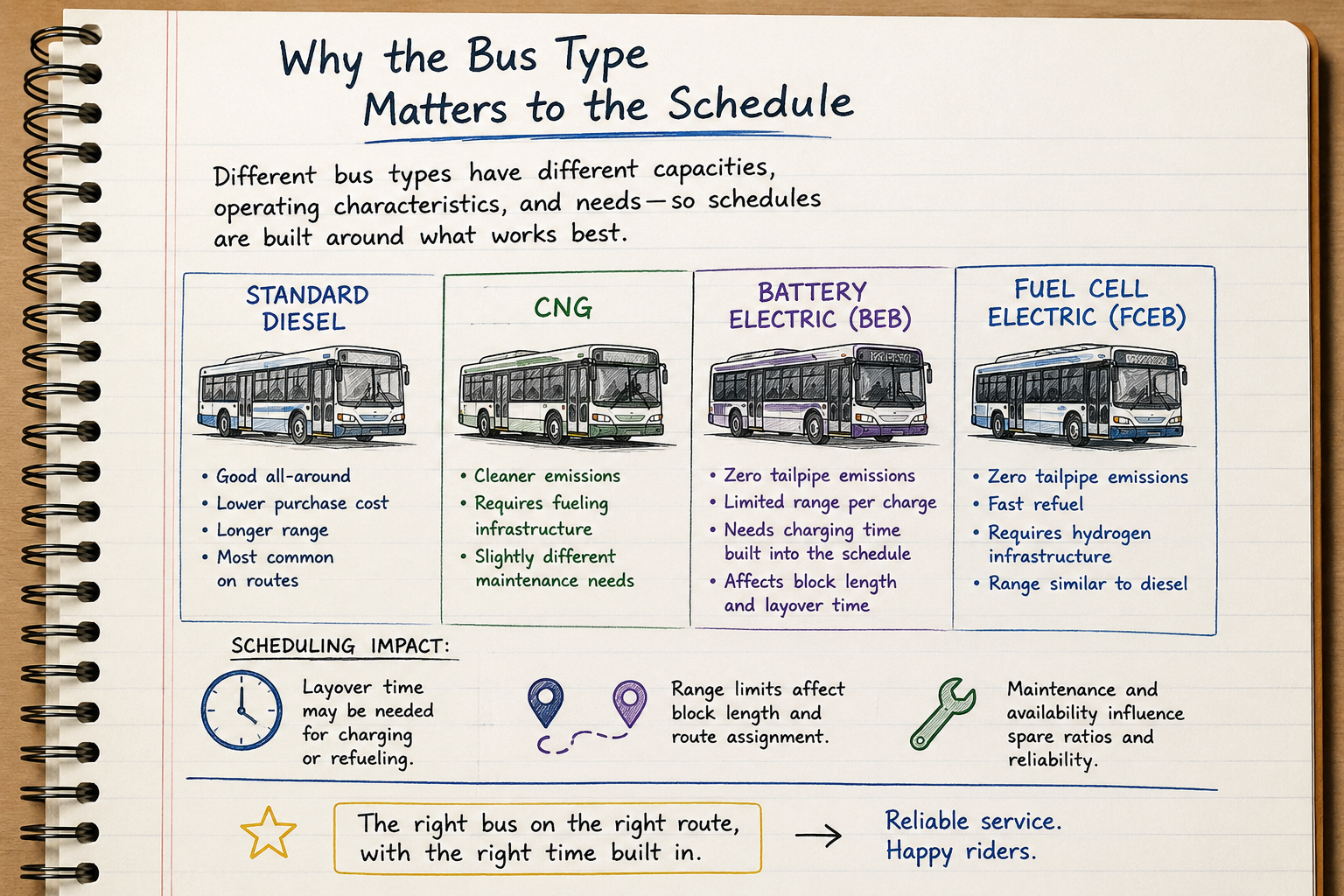
Modern transit fleets can contain several vehicle types, and each may have different operating characteristics.
Capacity
The most obvious difference is passenger capacity.
A heavily used trip may require a larger bus.
Assigning a smaller vehicle may result in:
- Overcrowding
- Passengers being passed up
- Longer boarding times
Vehicle assignment therefore begins with expected demand.
Vehicle Length and Geometry
Not every roadway or terminal works equally well for every vehicle.
A longer bus may have difficulty with:
- Tight turns
- Small turnaround areas
- Narrow streets
- Limited bus bays
The schedule and route design need to reflect the physical vehicle.
Conventional Fuel Range
Diesel and other conventionally fueled buses also have range considerations, although agencies have historically been able to refuel them relatively quickly.
Long blocks still require enough fuel to complete the assignment with an appropriate reserve.
Battery-Electric Buses
Battery-electric buses add more variables.
Range can be affected by:
- Block mileage
- Temperature
- Air conditioning
- Heating
- Elevation
- Passenger load
- Traffic
- Driving conditions
The advertised maximum range of a bus should not automatically be treated as the planning range for daily service.
Operational reserve is important.
Charging
Charging also takes time.
A block may be designed around:
- Overnight charging
- Midday charging
- Opportunity charging
If the bus must charge during the service day, the charger itself becomes part of the operating plan.
It has to be:
- Available
- Working
- Located where the bus can reach it
- Scheduled for enough time
Hydrogen Fuel-Cell Buses
Hydrogen fuel-cell electric buses may offer different range and fueling characteristics.
They still require appropriate fueling infrastructure and operational planning.
A mixed zero-emission fleet therefore does not mean every zero-emission bus can automatically substitute for every other one.
Assign the Vehicle to the Block
The correct way to evaluate a bus is generally against the entire block.
A bus might easily operate one 20-mile trip.
That does not mean it can operate a 220-mile daily block containing that trip.
Planners need to consider:
- Revenue mileage
- Deadhead
- Recovery
- Fuel or energy reserve
- Charging or fueling opportunities
Tags
This article reflects the author's personal experience and general industry knowledge. Agency practices, labor agreements, laws, funding requirements, and operating conditions vary.
Related Articles
Transit Operations1 min read
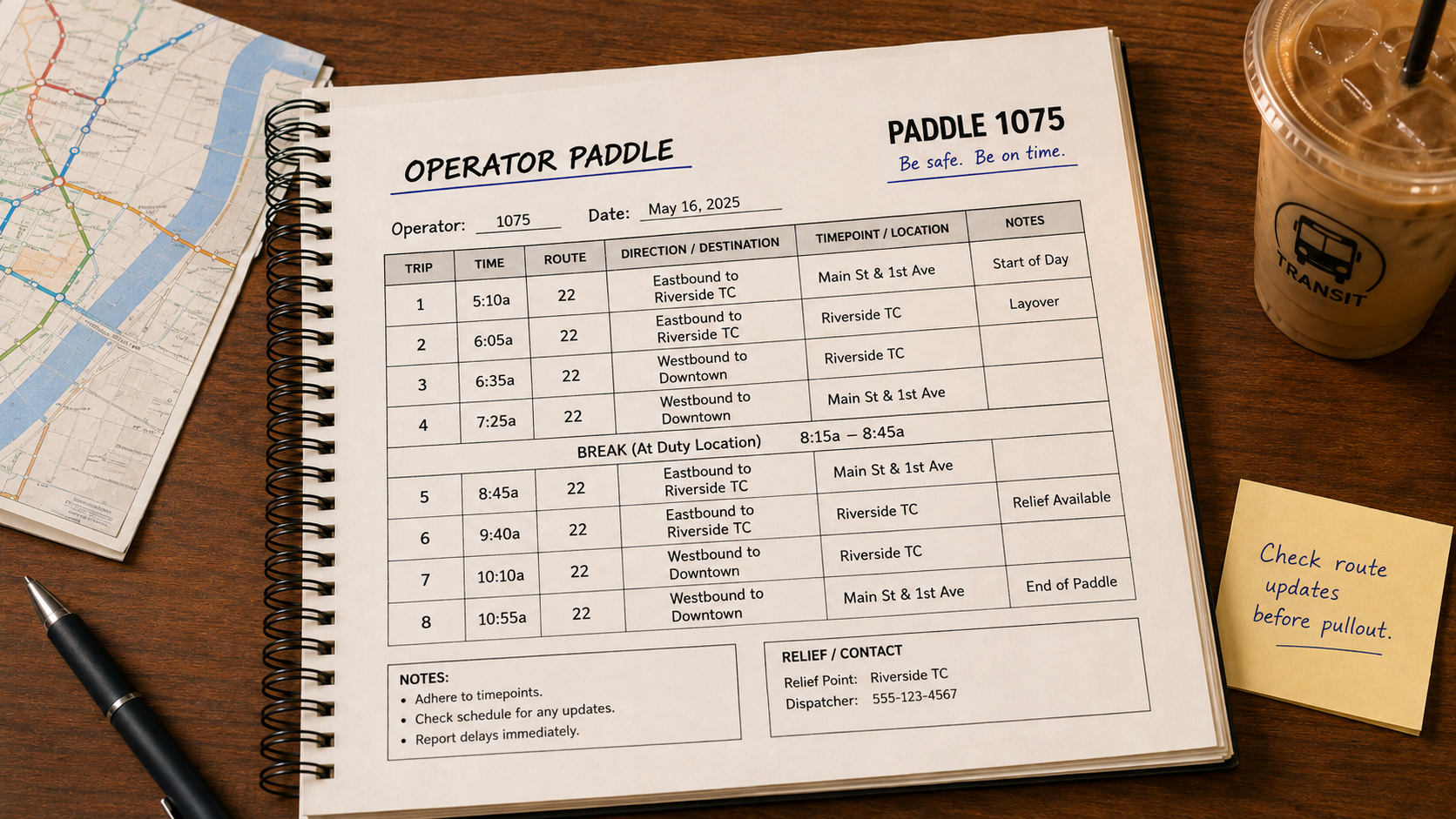
What Is an Operator Paddle?
Passengers see a timetable designed for travel planning. Operators need something more detailed. An operator paddle translates scheduled trips, timepoints, breaks, route changes, and other instructions into the working schedule used to operate the service.
Read Article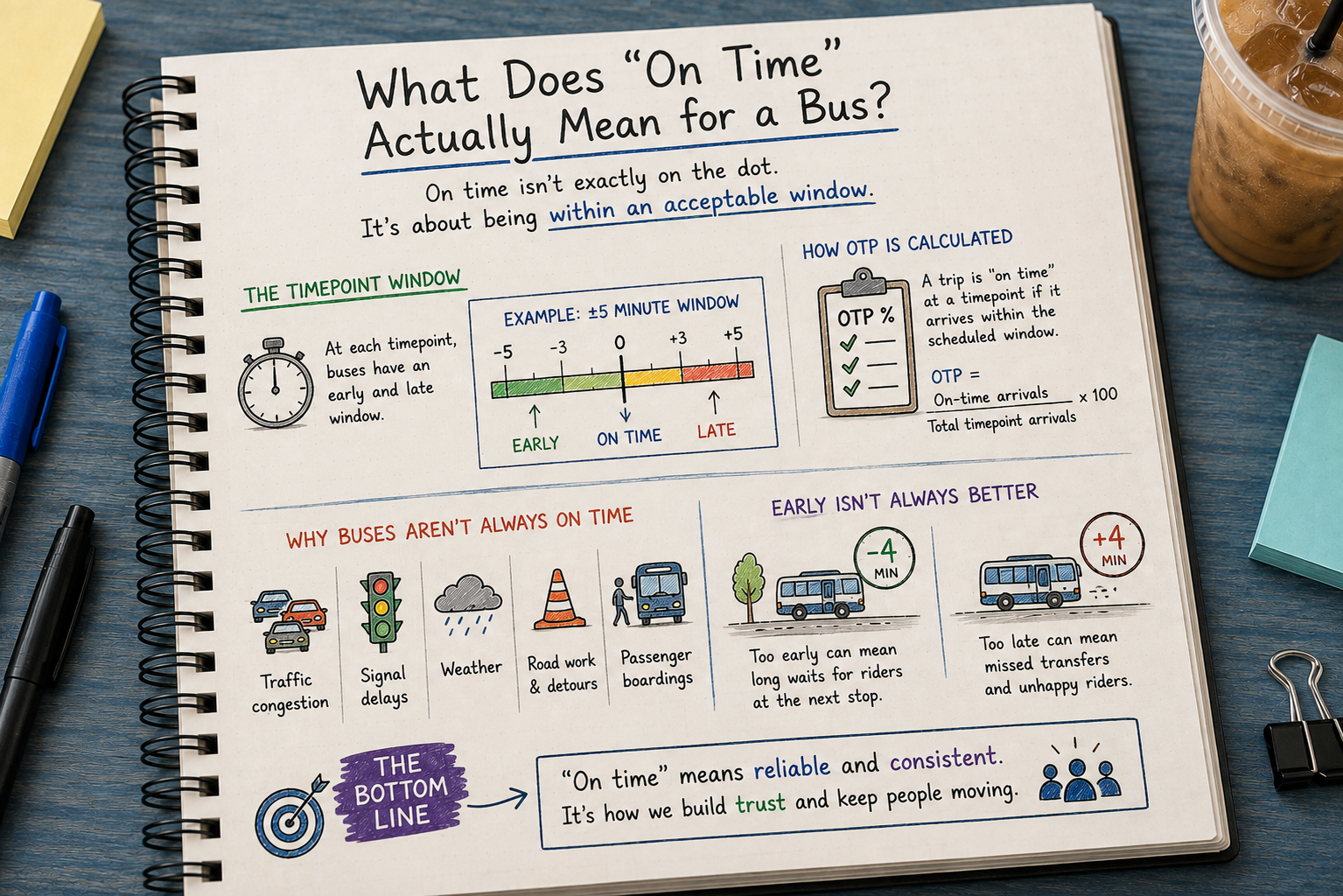
Transit Operations6 min read
What Does “On Time” Actually Mean for a Bus?
On-time performance is one of transit’s most important service measures, but “on time” does not always mean arriving at the exact scheduled minute. Understanding early departures, late arrivals, timepoints, and schedule adherence helps explain what the numbers really measure.
Read Article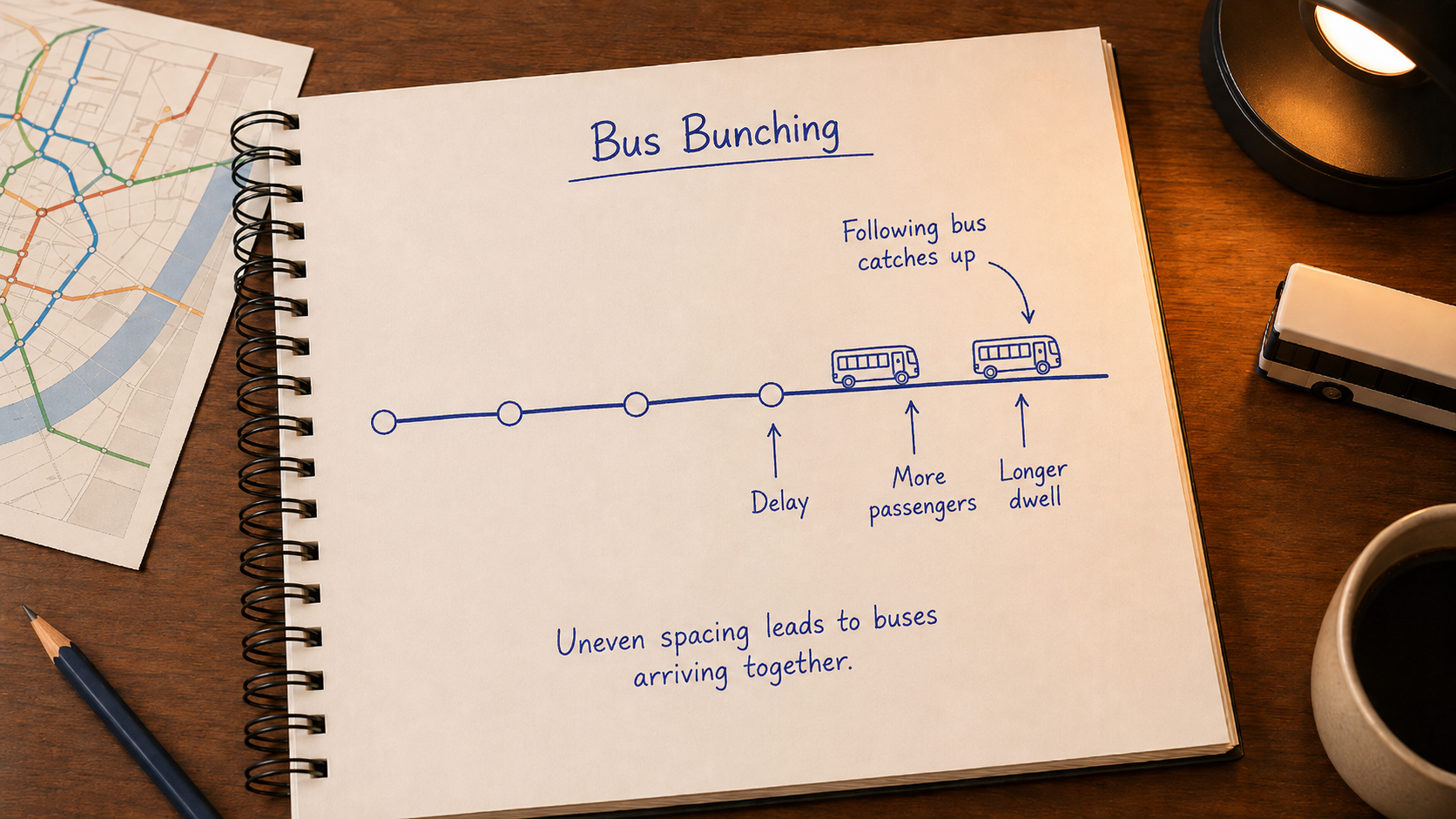
Transit Operations5 min read
Why Buses Bunch—and Why the Second Bus Cannot Always Just Pass
Bus bunching often begins with a small delay that causes one bus to carry more passengers while the following bus catches up. This article explains how bunching develops, why simply passing is not always the answer, and how transit agencies try to restore proper spacing.
Read Article