What Happens to Bus Service During a Detour?
The work behind a temporary route that passengers can find and buses can operate
By Craig3 min read
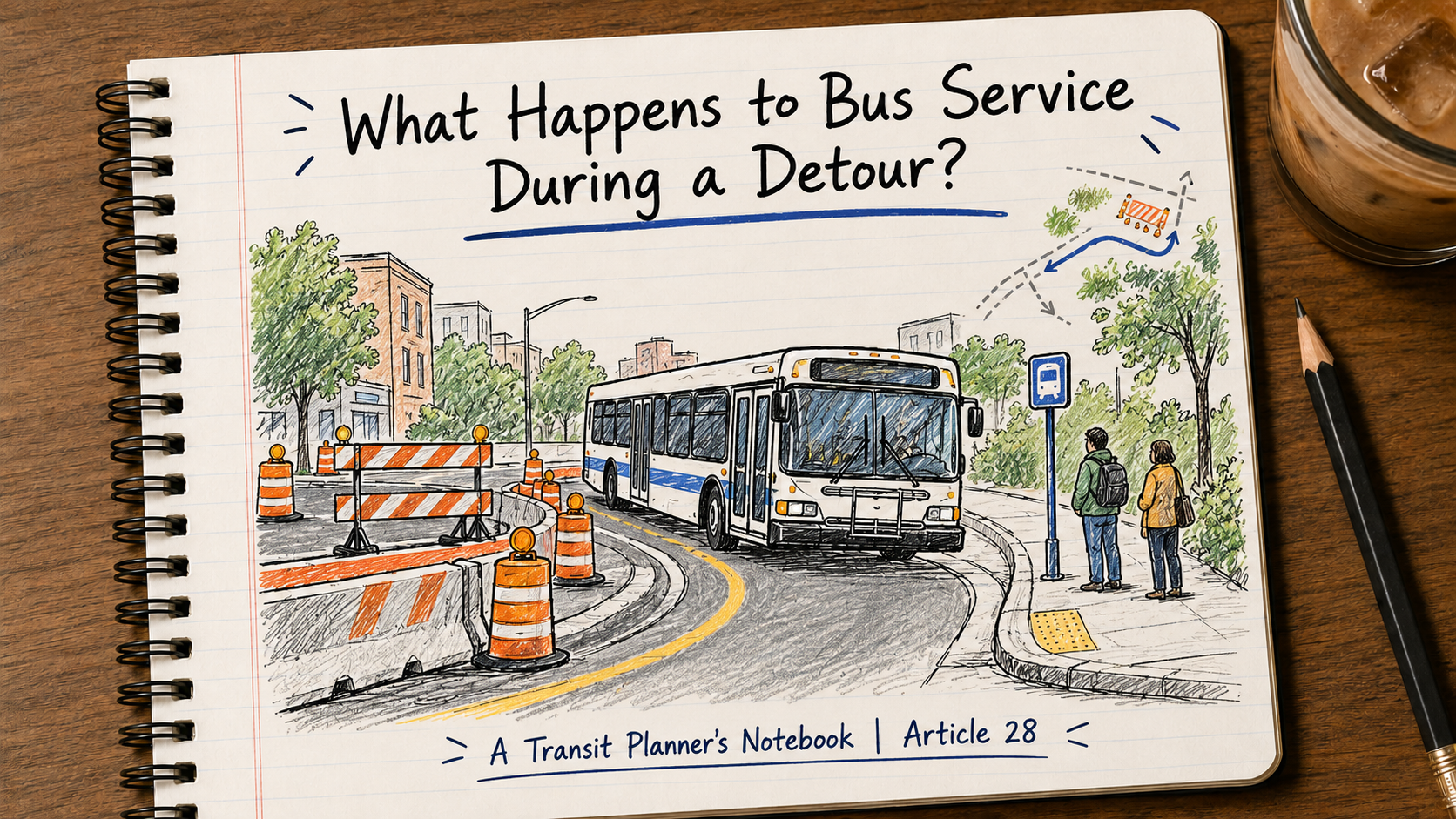
A road closes for construction. The normal bus route can no longer pass through, and several regular stops are behind the closure.
Finding another street is only the beginning. The bus must be able to operate the temporary path, passengers must be able to find usable stops, and the additional travel must fit into the day's work as well as conditions allow.
That temporary arrangement is a detour.
Start with a Path the Bus Can Operate
A diversion suitable for an automobile may be unsuitable for a transit bus.
The temporary route needs to be checked for turns, clearances, roadway restrictions, parked vehicles, and other conditions affecting the assigned vehicle. A turn that looks possible on a map may be blocked during actual service hours.
Both directions need review. A workable path around the closure in one direction does not establish that the reverse movement will work too.
When a route ends near the affected area, the bus also needs a practical place to turn around and begin its next trip.
Follow the Passenger to the Temporary Stop
Passengers arriving at the normal stop need to know what to do next.
Some stops may remain in service. Others may move temporarily or have no close replacement. The agency needs to identify those differences clearly.
A temporary boarding location should be reviewed for the bus and for the people reaching it. Construction can close sidewalks, move crossings, or leave the nearest apparent path difficult to use.
Sending passengers to a nearby street without checking the walking route can create a problem even when the bus itself has a good diversion.
The useful question is whether people can understand and complete the temporary journey.
A Short Detour Can Affect the Rest of the Day
Imagine a hypothetical detour that adds several minutes to each trip.
Those minutes can reduce the recovery available at the terminal. They may also move the bus's arrival beyond a connecting departure or affect when the next trip can begin.
Congestion on the temporary path can make the effect larger at certain hours. A diversion that works early in the morning may behave differently during school traffic or the afternoon commute.
Planners and operations staff need to estimate the added time and monitor what actually occurs. A long-running detour may require further schedule or operating adjustments.
The running-time and recovery principles introduced earlier in the series still apply while the bus is off its normal path.
Everyone Needs the Same Instructions
Operators need a clear route description and information about affected stops. Dispatch and field supervision need to understand how the detour changes service. Customer service needs to explain the same arrangement to passengers.
Public notices should identify:
- The affected route and direction.
- When the detour begins and, when known, when it is expected to end.
- Which stops are closed or moved.
- Where passengers can board instead.
- Any significant change to the journey or connections.
A map can help, but the written explanation must also be understandable. A passenger should not need to interpret an engineering drawing to locate the bus.
For a sudden closure, immediate instructions may have to be followed by more complete notices as conditions become clear. Updates need to reach both the street and the information channels passengers use.
Digital Information Needs Attention
Passengers may consult a website, a trip planner, or a real-time display while standing beside the closed stop.
Those tools do not always change automatically when a detour begins. The agency needs to consider how service alerts, stop notices, and any temporary data changes will communicate the arrangement.
GTFS: The Data Behind Your Transit Trip Planner introduced the data behind digital trip planning. A detour demonstrates why the information people receive must be checked against the service operating on the street.
Returning to Normal Is Another Change
The expected end of construction does not, by itself, confirm that regular service can resume.
The roadway, stops, and pedestrian access need to be available. Operators and passengers then need a clear restoration time.
Temporary signs and obsolete alerts should be removed or updated. Leaving them in place can continue the confusion after the physical closure has ended.
Tags
This article reflects the author's personal experience and general industry knowledge. Agency practices, labor agreements, laws, funding requirements, and operating conditions vary.
Related Articles
Transit Operations3 min read
Why Do Operators Change While the Bus Stays in Service?
A bus can remain in service while its operators change. Understanding blocks, runs, and relief points explains the handoff and the travel arrangements needed to keep the service moving.
Read Article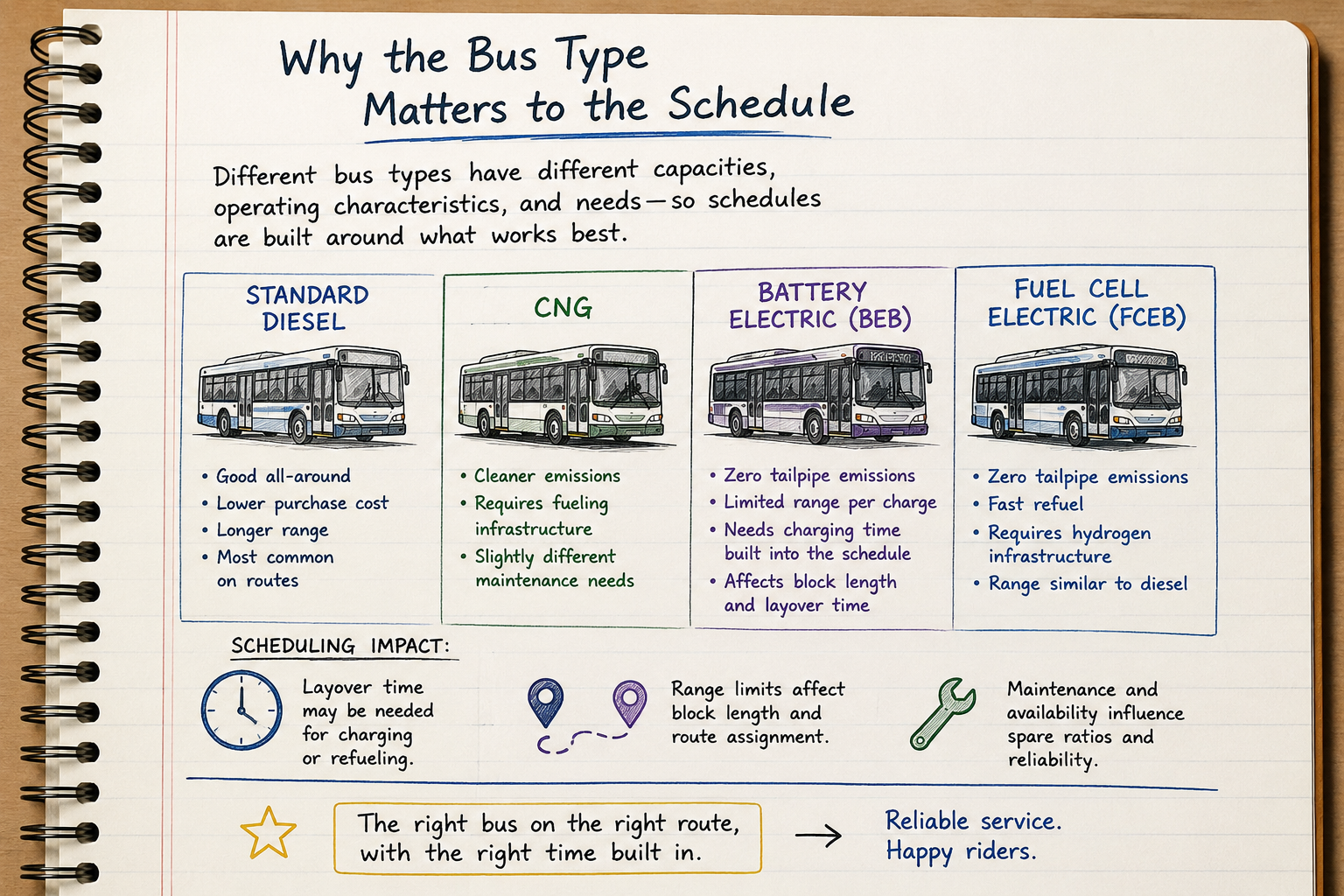
Transit Operations2 min read
Why the Bus Type Matters to the Schedule
A bus is not always interchangeable with every other bus in the fleet. Passenger capacity, route geometry, block mileage, fuel type, battery range, charging needs, and other vehicle characteristics can determine which assignments are practical.
Read Article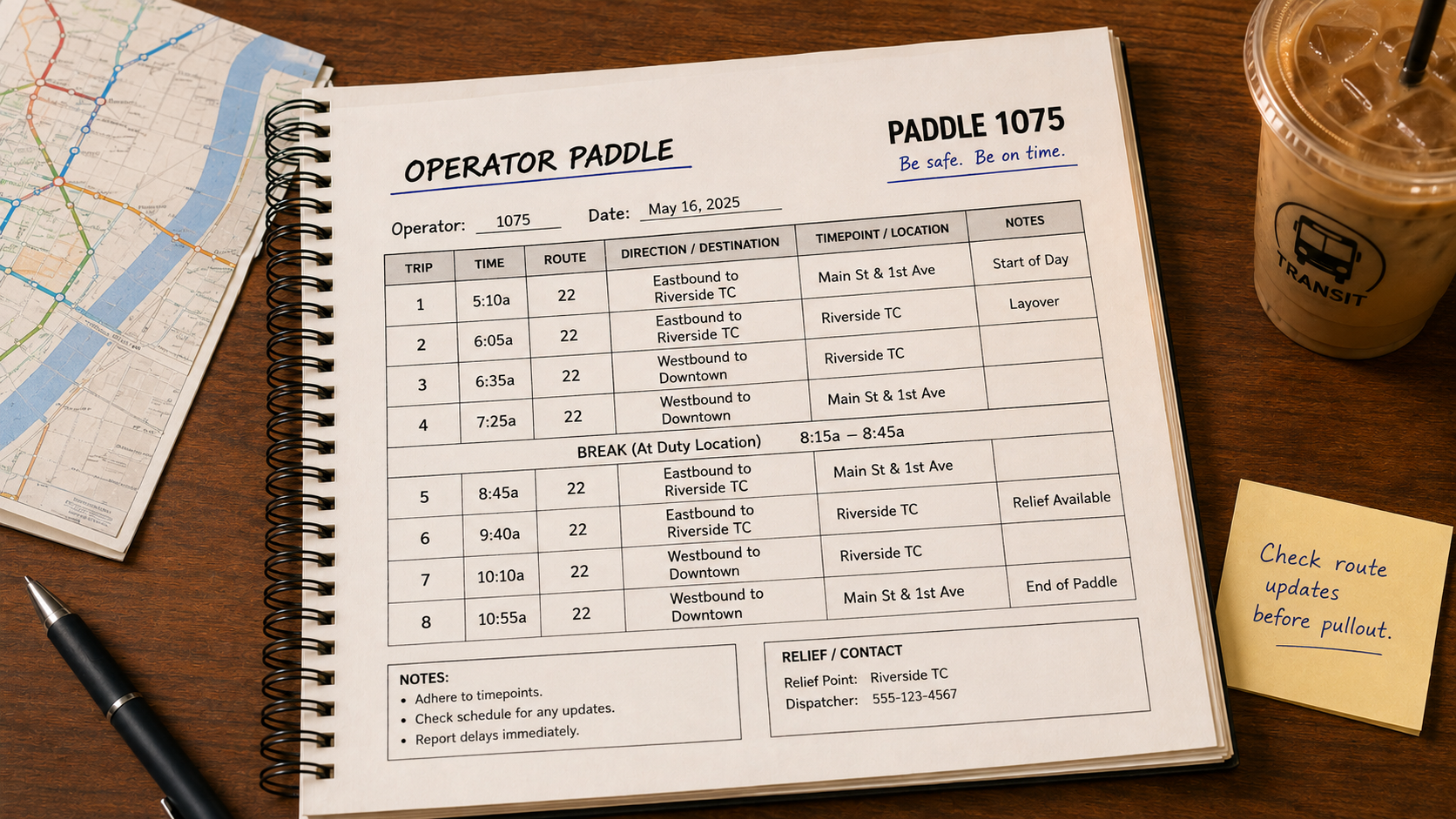
Transit Operations1 min read
What Is an Operator Paddle?
Passengers see a timetable designed for travel planning. Operators need something more detailed. An operator paddle translates scheduled trips, timepoints, breaks, route changes, and other instructions into the working schedule used to operate the service.
Read Article