How a Transit Service Change Goes from Idea to the Street
The planning, scheduling, data, coordination, and communication behind changing bus service
By Craig2 min read
A new route appears on the timetable.
A departure moves by ten minutes.
A stop changes.
To the public, the change may look simple.
Behind it may be weeks or months of work.
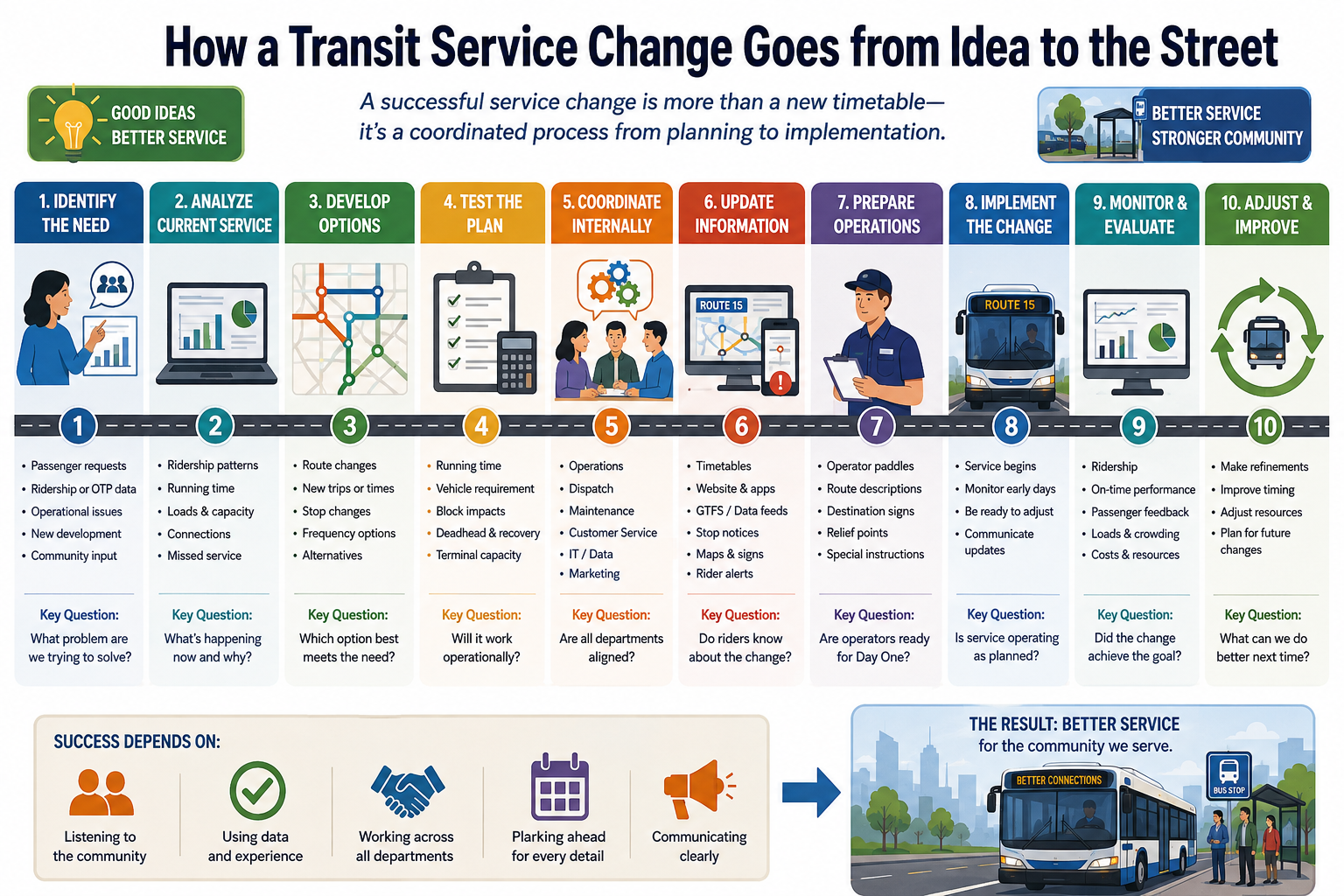
Where Service Changes Begin
A service change can originate from:
- Passenger requests
- Ridership data
- On-time-performance problems
- Operator feedback
- New housing or development
- School changes
- New employers
- Road construction
- Funding changes
- Planning studies
- Political or community requests
The first step is determining whether the problem is real and whether changing service is the appropriate solution.
Analyze the Existing Service
Before changing anything, planners need to understand what is happening now.
That may include reviewing:
- Ridership
- Running time
- OTP
- Passenger loads
- Missed service
- Connections
- Existing resources
Changing a route without understanding the current service can simply move the problem elsewhere.
Develop the Proposal
Once the need is established, planners can begin developing alternatives.
A proposed change might involve:
- A route extension
- A shortened route
- New departure times
- Additional trips
- Revised headways
- New stops
- Different recovery
- A special trip
Each option has operational consequences.
Test the Schedule
A proposed route is not ready simply because it looks good on a map.
Planners must determine:
- Running time
- Vehicle requirement
- Block impacts
- Deadhead
- Operator implications
- Terminal capacity
- Connections
- Vehicle suitability
This is where many apparently simple ideas become complicated.
Coordinate Internally
Planning does not operate in isolation.
A service change may require coordination with:
- Operations
- Dispatch
- Maintenance
- Customer service
- Marketing
- Information technology
- Bus stop staff
- Contractors
- Management
Each department sees a different part of the implementation.
Update Passenger Information
The public needs accurate information before the change begins.
That may include:
- Timetables
- Website information
- GTFS
- Trip planners
- Bus stop notices
- Destination signs
- Maps
- Social media
- Rider alerts
One incorrect source can create confusion even if everything else is correct.
Prepare Operations
Operators and dispatchers need to know what changed.
Operational materials may include:
- New paddles
- Supervisor summaries
- Route descriptions
- Destination-sign codes
- Stop instructions
- Special notices
A service change that is clear to planning but unclear to the people operating it is not ready.
Implementation Day Is Not the End
Once the service begins, planners should monitor it.
The first weeks may reveal:
- Unexpected running-time issues
- Passenger confusion
- Stop problems
- Heavy loads
- Weak connections
- Operational conflicts
Some adjustments can be handled immediately. Others may need to wait for the next formal service change.
Tags
This article reflects the author's personal experience and general industry knowledge. Agency practices, labor agreements, laws, funding requirements, and operating conditions vary.
Related Articles
Transit Planning4 min read
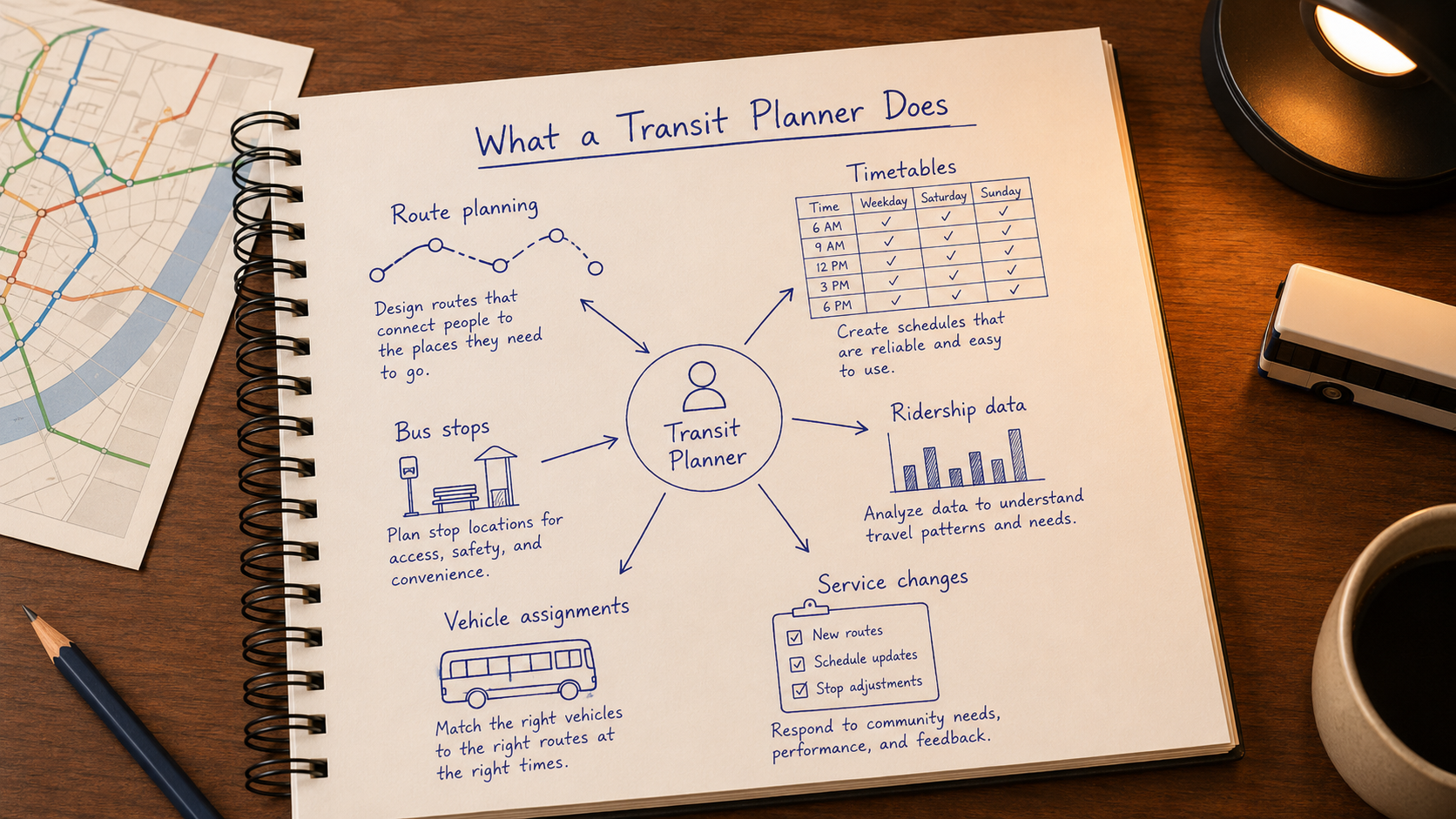
What Does a Transit Planner Actually Do?
Most passengers see the bus, the stop, and the timetable. This article explains the planning, scheduling, data analysis, vehicle assignments, and coordination required to turn those visible pieces into reliable daily transit service.
Read Article