Why Doesn't Every Bus Stop Have a Shelter?
How waiting conditions, available space, and upkeep shape stop improvements
By Craig3 min read

Two stops serve the same bus route. One has a shelter and bench. The other has a sign beside the sidewalk.
Passengers waiting in the sun or rain reasonably ask why the second stop has not received the same improvements.
Answering that question involves the conditions people face while waiting, the space available, and the ability to build and maintain the improvement.
Different Improvements Serve Different Needs
A sign identifies the stop and the service using it. A bench provides a place to sit. A shelter offers some protection from the weather. Lighting and clear passenger information address other needs.
The boarding area and walking path are also fundamental parts of the stop. A shelter does not compensate for a place where passengers cannot safely reach or board the bus.
These improvements work together, but each has a separate purpose. Reviewing a stop should begin with the problems passengers actually experience.
How Many People Wait, and for How Long?
Boarding activity helps identify how many people may benefit from a shelter. The length and conditions of the wait matter too.
A stop with frequent buses may have many boardings but relatively short waits. A stop with fewer boardings may serve passengers who must wait much longer between departures or while transferring.
Exposure to heat, rain, wind, or cold can make that waiting time particularly difficult. Nearby destinations and the needs of regular users also deserve attention.
This is a practical application of Why Can a Busy Route Have an Almost Empty Bus?: a passenger count needs context. The number helps describe the stop, while additional information explains the experience of using it.
A Shelter Needs a Workable Location
An existing bus stop does not necessarily have enough usable space for a shelter.
A structure may conflict with a narrow sidewalk, utility equipment, a driveway, a property boundary, or the area needed for boarding. Its placement can also affect visibility and pedestrian movement.
The improvement must preserve a practical route past the stop and to the bus. Passengers using wheelchairs, walkers, or other mobility devices need room to move through the area.
Sometimes a shelter project therefore includes more than the shelter itself. It may require sidewalk work, a different layout, coordination with a property owner, or another site improvement.
Why Can’t a Bus Stop Just Be Put Here? covered stop placement in more detail. Here, the important question is whether the proposed amenity improves the existing stop as a whole.
Installation Is the Beginning of the Commitment
A shelter needs cleaning, repairs, and attention when it is damaged. Benches, signs, lighting, and information displays also require care.
Responsibilities can be shared among a transit agency, a jurisdiction, a property owner, or another partner. Those arrangements need to be understood before an improvement is installed.
A project needs resources for construction and for its continued upkeep. A damaged or poorly maintained shelter can become another obstacle for passengers rather than the improvement originally intended.
Comparing Two Stops
Consider two hypothetical candidates for improvement.
The first has substantial boarding activity, short waits, and enough space for a shelter. The second has fewer boardings but serves a clinic, has long waits, and exposes passengers to strong afternoon sun. Its sidewalk also needs work before a shelter will fit.
A ranking based only on boarding totals might put the first stop ahead. A broader review may identify a strong need at the clinic stop as well.
The agency could pursue the simpler installation while developing the sidewalk work and funding needed at the second location. It could also consider whether an earlier, smaller improvement would help people waiting there.
The useful outcome is an explained priority and a practical path forward. Passengers should be able to understand what is planned, what remains unresolved, and why the work takes time.
Conditions Should Be Reviewed Again
A stop's needs can change when a new destination opens, transfers increase, or service hours change. A previously lightly used stop may become more important.
Requests from passengers and observations from operators can help identify changes that a periodic count misses. A stop-improvement program should have a way to reconsider those conditions.
Tags
This article reflects the author's personal experience and general industry knowledge. Agency practices, labor agreements, laws, funding requirements, and operating conditions vary.
Related Articles
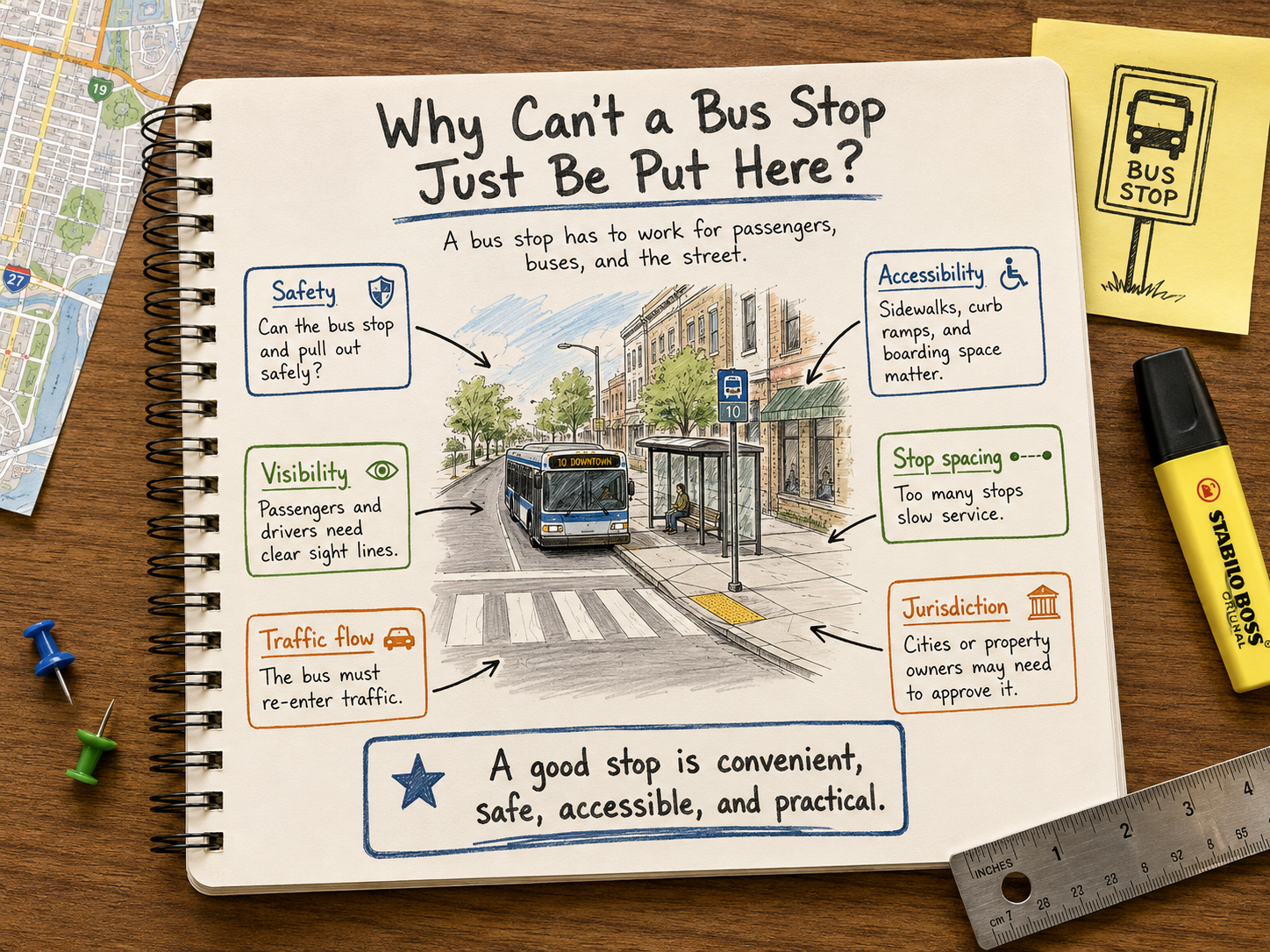
Bus Stops and Facilities4 min read
Why Can’t a Bus Stop Just Be Put Here?
A convenient location is not automatically a suitable bus stop. Planners must consider pedestrian access, roadway conditions, accessibility, spacing, visibility, jurisdictional approval, and how safely a bus can enter and leave the stop.
Read Article